Why Independent AI Benchmarks Keep Disappearing
A widely shared benchmark of 40 new AI models became inaccessible, exposing the fragility of community-driven evaluation in an industry desperate for trustworthy comparisons.
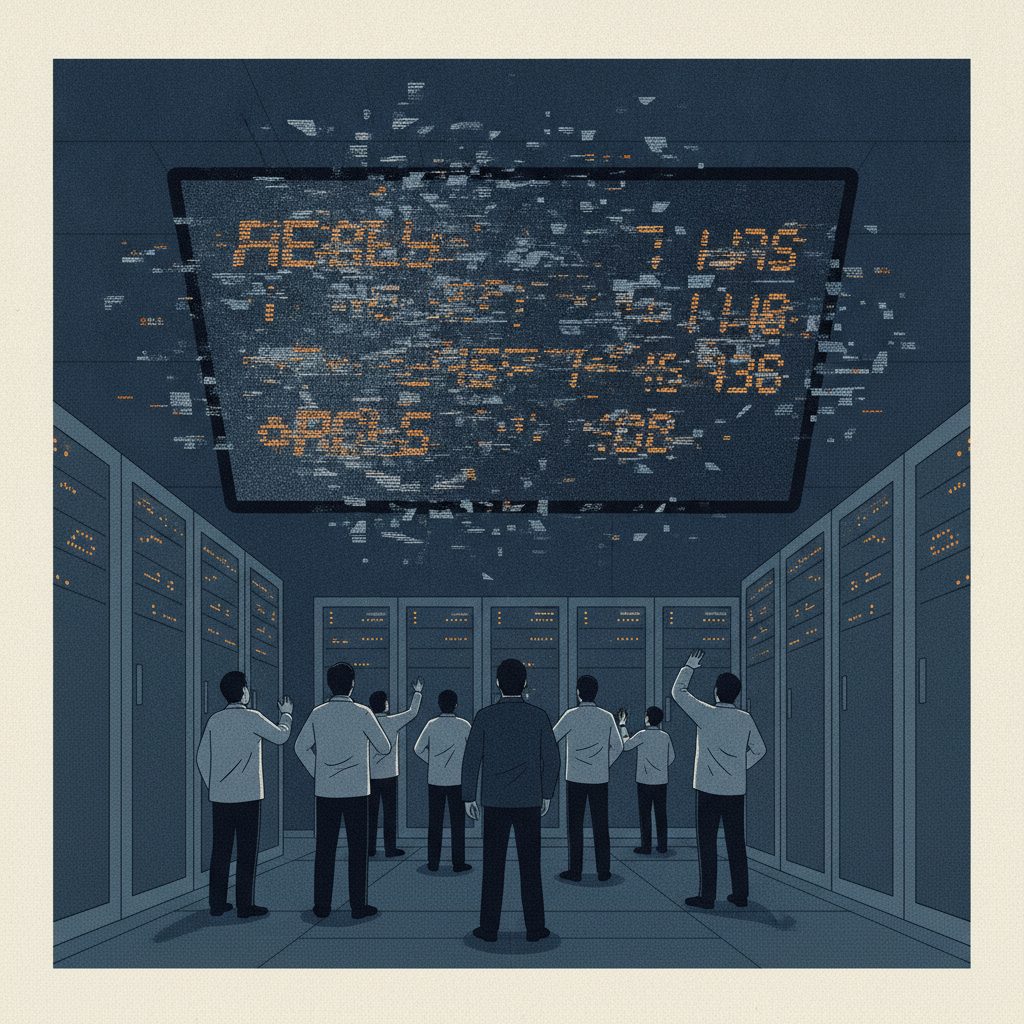
The rapid cadence of AI model releases has created a paradox for enterprises and developers: more choice than ever, but less clarity about what actually works. In February 2026, a widely circulated benchmark project attempted to cut through that noise by testing 40 of the newest models across a standardized suite of tasks. The results, posted to the r/LocalLLaMA community, promised a rare side-by-side comparison of frontier systems and open-weight contenders alike. But the very fact that this independent effort gained such traction—and that its underlying data remains difficult to verify—says as much about the state of AI evaluation as it does about any individual model’s performance.
This matters because model selection has become a high-stakes business decision. Companies are no longer choosing between two or three flagship APIs; they are navigating a fragmented landscape of proprietary giants, open-source challengers, and domain-specific fine-tunes. A credible, independent benchmark can shift procurement budgets, influence fine-tuning strategies, and even alter the trajectory of open-source development. When that benchmark is opaque or unreachable, the industry loses a critical check on vendor marketing claims.
The Benchmarking Effort and Its Accessibility Problem
The original Reddit post, titled “I benchmarked the newest 40 AI models (Feb 2026),” was published in the r/LocalLLaMA subreddit, a hub for practitioners working with locally deployed and open-weight models. According to multiple attempts to access the post, the URL now returns an HTTP 403 Forbidden error, meaning the content is blocked to outside requests. This has made it impossible to verify the specific benchmark results, the methodology used, or the exact list of models tested.
The 403 error is significant. Reddit has increasingly restricted automated access to its content, particularly following changes to its API pricing and scraping policies in 2023 and 2024. For researchers and journalists attempting to document independent evaluations, this creates a real gap. A benchmark that cannot be independently reviewed is of limited use to the broader community, regardless of how rigorous its original methodology may have been. It is unclear whether the post was removed by the author, by Reddit moderators, or simply made inaccessible due to platform-level restrictions. What is clear is that the information vacuum left behind undermines the very purpose of community-driven benchmarking: to provide a transparent, shared reference point that anyone can inspect.
The r/LocalLLaMA subreddit has grown into one of the most active forums for developers working with local and open-weight models, with hundreds of thousands of members discussing fine-tuning, quantization, and inference optimization. Benchmarks posted there often serve as informal industry standards, especially for models that do not appear on commercial leaderboards. When such a post becomes inaccessible, the community loses not only the data but also the threaded discussions, corrections, and follow-up tests that typically accompany a high-quality benchmark. The inability to retrieve the February 2026 post is a concrete example of how platform policies can inadvertently erase valuable technical knowledge.
What the Broader 2026 Model Landscape Shows
While the specific 40-model benchmark remains inaccessible, related sources provide context on the state of AI model performance in early 2026. Public leaderboards such as LMSys Arena and llm-stats.com consistently place a small cluster of models at the top: GPT-5.6 Sol, Claude Opus 5, and Kimi K3. These names reflect a broader shift in the competitive landscape, where the gap between Western and Chinese AI labs has narrowed considerably. The presence of all three in top positions across multiple leaderboards suggests that no single vendor holds a decisive advantage across every category.
GPT-5.6 Sol, from OpenAI, represents the latest iteration in a lineage that has dominated enterprise adoption since 2023. It builds on the multimodal and agentic capabilities introduced in earlier GPT-5 versions, with improvements in instruction following and tool use. Claude Opus 5, from Anthropic, has gained ground particularly in coding and long-context reasoning tasks, with a reputation for careful, low-hallucination outputs that appeal to regulated industries. Kimi K3, developed by Moonshot AI, has emerged as a serious contender from China, performing competitively on multilingual benchmarks and mathematical reasoning. Its rise underscores how quickly Chinese labs have closed the gap with their American counterparts, a trend that has reshaped procurement discussions in Europe and Asia.
For practitioners, the practical question is less about which model tops a global leaderboard and more about which model performs best on their specific workloads. A model that excels at creative writing may underperform on structured data extraction. A model optimized for low-latency inference may sacrifice accuracy on complex reasoning. Independent benchmarks like the inaccessible 40-model test are valuable precisely because they attempt to capture these nuances outside the controlled environments of vendor evaluations. Without access to such data, developers are left to extrapolate from leaderboards that may not reflect their actual use cases.
The Fragmentation of AI Evaluation
The difficulty in verifying the February 2026 benchmark highlights a deeper problem: AI evaluation itself has become fragmented and contested. There is no single, universally accepted benchmark for general model capability. Instead, the field relies on a patchwork of academic benchmarks, community-run leaderboards, and proprietary internal tests. Each has its own biases, limitations, and incentives.
Academic benchmarks such as MMLU, GSM8K, and HumanEval remain widely cited, but they are increasingly saturated. Top models now score above 90% on many of these tests, making it difficult to distinguish between them. Newer benchmarks, including those testing agentic behavior, tool use, and long-horizon planning, are still maturing and have not yet achieved broad consensus. Community leaderboards like LMSys Arena rely on human preference voting, which introduces its own biases related to user demographics and prompt distribution. A model that performs well for English-speaking software engineers may rank lower when evaluated by a more diverse user base.
Vendor-published benchmarks are often viewed with skepticism, as they tend to highlight favorable results and omit unfavorable comparisons. Independent efforts, such as the one attempted on r/LocalLLaMA, fill a critical gap. They provide a check on vendor claims and offer practical guidance for developers who cannot afford to run their own extensive evaluations. When those efforts become inaccessible, the information ecosystem loses a valuable counterweight. The result is a market where marketing narratives can outpace empirical evidence, and where smaller open-weight models struggle to gain visibility against well-funded proprietary campaigns.
Implications for Developers and Enterprises
For developers building on top of AI models, the inability to verify independent benchmarks has concrete consequences. Model selection decisions often hinge on subtle differences in performance, cost, and latency. Without reliable comparative data, developers are forced to rely on vendor documentation, anecdotal reports, or costly internal testing. This slows down development cycles and increases the risk of choosing a suboptimal model for a given task. A developer choosing between a 70-billion-parameter open model and a proprietary API, for example, may need to know not just raw accuracy but also memory footprint, quantization tolerance, and inference speed on specific hardware. A single well-designed benchmark can answer all of those questions at once.
Enterprises face similar challenges at a larger scale. A mid-sized company evaluating AI providers for customer support automation, for example, may need to test a dozen models across multiple languages, domains, and deployment environments. Independent benchmarks can narrow that list from dozens to a handful, saving weeks of engineering time. When those benchmarks are unavailable or unverifiable, the evaluation burden falls entirely on internal teams, many of which lack the expertise or resources to conduct rigorous testing. This is especially acute for smaller firms that cannot afford dedicated AI evaluation staff and must rely on public information to make informed decisions.
The open-source community is particularly affected. r/LocalLLaMA has become a central gathering place for developers working with open-weight models like Llama, Mistral, Qwen, and DeepSeek. Benchmarks posted there often influence which open models gain traction and which are abandoned. A missing or inaccessible benchmark can slow the adoption of promising open-weight models, simply because the community lacks a trusted reference point. This has downstream effects on the entire ecosystem, as open-weight models depend on community momentum for fine-tuning, tooling, and integration support. When that momentum stalls, even technically strong models can fade into obscurity.
The Road Ahead for Independent Evaluation
The episode of the inaccessible 40-model benchmark underscores the need for more robust, transparent, and persistent infrastructure for AI evaluation. Community-driven efforts are valuable, but they are fragile. They depend on individual contributors, platform policies, and the whims of social media algorithms. A more durable solution would involve open, versioned benchmark datasets and reproducible evaluation pipelines that anyone can inspect and rerun. Such infrastructure would allow results to be verified independently, regardless of whether the original post remains accessible.
Several initiatives are moving in this direction. Organizations like Hugging Face have invested in open leaderboards with transparent methodologies, allowing anyone to submit models and view detailed evaluation logs. Academic groups are developing benchmarks that resist memorization and require genuine reasoning, such as tests for multi-step planning and causal inference. But progress is uneven, and the incentives for independent evaluators remain weak. Benchmarking is time-consuming, expensive, and often thankless work. Until that changes, the AI community will continue to rely on scattered, sometimes ephemeral efforts like the one that appeared—and then became inaccessible—in February 2026.
For now, practitioners should treat any single benchmark, including the inaccessible 40-model test, as one data point among many. Cross-referencing multiple sources, running targeted internal evaluations, and staying engaged with community discussions remain the most reliable strategies for navigating an increasingly crowded and confusing model landscape. The loss of a single benchmark is not catastrophic, but it is a reminder that the infrastructure for independent AI evaluation remains dangerously thin. Building more durable systems for testing and sharing results is not a luxury; it is a necessity for an industry that increasingly runs on trust in numbers.
Sources
- I benchmarked the newest 40 AI models (Feb 2026)
- Best Video Generation AI Models in 2026 | Pinggy Blog
- AI News Briefs BULLETIN BOARD for July 2026
Written by an AI editorial process from the sources above. Errors may occur.
Newsletter
Get the AI news that matters
One short brief with the day's most important AI stories — written for professionals.
We send a confirmation link. No spam. Unsubscribe anytime.
Read next

AI Accelerates Drug Discovery from Concept to Clinic
Artificial intelligence is slashing development timelines and costs in pharmaceutical R&D, with AI-designed drugs now entering clinical trials in record time.
27 Sep 2026
Google Moves Gemini Team Under DeepMind Leadership
Google integrates its consumer AI app team into DeepMind to accelerate generative AI development and streamline research-to-product pipelines.
25 Sep 2026
AI in Drug Discovery: From Target ID to Clinical Trials
Artificial intelligence is accelerating drug discovery, but clinical validation remains the final frontier.
24 Sep 2026