Google Moves Gemini Team Under DeepMind Leadership
Google integrates its consumer AI app team into DeepMind to accelerate generative AI development and streamline research-to-product pipelines.
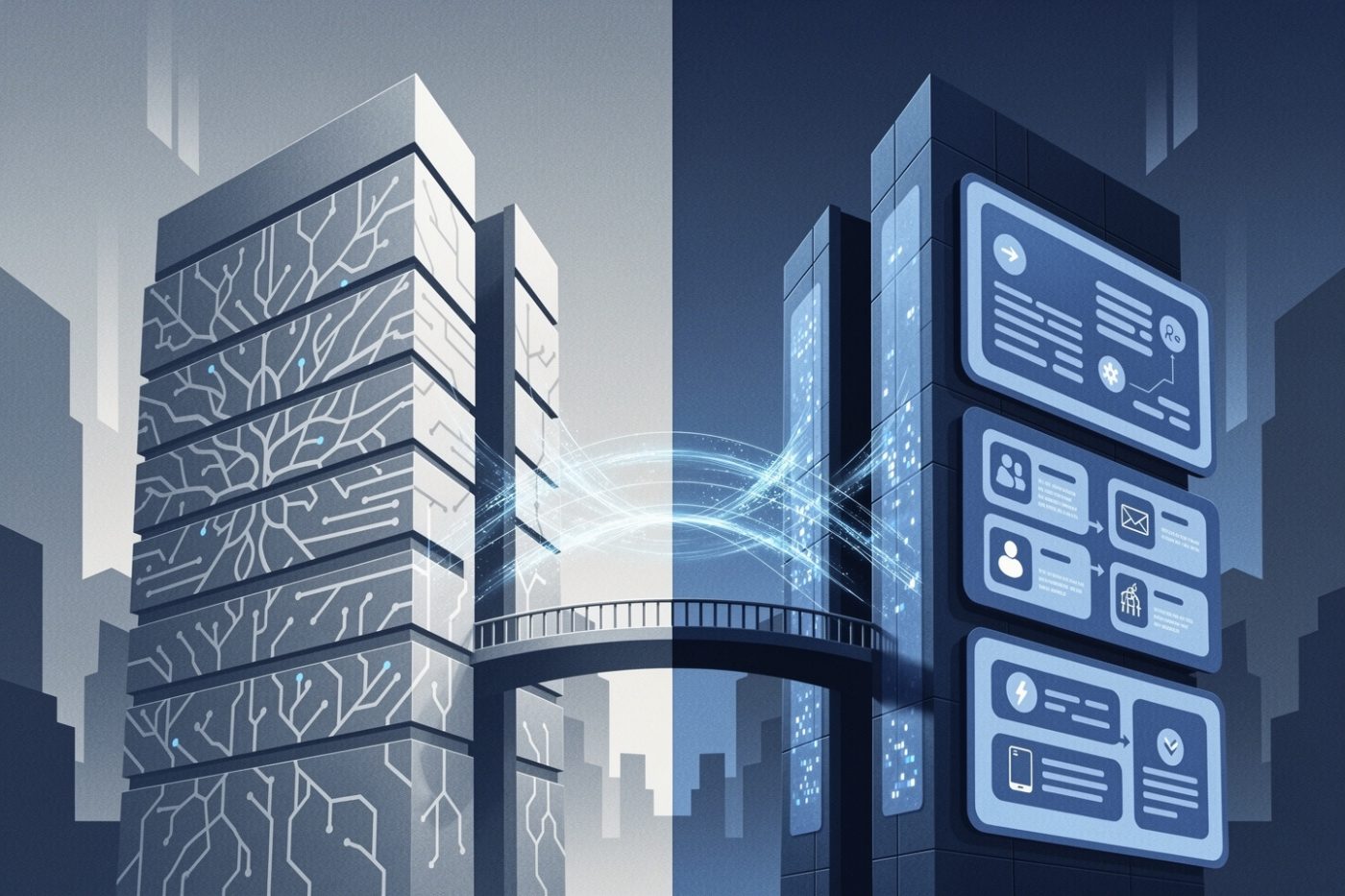
On October 17, 2024, Google announced a major internal reorganization that places the team behind its flagship consumer AI product, the Gemini app, directly under the umbrella of Google DeepMind. In a blog post, CEO Sundar Pichai confirmed the shift, signaling a strategic pivot to accelerate the development and deployment of generative AI technologies by merging product and research leadership. The move integrates the consumer-facing Gemini team into DeepMind, the company’s premier AI research division led by CEO Demis Hassabis. Sissie Hsiao, who previously led the Gemini product team, will now report directly to Hassabis, consolidating control over both foundational AI models and their real-world applications under a single technical leadership structure.
This reorganization is more than a bureaucratic reshuffle—it reflects a deliberate effort by Google to tighten the feedback loop between AI research and product deployment. For an international audience of executives, technologists, and AI specialists, the shift underscores a growing industry imperative: speed and integration are now critical in the race to deliver advanced AI at scale. By embedding the Gemini app team within DeepMind, Google aims to shorten the time between model innovation and consumer availability, a bottleneck that has historically slowed the commercialization of cutting-edge AI. The Gemini app, which serves as Google’s primary interface for its most advanced generative AI capabilities, is central to this strategy. Streamlining its development pipeline could allow faster iteration on features like multimodal reasoning, real-time information synthesis, and personalized assistance—capabilities increasingly demanded by users and enterprises alike.
Unifying Research and Product Under One Roof
The integration of the Gemini team into DeepMind represents a structural bet on convergence. Historically, AI research and product development at large tech companies have operated in parallel, sometimes with misaligned incentives and timelines. DeepMind, known for breakthroughs like AlphaFold and advanced reinforcement learning, has primarily focused on long-term, foundational research. Meanwhile, product teams like Gemini’s have worked to adapt those models for consumer use, often requiring additional training, safety checks, and interface design. By bringing these functions under one leadership chain, Google aims to eliminate friction in the development lifecycle.
Demis Hassabis, who co-founded DeepMind and has led it since its acquisition by Google in 2014, is now positioned to oversee both the creation of core AI models and their integration into user-facing products. This centralization could lead to more efficient post-training workflows, faster fine-tuning of models based on user feedback, and tighter alignment on safety and performance benchmarks. According to internal communications cited in media reports, the goal is to enable “faster deployment of new AI models into the Gemini app,” reducing the lag that once separated research milestones from product updates.
The move also reflects a broader industry trend. Companies like OpenAI and Anthropic have long operated with tightly coupled research and product teams, allowing rapid iteration based on real-world usage. Google’s reorganization suggests an acknowledgment that the era of siloed AI development is ending. For global AI leaders, the implication is clear: future competitiveness will depend not just on model capability, but on organizational agility.
Leadership Shifts and Strategic Realignment
Concurrent with the Gemini restructuring, Google announced a significant leadership transition in its Knowledge & Information division. Prabhakar Raghavan, a long-time executive who oversaw Search, Ads, and Commerce, is stepping into a new role as Chief Technologist, focusing on high-level technical strategy rather than day-to-day product management. His responsibilities will be assumed by Nick Fox, a veteran Google executive who will now serve as Senior Vice President of Knowledge & Information.
Raghavan’s shift to a more technical, less operational role is notable. It suggests a leadership philosophy that prioritizes deep technical expertise at the highest levels of decision-making. Raghavan, who holds a PhD in computer science and has been instrumental in integrating AI into Google Search, is expected to focus on long-term AI architecture and cross-product technical coherence. His move may also reflect a recalibration of priorities: as AI becomes more central to Google’s core offerings, technical depth is being elevated over traditional product management hierarchies.
Meanwhile, the Assistant teams responsible for voice-activated devices and smart home experiences are being transferred to the Platforms & Devices group. This move is designed to improve end-to-end user experience across hardware and software, particularly as AI assistants become more context-aware and proactive. By aligning these teams with device engineering, Google aims to create tighter integration between AI capabilities and physical interfaces—a critical step as ambient computing gains traction.
Competitive Pressures and the Generative AI Race
The timing of Google’s reorganization is no coincidence. The generative AI landscape has evolved rapidly since the launch of OpenAI’s ChatGPT in late 2022, forcing tech giants to rethink their AI strategies. Microsoft, through its partnership with OpenAI, has embedded advanced AI across its productivity suite. Meta has pursued an open-source model with Llama, gaining developer mindshare. Meanwhile, startups like Anthropic and Mistral are attracting significant investment and talent.
Google, despite its deep AI research heritage, has faced criticism for being slow to market with consumer-ready generative AI. Gemini, initially launched as Bard, had a rocky start, including a high-profile demo error that dented confidence. However, the company has made steady progress, particularly in integrating AI across Search, Workspace, and Android. The reorganization signals a renewed push to close the gap. By consolidating AI leadership under DeepMind, Google is effectively declaring that AI is no longer a feature—it is the foundation.
For enterprise users and developers, this shift could mean more consistent, reliable, and rapidly evolving AI tools. A unified DeepMind-led structure may also improve transparency in model updates and safety practices, which are increasingly important for business adoption. However, challenges remain. Integrating large research and product teams can lead to cultural friction, and the pressure to deliver consumer AI quickly may strain DeepMind’s traditionally methodical approach.
Industry Implications and What Comes Next
Google’s decision to merge the Gemini app team with DeepMind is more than an internal adjustment—it is a statement about the future of AI development. For global technology leaders, it highlights a growing consensus: to compete in the next phase of AI, companies must dissolve the barriers between research labs and product teams. The move positions Google to respond more nimbly to breakthroughs, whether in model efficiency, multimodal reasoning, or real-time personalization.
Looking ahead, the success of this reorganization will depend on execution. Can DeepMind scale its research rigor to meet the demands of a fast-moving consumer product? Can the Gemini team maintain innovation velocity without losing sight of safety and reliability? And will the broader leadership changes, including Raghavan’s new role, translate into clearer technical direction across Google’s vast product ecosystem?
While the full impact remains to be seen, the strategic direction is clear. Google is betting that the future of AI belongs not to the fastest coder or the most powerful model, but to the most integrated organization. As the global AI race intensifies, this move may prove to be a defining moment in Google’s evolution—from a company that uses AI to one that is fundamentally built on it.
Sources
- Google shifts Gemini app team to DeepMind
- Google shifts Gemini app team to DeepMind | Reuters
- Google merges Gemini with DeepMind | Digital Watch Observatory
- Exclusive: Google moves Gemini app team to DeepMind unit in latest reorg
- Changes across Knowledge & Information and Gemini app teams
Written by an AI editorial process from the sources above. Errors may occur.
Newsletter
Get the AI news that matters
One short brief with the day's most important AI stories — written for professionals.
We send a confirmation link. No spam. Unsubscribe anytime.
Read next
AI Accelerates Drug Discovery from Concept to Clinic
Artificial intelligence is slashing development timelines and costs in pharmaceutical R&D, with AI-designed drugs now entering clinical trials in record time.
27 Sep 2026
AI in Drug Discovery: From Target ID to Clinical Trials
Artificial intelligence is accelerating drug discovery, but clinical validation remains the final frontier.
24 Sep 2026
LLMs as Autonomous Agents: Rise and Security Risks
Large language models are evolving into autonomous agents capable of real-world actions, but their growing independence introduces critical security and accountability challenges.
22 Sep 2026