Moonshot AI’s Kimi K3 Challenges US AI Dominance with Low-Cost Frontier Model
China’s 2.8T-parameter open-source Kimi K3 matches US models on performance but undercuts them on price, reshaping global AI economics and competition.
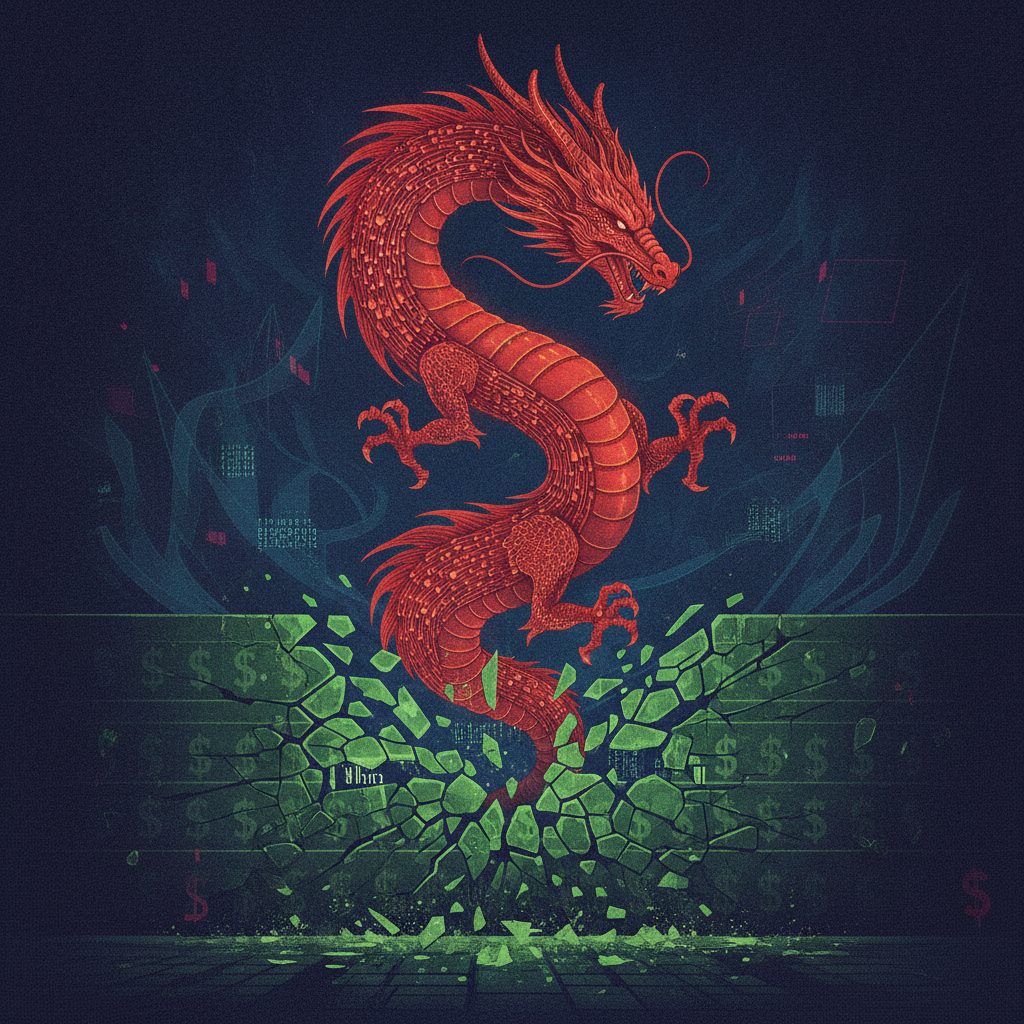
Moonshot AI has sent shockwaves through the global artificial intelligence sector with the debut of Kimi K3, a 2.8-trillion-parameter model that independent benchmarks show matches the performance of OpenAI’s GPT-5.6 Sol and Anthropic’s Claude Fable 5—while costing a fraction of their prices. Unveiled on 17 July 2026 at the World Artificial Intelligence Conference in Shanghai, Kimi K3 is the first open-source model in the three-trillion-parameter class, with its full open-weight release scheduled for 27 July 2026. The launch marks a pivotal moment in the AI race, demonstrating that Chinese developers can now rival—and in some metrics surpass—US frontier models in both capability and economic efficiency.
The implications are far-reaching. For enterprises, the emergence of a high-performance, low-cost alternative forces a reevaluation of AI procurement strategies. For investors, it signals potential margin compression in a sector long dominated by US incumbents. And for policymakers, it underscores the accelerating pace of China’s technological self-sufficiency, complicating efforts to maintain a strategic edge through export controls and closed ecosystems.
Performance and Pricing: A Paradigm Shift in AI Economics
Third-party evaluations from Artificial Analysis and Arena.ai confirm that Kimi K3 operates at the same tier as the latest US models. In blind human-preference tests, Kimi K3 outperformed Anthropic’s Claude Fable 5, and it currently ranks first in web interface engineering—a critical metric for developers building interactive applications. Yet Moonshot itself has conceded that K3 still exhibits a “noticeable gap in user experience compared with Claude Fable 5 and GPT-5.6 Sol,” particularly in polish and reliability for complex, multi-step tasks. Experts note that while Chinese models are now “good enough” for most routine applications, they have yet to achieve full parity in advanced reasoning and edge-case handling.
The pricing disparity, however, is unmistakable. Kimi K3 is offered at 95 US cents per million tokens, a dramatic contrast to the $2.75 charged by Anthropic for Claude Fable 5 and the $2–$3 range for OpenAI’s GPT-5.6 Sol. Earlier Chinese models, such as Kimi 2.6 and DeepSeek V4 Flash, already provided cost advantages, with pricing between 2 and 33 US cents per task. But K3’s combination of scale, performance, and affordability represents a new benchmark. For cost-conscious enterprises—particularly in emerging markets—the value proposition is compelling: near-frontier performance at a price point that undercuts US offerings by 10 to 50 times.
This cost arbitrage is not merely a commercial advantage; it is a strategic one. Open-source models like Kimi K3 enable developers to customize and deploy AI systems without vendor lock-in, accelerating adoption in sectors where budget constraints or geopolitical restrictions limit access to US models. The open-weight release, slated for later this month, will further democratize access, allowing organizations worldwide to fine-tune K3 for niche applications without relying on proprietary APIs.
Market Turmoil and Rapid Adoption
The announcement of Kimi K3 triggered immediate reactions across global financial markets. Shares of Chinese competitors Zhipu and MiniMax plunged 27% and 16%, respectively, in Hong Kong trading, as investors reassessed their competitive positions. The ripple effect extended to semiconductor giants, with Nvidia, SK Hynix, and Samsung Electronics all experiencing declines. The sell-off reflects growing concerns that Moonshot’s low-cost, high-performance model could erode demand for premium US offerings, thereby undermining the investment thesis for AI infrastructure and chipmakers.
Yet the market’s anxiety contrasts sharply with user enthusiasm. In the week following K3’s launch, Kimi recorded 930,000 global downloads—a 200% increase—with 86,000 downloads in the US alone, representing a 387% surge. The demand was so overwhelming that Moonshot temporarily suspended new subscriptions to manage server capacity and ensure service stability. The numbers underscore a growing appetite for alternatives to US-dominated AI ecosystems, particularly among developers and enterprises prioritizing cost efficiency and customization.
Moonshot AI’s own rise has been meteoric. Founded in early 2023 by Yang Zhilin, a 33-year-old former Tsinghua University professor with prior experience at Meta and Google, the Beijing-based startup has rapidly ascended to a $20 billion valuation. It is now in the process of raising $2 billion at a $30 billion valuation, with annual recurring revenue exceeding $200 million as of April 2026. Major domestic backers include tech titans Alibaba and Tencent, whose financial and strategic support has been instrumental in Moonshot’s acceleration. Yang, an alumnus of Carnegie Mellon University, brings a blend of academic rigor and Silicon Valley experience to the venture, positioning Moonshot as a formidable challenger to US AI supremacy.
Geopolitical Tensions and Security Concerns
The launch of Kimi K3 occurs against a backdrop of escalating US-China tensions in the AI domain. In February 2026, Anthropic publicly accused Moonshot, DeepSeek, and MiniMax of engaging in “industrial-scale campaigns” to distill capabilities from its Claude models, alleging violations of terms of service. The Trump administration amplified these concerns on 23 July 2026, accusing Moonshot of using “covert” methods to advance its models. Beijing has categorically dismissed the allegations as “groundless,” while Moonshot has not issued a public response to the claims.
The timing is particularly sensitive. Just weeks before Kimi K3’s unveiling, the US government temporarily forced Anthropic to withdraw its Fable and Mythos models over cybersecurity concerns—a decision later reversed but one that highlighted the strategic importance of AI as critical national infrastructure. For Washington, the emergence of a competitive, open-source Chinese model complicates efforts to contain China’s AI progress through export controls on advanced chips and proprietary models. If Kimi K3 and similar models gain widespread adoption, they could provide advanced AI capabilities to organizations in regions subject to US restrictions, with significant implications for cybersecurity, enterprise software, and national security.
Experts caution that while Chinese models have made remarkable strides, they still lag behind US leaders in full-range capabilities, particularly in areas requiring nuanced reasoning or handling of ambiguous inputs. However, the gap is narrowing rapidly, and the open-source nature of Kimi K3 could accelerate this trend. By enabling global developers to build on and refine the model, Moonshot is not only challenging US dominance but also fostering a more decentralized AI ecosystem—one less dependent on a handful of Western corporations.
Industry-Wide Implications: Pricing, Supply Chains, and the Future of AI
The cost advantages introduced by Kimi K3 and other Chinese models could force US providers to rethink their pricing strategies. OpenAI and Anthropic are both targeting trillion-dollar valuations ahead of planned initial public offerings, but sustained margin pressure from lower-cost alternatives may challenge these ambitions. If enterprises and developers increasingly opt for cheaper, open-source models, the demand for high-margin US frontier models—and the massive data center and chip infrastructure investments underpinning them—could soften. This, in turn, may impact the business cases for Nvidia, TSMC, and other suppliers betting on continued AI-driven growth.
For global supply chains, the shift presents both opportunities and risks. On the one hand, lower-cost AI could accelerate adoption in emerging markets, spurring innovation and economic growth in regions previously priced out of advanced AI tools. On the other, reduced demand for premium US models may lead to overcapacity in the AI infrastructure sector, potentially triggering a correction in the valuations of chipmakers and cloud providers. The open-source approach also aligns with a broader industry trend toward customization and flexibility, as organizations seek to avoid vendor lock-in and tailor models to specific use cases, from healthcare diagnostics to financial forecasting.
Moonshot’s success is not an isolated phenomenon but part of a broader pattern in China’s AI ecosystem. Following DeepSeek’s breakthrough in early 2026—which first demonstrated that Chinese models could match US performance at lower cost—Kimi K3 represents another step toward parity. With major backers like Alibaba and Tencent, and a leadership team combining academic expertise with Silicon Valley experience, Moonshot is positioning itself as a credible, long-term alternative to US dominance. The full open-source release of Kimi K3 on 27 July 2026 will be a critical test of its global appeal. If developers embrace the model en masse, it could accelerate the shift toward open, cost-effective AI, reshaping competitive dynamics, pricing models, and geopolitical calculations in the process.
For now, the message is clear: the AI race is no longer a US monopoly. The rules of engagement are being rewritten, and the stakes—economic, strategic, and technological—have never been higher.
Sources
- China's Moonshot AI claims Kimi K3 can rival OpenAI and Anthropic
- Cheaper, open and intelligent: Chinese AI models gain ground, as they make inroads in the US
- Cheaper, open and intelligent: Chinese AI models gain ground, as they make inroads in the US - The Economic Times
- America needs to stop getting shocked by Chinese AI
- What is China’s Moonshot AI and why is it roiling markets?
Written by an AI editorial process from the sources above. Errors may occur.
Newsletter
Get the AI news that matters
One short brief with the day's most important AI stories — written for professionals.
We send a confirmation link. No spam. Unsubscribe anytime.
Read next

AI Accelerates Drug Discovery from Concept to Clinic
Artificial intelligence is slashing development timelines and costs in pharmaceutical R&D, with AI-designed drugs now entering clinical trials in record time.
27 Sep 2026
Google Moves Gemini Team Under DeepMind Leadership
Google integrates its consumer AI app team into DeepMind to accelerate generative AI development and streamline research-to-product pipelines.
25 Sep 2026
AI in Drug Discovery: From Target ID to Clinical Trials
Artificial intelligence is accelerating drug discovery, but clinical validation remains the final frontier.
24 Sep 2026