Google’s AlphaGenome Atlas Lands While Gemini 3.5 Pro Lags
A free 1-petabyte portal from Google DeepMind now offers precomputed predictions for all 9 billion possible single-nucleotide variants, accelerating rare disease research. The launch contrasts with the still-missing flagship Gemini 3.5 Pro model.
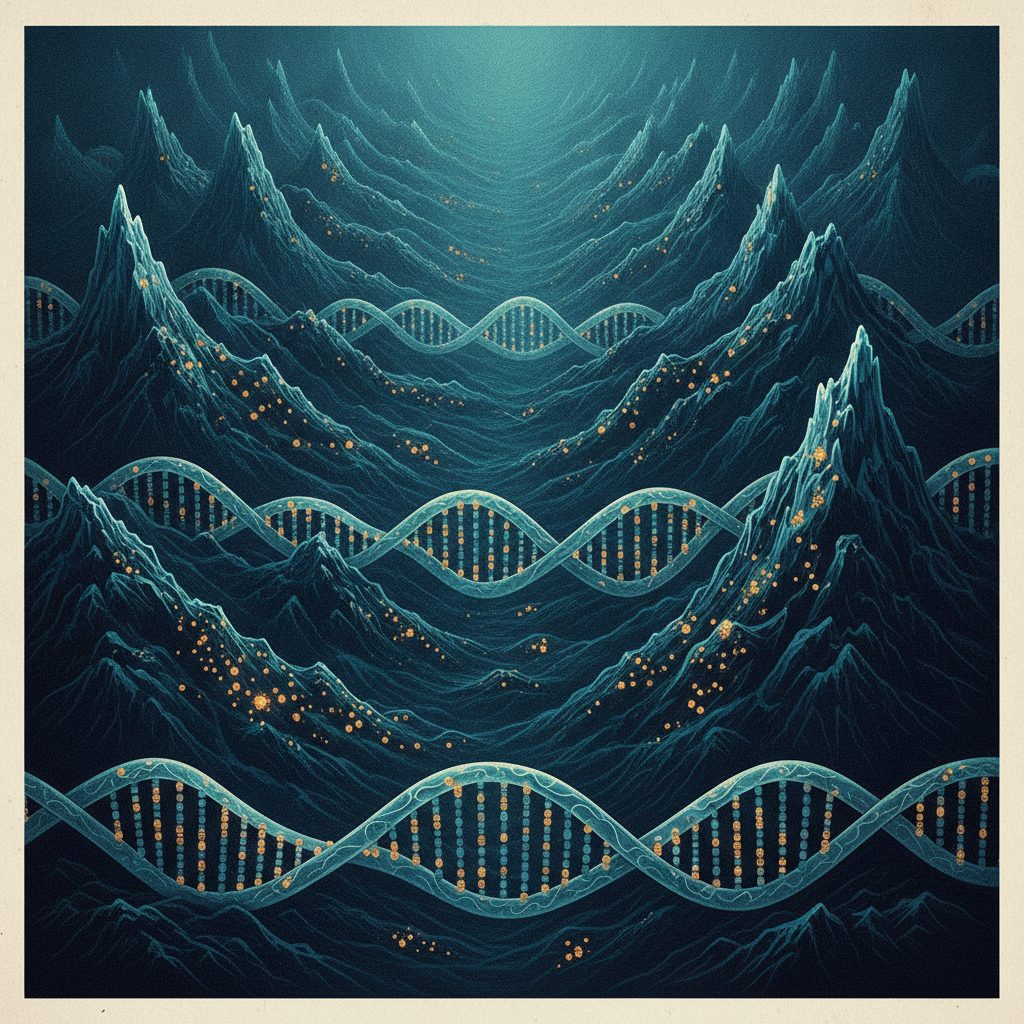
On September 8, 2026, Google DeepMind released AlphaGenome Atlas, a free, 1-petabyte research portal containing precomputed predictions for the molecular effects of all 9 billion possible single-nucleotide variants in the human genome. The launch did not dominate tech headlines the way a new consumer chatbot might, but for researchers working on rare diseases and drug discovery, it marked a major advance in open AI infrastructure.
The timing is significant. Google’s Gemini ecosystem in 2026 has been defined by two conflicting narratives. On one side, the company has shipped a wave of consumer and enterprise AI features—including Gemini 3.5 Flash, Gemini Omni Flash, and Gemini Spark—that keep it competitive in everyday productivity and multimodal AI. On the other, its flagship Gemini 3.5 Pro model remains unreleased months after its expected June 2026 launch, allowing rivals Anthropic and OpenAI to hold the high-end model lead. For executives and founders, that delay signals a potential strategic vulnerability in Google’s AI dominance, impacting decisions on AI platform partnerships. For specialists in biotech, healthcare, and life sciences, AlphaGenome Atlas is a transformative, open-access tool that can dramatically accelerate research into genetic diseases and drug discovery, representing a major leap in AI’s application to foundational science.
A 1-petabyte atlas of human genetic variation
AlphaGenome Atlas is not a small research dataset. It is a 1-petabyte, free-to-use portal that provides precomputed predictions for the molecular effects of all 9 billion possible single-nucleotide variants in the human genome. According to Google DeepMind and coverage from The Verge, Nature, Releasebot, and MarkTechPost, the atlas is more than 30 times larger than the AlphaFold Database, which itself transformed protein structure prediction. The scale means researchers no longer need to run expensive computations for each variant of interest; they can query a precomputed result and move directly to interpretation.
AlphaGenome Atlas is more than 30 times larger than the AlphaFold Database.
Central to the release is the AlphaGenome Variant Impact (AVI) score, a single number designed to rank the likely impact of a genetic variant, as reported by Nature and MarkTechPost. That simplicity is powerful. Instead of parsing multiple complex outputs, a researcher can use the AVI score to prioritise variants that may be causal for rare diseases or complex traits. Single-nucleotide variants are the most common type of genetic variation, and understanding their effects is central to precision medicine. The tool is aimed squarely at accelerating the identification of disease-causing mutations and, by extension, drug discovery. MarkTechPost and other AI research outlets have highlighted the AVI score as a practical bridge between raw genomic data and clinical or experimental follow-up.
Consumer and enterprise updates at I/O 2026
While AlphaGenome Atlas targets the scientific community, Google’s May 19, 2026, I/O conference delivered a broad set of consumer and enterprise updates. The most visible change was the launch of Gemini 3.5 Flash, which became the default model for the Gemini app and Google Search. The model offers improved speed, stronger agentic task handling, and better coding capabilities, according to The Verge. Alongside the model, Google introduced a “neural expressive” redesign for the Gemini app, aiming to make interactions feel more natural and responsive.
Google also expanded its multimodal and agentic portfolio. Gemini Omni Flash can generate video from text, images, and audio inputs, putting Google in direct competition with other generative video tools. Gemini Spark is an always-on AI agent designed to handle background tasks in Google Workspace, such as monitoring documents, summarising changes, or preparing updates without constant user prompting. A new AI-powered image editor called Pics allows users to make iterative edits through natural-language comments, rather than manual adjustments. These features signal a clear push to embed Gemini more deeply into daily workflows.
- Gemini 3.5 Flash — default model for the Gemini app and Search, with improved speed and coding.
- Gemini Omni Flash — video generation from text, images, and audio.
- Gemini Spark — always-on agent for background tasks in Workspace.
- Pics — AI image editor with comment-based iterative edits.
The missing flagship: Gemini 3.5 Pro delay
For all the consumer momentum, Google’s most advanced model remains absent. Gemini 3.5 Pro, the expected flagship, was slated for a June 2026 release but has not yet been made public, according to reporting from Bind AI and Releasebot. Axios and Bloomberg have confirmed the delay, which has now stretched well beyond the original window—by some counts, more than 67 days past the anticipated launch. That gap matters because the high-end model market is where enterprise customers evaluate long-term AI partnerships, and where developer mindshare is won or lost.
The delay has allowed Anthropic and OpenAI to maintain their lead in top-tier AI model performance, raising investor concerns about Google’s competitiveness. For global enterprises deciding which foundation model to build on, the absence of a current flagship can push evaluations toward competitors. Google’s consumer and mid-tier models are strong, but the flagship gap creates uncertainty about the company’s ability to execute at the frontier.
Strategic implications for research and enterprise AI
For an international professional audience, these developments carry distinct implications. AlphaGenome Atlas and the Gemini 3.5 Pro delay represent two very different kinds of strategic signal. The Atlas is an open, public-good infrastructure play. By making 1 petabyte of precomputed genomic predictions free to use, Google DeepMind is positioning itself as a foundational layer for the life sciences—an area where AI’s commercial value is enormous but where open access can accelerate the entire field. For biotech startups, academic labs, and pharmaceutical companies, the tool lowers the cost of exploring genetic variants by orders of magnitude, potentially compressing years of computational work into days of querying.
Sources
- Google Gemini New Features 2026 — The Update That Quietly Changed ...
- Gemini Updates & Release Notes
- The 13 biggest announcements at Google I/O 2026
- Gemini 3.5 Pro Still Missing at 67 Days, Rivals Gain [2026]
- Gemini 2.5 Flash Preview 09-2025 by Google on Vercel AI Gateway, Specs, Pricing & API
Written by an AI editorial process from the sources above. Errors may occur.
Newsletter
Get the AI news that matters
One short brief with the day's most important AI stories — written for professionals.
We send a confirmation link. No spam. Unsubscribe anytime.
Read next

AI Accelerates Drug Discovery from Concept to Clinic
Artificial intelligence is slashing development timelines and costs in pharmaceutical R&D, with AI-designed drugs now entering clinical trials in record time.
27 Sep 2026
Google Moves Gemini Team Under DeepMind Leadership
Google integrates its consumer AI app team into DeepMind to accelerate generative AI development and streamline research-to-product pipelines.
25 Sep 2026
AI in Drug Discovery: From Target ID to Clinical Trials
Artificial intelligence is accelerating drug discovery, but clinical validation remains the final frontier.
24 Sep 2026