AI Drug Discovery Faces Pivotal 2026 as Clinical Validation Lags Market Growth
Efficiency gains and pharma partnerships are accelerating, but no AI-discovered drug has yet won full FDA approval—making 2026 a critical test of clinical value.
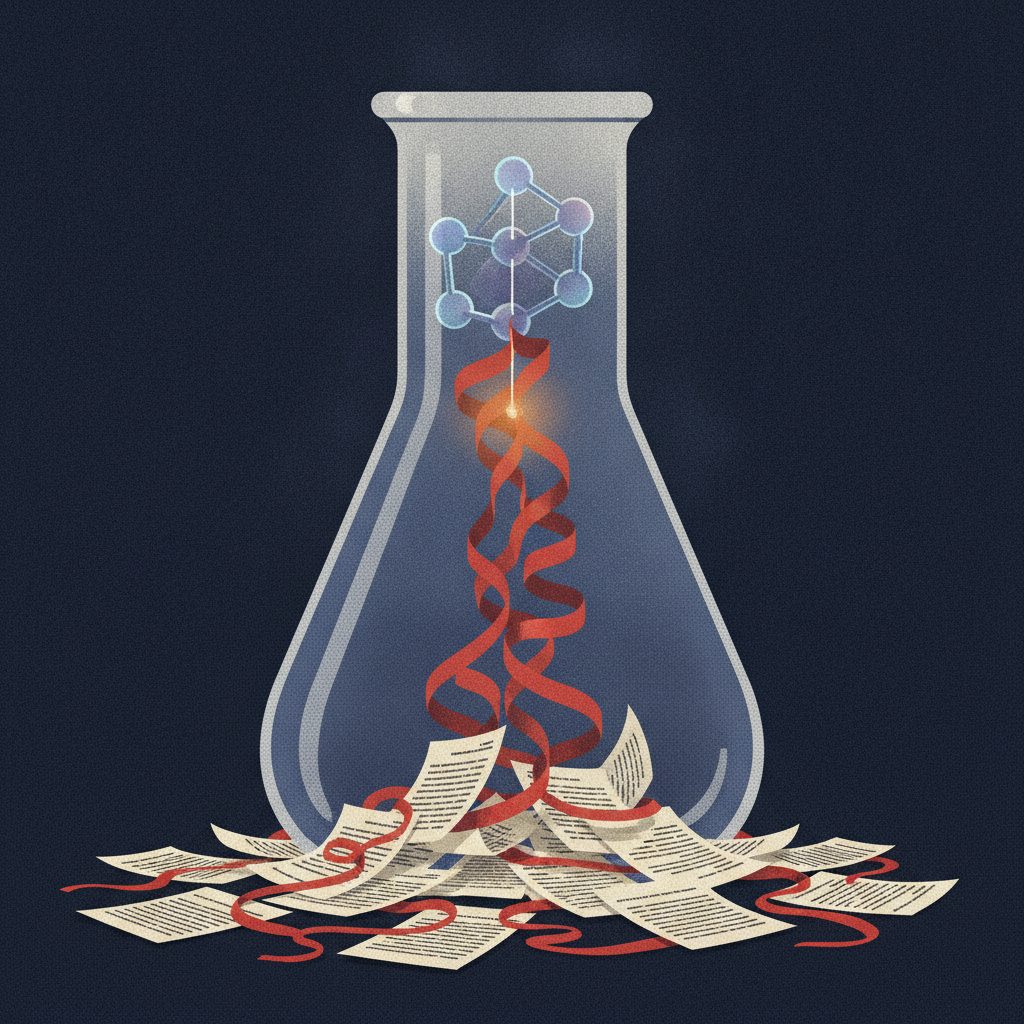
The artificial intelligence-driven drug discovery market is expected to be worth between $3.25 billion and $6.16 billion in 2026, with some projections reaching $10 billion. But for many biopharma executives, the more consequential number is still zero: as of early 2026, no AI-discovered drug has received full approval from the U.S. Food and Drug Administration.
That tension — between rapid commercial growth and unproven clinical success — makes 2026 a pivotal year for AI in early-stage drug development. The technology is compressing timelines and improving hit rates in ways that were impossible a decade ago. Yet the industry’s ultimate promise is not faster discovery alone, but better drugs that survive late-stage trials and reach patients. For founders and executives, the question is whether current AI platforms can clear the biological and regulatory hurdles that have historically separated computational promise from clinical reality.
Measurable Efficiency Gains Are Now Standard
The operational case for AI in drug discovery has strengthened considerably. AI-enabled workflows are now compressing early discovery timelines by 30–40%, reducing preclinical candidate development to 13–18 months compared with the traditional three to four years. In antibody design, hit rates have improved to 16–20%, versus roughly 0.1% for older computational methods, according to industry data.
These gains are attracting large-scale capital and partnerships. In March 2026, Insilico Medicine secured a $2.75 billion collaboration with Eli Lilly, building on its progress with zasocitinib, a psoriasis drug originally developed via Schrödinger’s platform and now in Phase III trials in partnership with Takeda. In April 2026, Novo Nordisk announced a partnership with OpenAI to apply AI across research, development and manufacturing. Google DeepMind’s Isomorphic Labs is engaged in a multi-target partnership with Johnson & Johnson, signalling that major pharmaceutical companies now treat AI as an integrated component of discovery rather than an isolated tool.
Clinical Validation Remains the Central Bottleneck
Despite the operational momentum, the clinical record is still thin. More than 170 AI-originated drug programs are in clinical development as of early 2026, but none has crossed the finish line to full FDA approval. Drug development overall still takes 12–15 years on average and costs approximately $2.6 billion per approved drug. AI has so far accelerated the front end of that process, not the expensive, high-risk later stages.
Part of the challenge is that early-stage metrics do not automatically translate into late-stage success. A higher hit rate in antibody design or a shorter preclinical timeline does not guarantee that a candidate will show efficacy and safety in human trials. The industry has seen AI-generated molecules enter clinical testing, but the attrition curve beyond Phase II remains largely unchanged. Until an AI-discovered therapy demonstrates a clear advantage in a registrational trial, the clinical value proposition will remain under scrutiny.
Critics argue that biological validation, not computational prediction, is the real bottleneck. Generative models can propose molecules that are difficult to synthesise or inactive in vivo. Pelago Bioscience, a contract research organisation that uses the CETSA platform to measure target engagement, frames the challenge bluntly: “biology still kingmaker.” The company’s position reflects a broader industry view that AI excels at hypothesis generation and prioritisation, but experimental confirmation remains the decisive test.
This does not diminish the value of AI, but it does reset expectations. A molecule that looks promising in silico may fail when confronted with the complexity of human biology. The companies most likely to succeed in 2026 are those that pair computational predictions with rigorous, early experimental validation rather than treating AI as a substitute for it.
Regulatory and Investment Pressures Are Converging
Regulatory frameworks are also maturing. The FDA’s draft guidance on AI in drug development is expected to be finalised in 2026, creating clearer expectations for how sponsors should validate AI-generated evidence. In the European Union, the high-risk provisions of the EU AI Act take effect on 2 August 2026. Most early discovery tools may fall outside the highest-risk categories, but the direction is clear: AI applications that influence patient safety or regulatory decisions will face increasing scrutiny.
Sources
- AI in drug discovery: predictions for 2026 | Opinion - Drug Target Review
- 2026: An AI tipping point for drug discovery - Drug Discovery World (DDW)
- A Short Overview of AI Trends in Drug Discovery - 2026+
- New tools and tougher economics will define drug discovery in 2026 | Drug Discovery News
- AI drug discovery in 2026: faster hypotheses, but biology ...
Written by an AI editorial process from the sources above. Errors may occur.
Newsletter
Get the AI news that matters
One short brief with the day's most important AI stories — written for professionals.
We send a confirmation link. No spam. Unsubscribe anytime.
Read next
AI Accelerates Drug Discovery from Concept to Clinic
Artificial intelligence is slashing development timelines and costs in pharmaceutical R&D, with AI-designed drugs now entering clinical trials in record time.
27 Sep 2026
Google Moves Gemini Team Under DeepMind Leadership
Google integrates its consumer AI app team into DeepMind to accelerate generative AI development and streamline research-to-product pipelines.
25 Sep 2026
AI in Drug Discovery: From Target ID to Clinical Trials
Artificial intelligence is accelerating drug discovery, but clinical validation remains the final frontier.
24 Sep 2026