2026 AI Developer Tools: Closing the 78-Point Security Gap
A Checkmarx analysis finds 96% of developers use AI coding tools but only 18% apply continuous security, driving a shift toward autonomous, self-healing fixes inside the IDE.
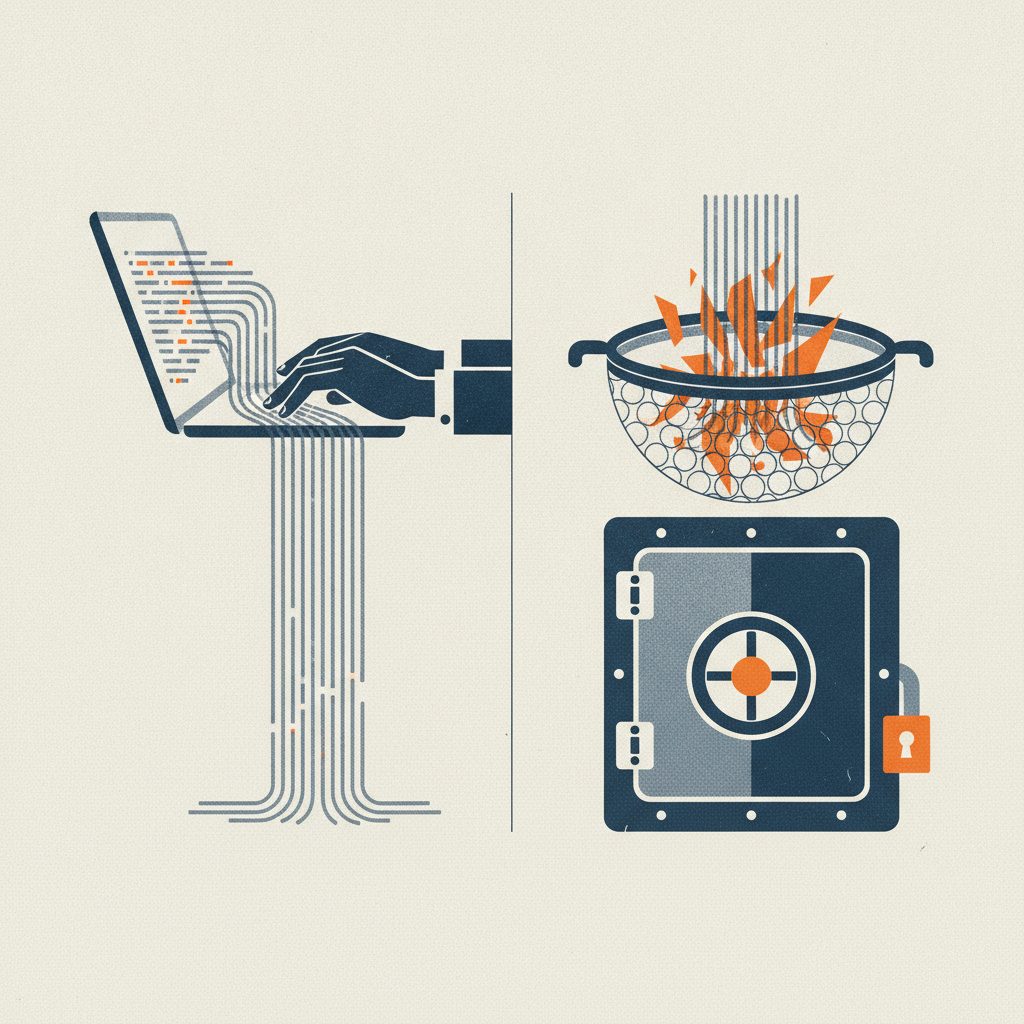
The 2026 AI developer tool landscape is defined by the integration of autonomous security agents into coding workflows, a response to the widespread adoption of AI coding assistants. A March 2026 analysis by Checkmarx, titled "Top 12 AI Developer Tools in 2026 for Security, Coding and Quality," identifies a critical gap: 96% of developers now use AI tools such as GitHub Copilot, but only 18% apply continuous security to the code those tools produce. That 78-percentage-point gap is driving a shift from passive code generation to active, self-healing application security.
The shift matters because the velocity of AI-assisted development has outpaced traditional security review. A Checkmarx-commissioned study of frontier models found that they produce working code 83–95% of the time, but only 24–36% of that code is both secure and functional. For organisations shipping software globally, this means a large share of AI-generated code may pass functional tests yet still carry vulnerabilities. The tools that succeed in 2026 are those that close this gap inside the developer's inner loop, before code is committed.
The security gap behind the shift
The numbers are unusually specific. Checkmarx's March 2026 analysis points to a 78-percentage-point gap between AI tool adoption and continuous security practice. In other words, nearly all developers use AI to write code, but fewer than one in five apply ongoing security checks to what those tools produce. The result is a growing volume of code that may be syntactically correct but not secure.
The Checkmarx-commissioned study adds a second layer. Frontier AI models generate working code 83–95% of the time, yet only 24–36% of that code is both secure and functional. This means a developer can see a successful build or passing test and still be shipping vulnerabilities. Traditional security reviews, which often happen late in the development cycle, are too slow for the pace of AI-assisted coding. The gap is not a marginal inefficiency; it represents a structural mismatch between how code is now produced and how it is secured.
Frontier AI models produce working code 83–95% of the time, but only 24–36% of that code is both secure and functional.
This mismatch is the core problem that the 2026 tool landscape is trying to solve. The answer, according to Checkmarx and other vendors in the space, is not to slow down AI adoption but to embed security into the same tools developers already use.
The agentic response: self-healing in the IDE
The most prominent example of this shift is Checkmarx One Assist, which Checkmarx positions as a top tool for 2026. Its Developer Assist agent operates pre-commit within integrated development environments such as Cursor and Visual Studio Code. When it detects a vulnerability, it generates a fix and verifies that fix before the code is committed. Checkmarx describes this as an autonomous "self-healing" capability, detailed in its press release "Checkmarx Unveils Self-Healing Application Security in Assist Agent Family."
This is a significant change from earlier security tools. Instead of flagging issues for a human to fix later, the agent acts within the developer's workflow. The fix is generated, tested, and confirmed at the point where the code is written. That reduces the time between vulnerability introduction and remediation, and it keeps the developer in the loop without requiring them to leave the IDE. For global engineering teams, this matters because it allows security to scale with AI-generated code. If only 24–36% of AI-generated code is both secure and functional, the majority of outputs require some correction. An agent that verifies its own fixes before commit is one way to maintain velocity without accepting hidden risk.
The broader 2026 tool stack
Beyond security agents, the 2026 landscape includes specialised tools across coding, review, testing, and documentation. Checkmarx's analysis identifies several leaders in each category:
- Code assistants: GitHub Copilot and Tabnine. Copilot offers deep IDE integration, while Tabnine emphasises privacy and flexibility in choosing large language models.
- Code review and analysis: CodeScene and Qodana, the latter from JetBrains, provide AI-powered code analysis beyond simple linting.
- Testing and quality automation: testRigor and LambdaTest are highlighted for AI-driven test generation and execution.
- Documentation: Document360, Mintlify, and GitBook use AI to generate and maintain content. GitBook is noted for its bidirectional Git sync and MCP analytics.
This list reflects a broader trend: AI is no longer confined to autocomplete. It now spans the entire software delivery lifecycle, from writing code to reviewing it, testing it, and documenting it. The tools that stand out in 2026 are those that integrate deeply with existing developer environments rather than requiring separate workflows. GitHub Copilot and Tabnine, for example, are not just code generators; they are becoming platforms for embedding additional capabilities, including security checks. Similarly, CodeScene and Qodana move code review from a periodic human activity to a continuous, AI-assisted process.
Implications and remaining risks
The shift to autonomous security agents is not without caveats. The Checkmarx analysis is, in part, a vendor's perspective, and the effectiveness of self-healing fixes depends on the quality of the underlying models and the accuracy of vulnerability detection. A fix that passes the agent's own verification may still introduce new issues or fail in edge cases. Organisations should treat these tools as a first line of defence, not a replacement for security review and penetration testing.
There is also category confusion in the market. A separate list circulated on Facebook in early 2026 under the title "Top 12 AI Tools You Need to Try in 2026" includes general-purpose tools such as ChatGPT, Midjourney, and Canva AI alongside coding tools. This conflation of general AI with developer-specific tooling can mislead decision-makers about what actually addresses security and code quality. For professionals evaluating tools, the distinction between a content generator and a pre-commit security agent is critical.
For international teams, the practical takeaway is that the inner development loop has become the new security perimeter. Tools like Checkmarx One Assist, GitHub Copilot, and Qodana are not just productivity aids; they are becoming the place where security policy is enforced. The risk is that organisations adopt AI coding assistants without the corresponding continuous security layer, leaving a large volume of AI-generated code unverified. That risk is particularly acute for distributed teams, where code may be written in one region, reviewed in another, and deployed globally without a consistent security checkpoint.
Looking ahead, the 2026 tool landscape suggests that the next wave of AI developer tools will be judged less on how much code they can generate and more on how reliably they can secure that code before it reaches production. The gap between 96% adoption and 18% continuous security is unlikely to persist if enterprises face real breaches or compliance failures. Expect autonomous security agents to become a standard feature of AI coding platforms, with verification and remediation embedded directly into commit workflows. The tools that win will be those that make security invisible to the developer but visible to the organisation.
Sources
- Top 12 AI Developer Tools in 2026 for Security, Coding ...
- Top 12 AI Tools You Need to Try in 2026 From content ...
Written by an AI editorial process from the sources above. Errors may occur.
Newsletter
Get the AI news that matters
One short brief with the day's most important AI stories — written for professionals.
We send a confirmation link. No spam. Unsubscribe anytime.
Read next
AI Coding Assistants in 2026: From Autocomplete to Autonomous Agents
Engineering teams now mix specialized assistants—Copilot, Cursor, Claude Code, Replit, and Qodo—across the delivery pipeline, weighing capability against token costs.
14 Sep 2026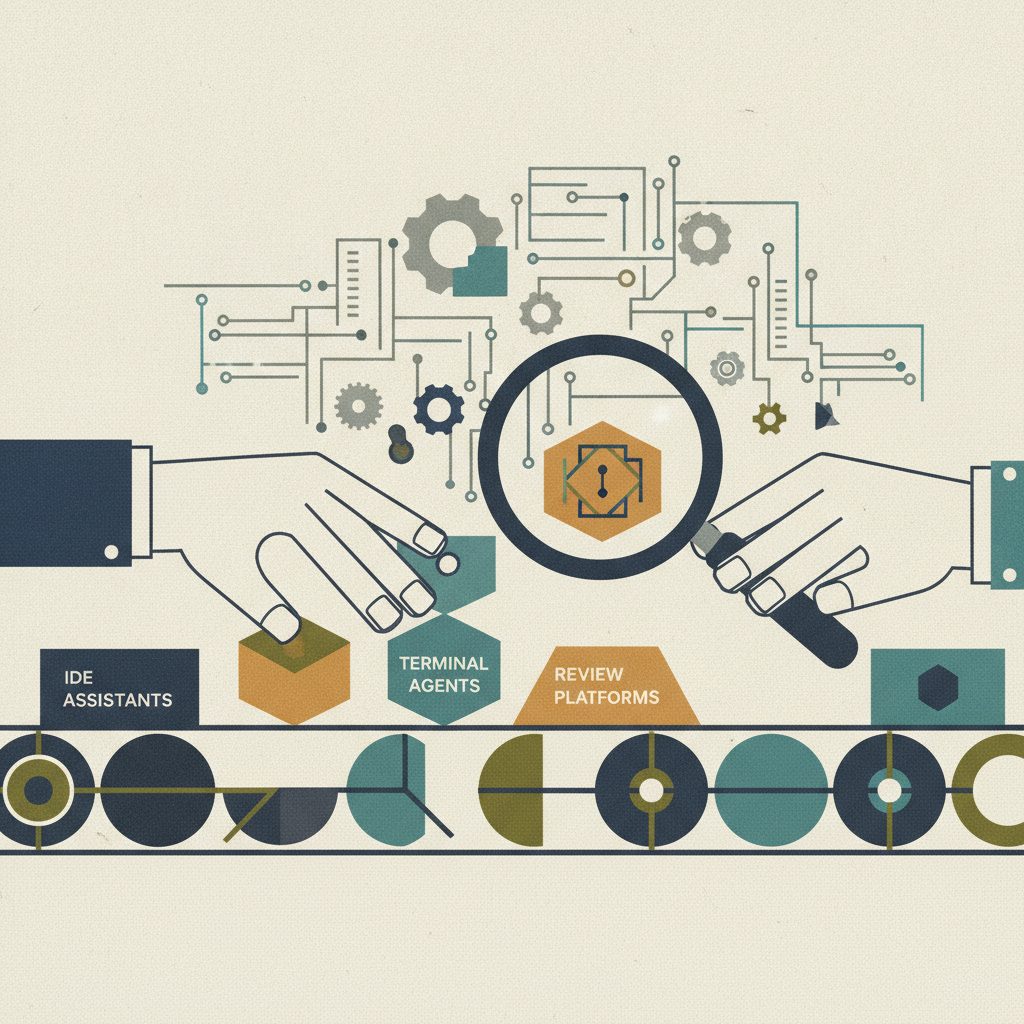
AI Coding Assistants in 2026: No Single Tool Wins
Adoption is mainstream, but high-performing teams now layer IDE assistants, terminal agents, and review platforms instead of betting on one universal tool.
11 Sep 2026
LLM Benchmarks in 2026: The 7 Evaluations That Matter
As MMLU saturates, model selection now depends on harder, contamination-resistant evals—from GPQA to SWE-bench Pro. Here are the seven benchmarks and evaluation strategies that define frontier AI in 2026.
6 Sep 2026