AI Coding Assistants in 2026: From Autocomplete to Autonomous Agents
Engineering teams now mix specialized assistants—Copilot, Cursor, Claude Code, Replit, and Qodo—across the delivery pipeline, weighing capability against token costs.

In 2026, AI coding assistants have shifted from autocomplete tools to autonomous agents that can plan, write, test, and deploy software from natural language prompts. Replit AI, for example, lets a user build, test, and ship a full-stack application entirely from a browser workspace. It is one of several platforms—alongside GitHub Copilot, Cursor, Claude Code, and Qodo—that now serve distinct roles across the software development lifecycle.
The change is not marginal. Qodo's research shows 88.3% of engineering teams now use AI coding tools regularly, up from 72% in early 2024. That level of adoption makes tool selection a business decision affecting delivery speed, token budgets, and code quality. Engineering leaders can no longer treat these assistants as interchangeable utilities.
From autocomplete to autonomous agents
Two years ago, AI coding tools mostly suggested the next few characters or lines. In 2026, leading assistants operate in agent mode, handling multi-file tasks, reasoning through complex debugging, and orchestrating deployment steps. GitHub Copilot, for instance, offers an agent mode for multi-file work while remaining integrated with GitHub and mainstream IDEs. Claude Code, often accessed through Zemith or Cline, is known for complex reasoning and debugging, supported by a context window of 1 million tokens. Replit AI pushes further toward full autonomy: a browser-based workspace where a user describes an app in plain language, then iterates, tests, and deploys without leaving the environment.
This shift has changed the definition of a coding assistant. In 2024, the central question was whether AI could help write code. In 2026, the question is which assistant can be trusted with a larger share of the delivery pipeline—and at what cost.
The 2026 landscape: five platforms compared
The major platforms now differentiate by role rather than competing on identical features. Current pricing and positioning include:
- GitHub Copilot — from $19 per user per month for Business. It integrates deeply with GitHub and mainstream IDEs, offering autocomplete and agent mode for multi-file tasks.
- Cursor — from $20 per month. An AI-native editor praised for its flow and repository-wide context, though users have criticized rising costs and limitations in large refactors.
- Claude Code — around $20 per month, often accessed through Zemith or Cline. It excels in complex reasoning and debugging, leveraging a 1 million token context window, but requires terminal or chat use rather than a full graphical IDE.
- Replit AI — free Starter tier, with Core plans from $20 per month. It enables full-stack app development, testing, and deployment from a browser workspace, making it especially attractive for prototyping and non-technical builders, though full backend functionality requires a paid plan.
- Qodo — team plans from $30 per user annually. It focuses on code review and quality, helping teams enforce standards during pull requests.
These subscription prices are only a starting point. The real cost increasingly depends on token consumption, especially for teams running large codebases or frequent agent-driven tasks. A tool with a low monthly fee can become expensive if its agent mode consumes tokens on repetitive or poorly scoped work.
The real trade-offs: polish, control, and cost
Industry analysts and developer communities describe the choice as a set of trade-offs rather than a simple ranking. Cursor is praised for a polished interface and repository-wide context, but users have criticized rising costs and limitations in large refactors. Cline and Aider, by contrast, offer model flexibility and customization, but that flexibility requires setup complexity many teams do not want to manage.
Cost efficiency and token usage are growing concerns, particularly at enterprise scale. A tool that performs well on a small project may become unpredictable across hundreds of repositories. As a result, many organizations are moving away from a single "best" assistant and toward a portfolio approach: one tool for daily IDE work, another for deep reasoning or debugging, and a third for code review and quality enforcement.
How teams are choosing in practice
For international professionals and distributed teams, the choice depends on workflow. Teams that live inside GitHub and mainstream IDEs often default to Copilot because of native integration. Teams facing hard debugging problems or complex architectural reasoning may prefer Claude Code despite its terminal-based interface. Founders and non-technical builders who need to go from idea to deployed application quickly often choose Replit AI, though full backend functionality requires a paid plan. Engineering organizations that prioritize standards during pull requests are turning to Qodo for code review.
This segmentation explains why a multi-tool strategy is now common. A developer might use Copilot inside an IDE for routine work, switch to Claude Code for a difficult bug, and rely on Qodo to review the final pull request—all within the same day. The assistant is no longer a single product but a layer of specialized capabilities that teams assemble according to their delivery pipeline.
Looking ahead, the next wave of AI coding assistants will likely be judged less on raw capability and more on cost per successful task. As token usage rises and enterprises demand predictable budgets, tools that deliver reliable results without excessive token consumption will gain an edge. The era of trying one assistant and declaring it the winner is over. In 2026, the most effective engineering organizations are those that understand the strengths, limits, and hidden costs of each tool—and use them together deliberately.
Sources
- Best AI Coding Assistants 2026: Dev Guide - Replit
- Best AI Coding Assistant in 2026: Complete Guide for Developers | Zemith.com
- 14 AI Coding Assistant Tools, Tested Across Real Workflows
- The Best AI Coding Assistants: 20 Tools Reviewed for 2026 - Axify
- Best AI Coding Agents for 2026: Real-World Developer Reviews
Written by an AI editorial process from the sources above. Errors may occur.
Newsletter
Get the AI news that matters
One short brief with the day's most important AI stories — written for professionals.
We send a confirmation link. No spam. Unsubscribe anytime.
Read next

AI Coding Assistants Reshape Software Development
AI-powered tools are transforming how developers write code, boosting productivity but raising concerns about security, licensing, and code quality.
2 Oct 2026
Alibaba Opens Access to Advanced AI Video Generation Model
Alibaba Cloud has made its Wan 2.1 multimodal model publicly available, enabling global developers to generate high-quality video and images through open-source tools.
1 Oct 2026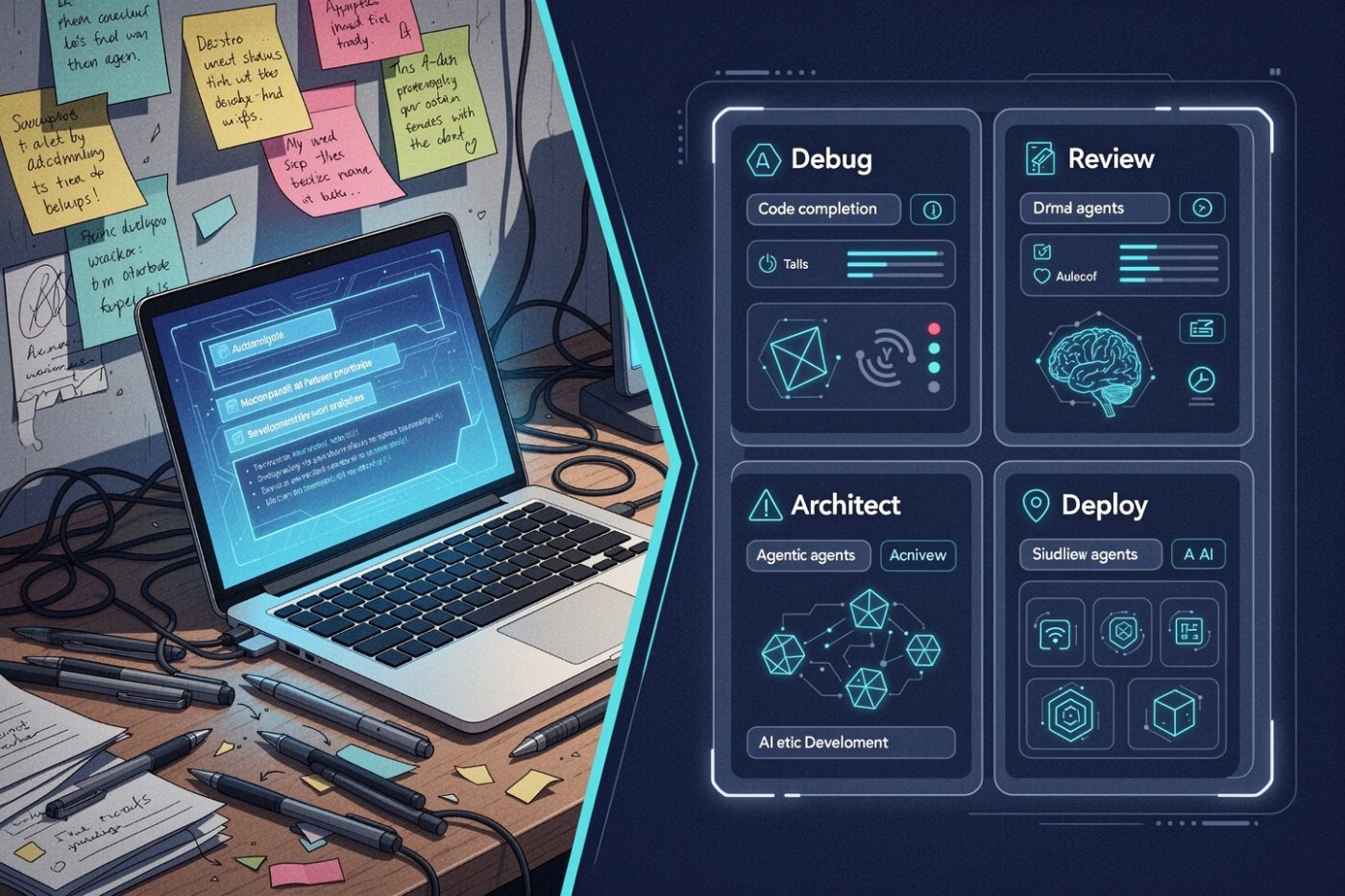
AI Coding Assistants in 2026: Beyond Autocomplete
As benchmarks reveal stark performance gaps, enterprises shift from single tools to specialized AI coding workflows focused on autonomy and trust.
28 Sep 2026