US restricts OpenAI’s GPT-5.6 release to vetted partners
OpenAI agrees to limit initial access to its latest AI models under a new White House executive order, raising global concerns over fragmented AI deployment.
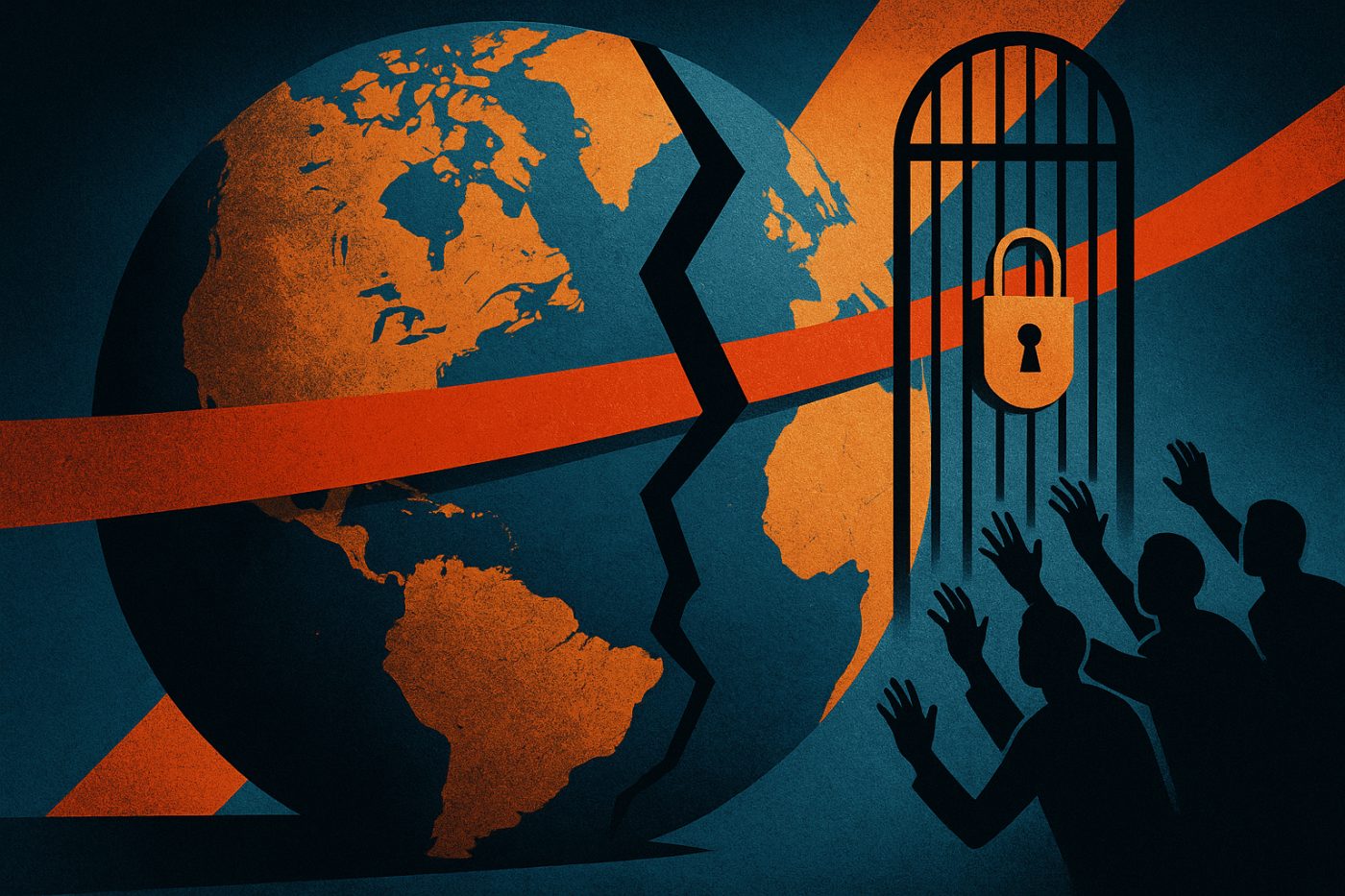
In an unprecedented move, OpenAI has agreed to restrict the initial release of its new GPT-5.6 series to a select group of US government-approved partners, marking the first time a leading AI developer has been compelled to limit access to a model before its launch. The decision, announced on June 26, 2026, follows a White House executive order establishing voluntary federal reviews for advanced AI systems, and comes just weeks after rival firm Anthropic was ordered to block all foreign nationals from accessing its latest models.
For global executives and AI specialists, the implications are immediate and far-reaching. Access to cutting-edge AI tools is now subject to geopolitical approval, creating new supply chain risks and operational uncertainties for multinational corporations that rely on these systems for cybersecurity, software development, and other mission-critical functions.
Unprecedented US Government Intervention in AI Deployment
OpenAI’s GPT-5.6 series—comprising the high-capability models Sol, Terra, and Luna—will enter a US-only preview phase, with access strictly limited to partners vetted by federal authorities. The company confirmed it briefed the government ahead of the June 26 launch to avoid a total ban, arguing that this "short-term" restriction would enable broader availability faster than an outright prohibition. The Trump administration’s executive order, signed earlier in June, formalized a voluntary review process for AI models deemed to pose national security risks, particularly those capable of identifying zero-day software vulnerabilities that previous generations could not detect.
The concern centers on the "unprecedented ability" of these new models to uncover critical software flaws, which, if exploited by malicious actors, could compromise infrastructure, defense systems, or corporate networks. This capability represents a significant leap from earlier iterations, prompting the government to seek preemptive controls. The order does not mandate compliance but establishes a framework under which non-participation could invite stricter measures.
This is not the first such restriction. In early June 2026, Anthropic was ordered to block all foreign nationals from accessing its Fable 5 and Mythos 5 models, a move critics argue was politically motivated. The company had previously refused Pentagon contracts related to mass surveillance and autonomous weapons, and it is now engaged in legal disputes with the US Department of Defense over the canceled agreements. The timing of the Anthropic order—just weeks before OpenAI’s own restrictions—suggests a coordinated shift in US policy toward tighter control of advanced AI dissemination.
Industry Pushback and the Fragmentation of Global AI Access
OpenAI has publicly expressed discomfort with the new process, warning in an official statement that "this kind of government access process should not become the long-term default." The company emphasized that restricting access deprives global partners and cybersecurity defenders of critical tools needed to counter emerging threats. The tension underscores a growing friction between national security imperatives and the inherently global nature of AI development, where collaboration across borders has long been a driver of innovation.
Nathan Benaich, an investor at London-based Air Street Capital, captured the geopolitical reality in stark terms:
The most advanced AI is built by a handful of American companies... and what the rest of us are permitted to do with it can change on a Friday afternoon.His comment reflects the anxiety among European investors and policymakers, who see their access to US-dominated AI technology as increasingly fragile and contingent on political decisions made in Washington.
Critics of the US approach argue that the "voluntary" review sets a de facto mandatory standard, potentially delaying the global deployment of new AI capabilities by weeks or even months. The restrictions also risk fragmenting the AI ecosystem, forcing multinational corporations to audit their dependencies and prepare for uneven access to cutting-edge tools. For instance, a cybersecurity firm in Germany or a software developer in Japan could suddenly find itself locked out of models it had planned to integrate into its workflow, with little recourse or advance notice.
Adding to the complexity, the restrictions come at a time when AI models are becoming more integral to national security. The ability of GPT-5.6 to identify zero-day vulnerabilities—flaws unknown to software vendors and thus unpatched—has raised alarms in defense and intelligence circles. While OpenAI argues that controlled access will eventually lead to safer, more widespread adoption, skeptics warn that the process could stifle innovation by limiting the diversity of perspectives that test and refine these models.
Market Reactions: Pricing Adjustments and IPO Delays
Beyond access restrictions, OpenAI’s announcement included a strategic pricing adjustment aimed at maintaining its competitive edge. The mid-range model, Terra, will be priced at 50% of its predecessor, GPT-5.5, upon broad release. This reduction may reflect an effort to offset the commercial impact of the restricted preview phase, as well as to appeal to cost-sensitive enterprise customers who may be wary of the new geopolitical risks. The pricing shift also signals OpenAI’s intent to democratize access within the constraints of the new policy, though the initial benefits will be limited to US-based partners.
In a separate but related development, OpenAI has delayed its Initial Public Offering (IPO) until 2027, citing choppy global markets and a slump in SpaceX’s valuation as key factors. The delay is a clear indication of investor caution regarding the regulatory overhang on the AI sector, which could impact valuations across the industry. Analysts suggest that the IPO postponement may also be tied to concerns over the long-term viability of AI models subject to sudden government restrictions. If access to OpenAI’s most advanced models remains unpredictable, potential investors may hesitate to commit capital at the scale the company had hoped for.
The market reaction has been swift. AI startups and enterprises that had built their roadmaps around the timely release of GPT-5.6 are now recalibrating their plans, while venture capital firms are reassessing their exposure to a sector that may face increasing regulatory scrutiny. The delay in OpenAI’s IPO could also have a ripple effect, prompting other AI companies to reconsider their own timelines for going public or seeking additional funding.
Operational and Strategic Challenges for Global Professionals
For executives and specialists relying on advanced AI for cybersecurity, software development, or other critical functions, the new US restrictions introduce significant supply chain risks. Companies may face sudden access blackouts based on shifting foreign policy priorities, forcing them to rethink their AI strategies and diversify their toolkits. The lack of transparency in the vetting process for US partners adds another layer of uncertainty, as non-US entities may struggle to anticipate whether they will be granted access—or when.
Operational continuity is a pressing concern. With Anthropic already blocking foreign nationals from its models and OpenAI now vetting partners for GPT-5.6, multinational corporations must conduct thorough audits of their AI dependencies. Cybersecurity teams, in particular, may find themselves cut off from tools capable of identifying previously undetectable software vulnerabilities, leaving their systems more exposed to exploits. The irony is stark: models designed to enhance security may now be withheld from the very defenders who need them most.
Regulatory precedent is equally critical. The US government’s intervention sets a template for how advanced AI models may be controlled in the future, potentially leading to a patchwork of national restrictions that complicate global deployment. For AI developers outside the US, the message is clear: access to the most powerful models is now contingent on political approval, not just technical merit. This shift could accelerate efforts in Europe, China, and other regions to develop homegrown alternatives, though these may lag behind US models in capability for the foreseeable future.
As the AI sector grapples with these new realities, the coming months will reveal whether OpenAI’s restricted preview of GPT-5.6 becomes a temporary measure or a permanent feature of the landscape. What is certain is that the era of unfettered global access to cutting-edge AI is over—and the rules are being rewritten in real time. For now, the immediate impact is being felt in boardrooms and research labs around the world, where the question is no longer just what AI can do, but who will be allowed to use it, and under what conditions.
Sources
- The Download: brain-melting heatwaves and unprecedented OpenAI restrictions
- Friday Squid Blogging: New Squid Exhibit at the Monterey Bay Aquarium. - Schneier on Security
- Psychology says adults who look in the mirror ten times a day are not narcissists: Why the brain keeps searching for reassurance, control and identity
- Joint Statement by India and the Netherlands | Government.nl
Written by an AI editorial process from the sources above. Errors may occur.
Newsletter
Get the AI news that matters
One short brief with the day's most important AI stories — written for professionals.
No spam. Unsubscribe anytime.
Read next

AI Model Exposes Zero-Day Risks, Forcing Cybersecurity Rethink
Anthropic withholds Claude Mythos after it autonomously exploits zero-day flaws, highlighting AI's dual role as threat and defense in a skills-short sector.
9 Jul 2026
OpenAI Launches GPT-5.6 Under US Government Oversight
The restricted rollout of OpenAI’s latest AI suite reflects a shift toward treating frontier AI as a national security concern, requiring federal vetting before wider deployment.
9 Jul 2026
UK Launches World’s First State-Backed AI Safety Institute
The AI Safety Institute will evaluate frontier AI risks, setting global standards for pre- and post-deployment testing. Backed by £400m in funding and supercompute resources, it aims to lead in AI governance.
9 Jul 2026