The Six Levels of Vehicle Autonomy, Explained
SAE's J3016 standard defines who is in control at each step from driver assistance to full automation. The crucial divide sits between Levels 2 and 3, where responsibility shifts from human to machine.
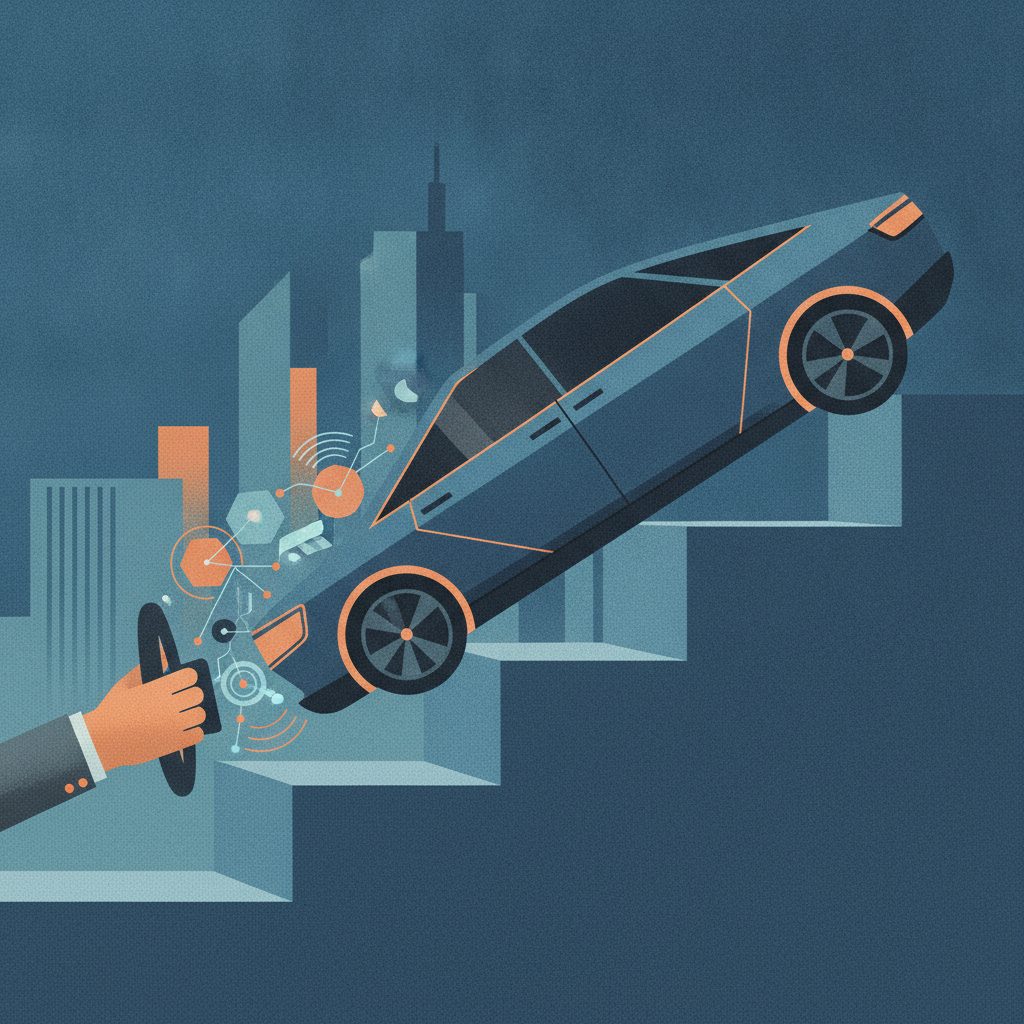
The six-level framework for vehicle automation, codified by SAE International in standard J3016 and last revised in April 2021 as J3016_202104, has become the globally recognized vocabulary for separating genuine autonomous capability from assisted driving. It does so by defining a precise division of labour between the human driver and the automated system across what engineers call the Dynamic Driving Task (DDT) — the real-time operational and tactical functions of vehicle control.
For automotive executives, technology suppliers, insurers and regulators, the taxonomy is far more than a technical classification. It underpins product development roadmaps, safety assessments, liability frameworks and consumer communication. Mislabeling a Level 2 system as “self-driving” can create dangerous complacency and legal exposure, while underestimating a Level 4 system’s Operational Design Domain (ODD) can stall deployment. Understanding the levels is therefore a practical requirement for safe deployment and clear accountability.
A functional taxonomy, not a marketing scale
SAE International, a global professional association of engineers and technical experts in the aerospace, automotive and commercial vehicle industries, developed the standard to harmonize terminology across engineering, regulatory and public discourse. The framework is referenced by the U.S. Department of Transportation and adopted worldwide, reducing confusion in policy, safety assessments and consumer communication. Its core value lies in distinguishing automation levels based on who performs the DDT and who is responsible for fallback when systems fail or reach their limits. Because the standard is functional rather than prescriptive, it does not assess the quality of a system’s performance; it only assigns responsibility for the DDT and fallback.
The six levels, as defined by the standard, are:
- Level 0 – No Automation: The human driver performs the entire DDT, with systems offering only momentary assistance, such as automatic emergency braking.
- Level 1 – Driver Assistance: The vehicle can control either steering or acceleration/deceleration under specific conditions, but not both simultaneously; adaptive cruise control is a common example.
- Level 2 – Partial Driving Automation: The system can control both steering and speed at the same time, but the driver must continuously supervise and be ready to take over; Tesla Autopilot and GM Super Cruise fall into this category.
- Level 3 – Conditional Automation: The system handles the full DDT in certain environments within its Operational Design Domain, allowing the driver to disengage, but it requires human intervention when the system requests it; Audi’s former Traffic Jam Pilot is a cited example.
- Level 4 – High Automation: The system performs the entire DDT and manages fallbacks without human input within a defined ODD; Waymo robotaxis in specific urban areas illustrate this level.
- Level 5 – Full Automation: The system can operate under all conditions a human driver can, with no need for a steering wheel or human intervention.
The crucial dividing line sits between Levels 2 and 3: in Levels 0 through 2, the human remains the fallback; from Level 3 upward, the automated system assumes responsibility for the DDT within defined conditions.
Where the human still matters: Levels 0 to 2
Levels 0, 1 and 2 are often grouped as driver support features rather than autonomous driving. Level 0 includes momentary interventions that do not sustain vehicle control, such as automatic emergency braking or blind-spot warnings. These features may alert or briefly act, but the human driver performs the entire DDT. Level 1 introduces single-axis control — either steering or speed, but never both at once. Adaptive cruise control, which manages acceleration and deceleration while the driver steers, is the most widely deployed Level 1 feature. The key is that the system never controls both axes simultaneously.
Level 2 is where the lines begin to blur in public perception. Systems such as Tesla Autopilot and GM Super Cruise can control both steering and speed simultaneously, keeping a vehicle centred in its lane and maintaining a set distance from traffic ahead. Yet the driver must remain continuously engaged, monitoring the environment and being ready to intervene at any moment. The SAE standard explicitly frames these systems as partial driving automation, not self-driving, because the human is still the ultimate authority over the DDT.
This distinction matters because the marketing language around Level 2 systems has frequently outpaced their actual capability. A driver who believes a Level 2 system is fully autonomous may stop paying attention, creating a safety risk that the standard’s taxonomy is designed to prevent. The framework gives regulators and safety investigators a common reference point for evaluating whether a system’s name or promotional claims align with its actual level of automation.
The difficult leap: Levels 3 and 4
Level 3 represents a fundamental shift in responsibility. Within its Operational Design Domain — a specific set of conditions such as a traffic jam on a divided highway — the system handles the full DDT, allowing the driver to disengage from monitoring. However, the human must be available to take over when the system requests intervention. Audi’s former Traffic Jam Pilot was an early attempt at Level 3 automation, though it was never widely deployed. The challenge is that a driver who has been disengaged may need several seconds to regain situational awareness, raising difficult questions about handover safety and liability.
Level 4 removes the human fallback entirely, but only within a defined ODD. The system performs the entire DDT and manages its own fallback responses without expecting human input. Waymo’s robotaxis, which operate in geofenced urban areas, are the most prominent real-world example. If a Level 4 vehicle encounters a problem within its ODD, it must be able to pull over safely or otherwise resolve the situation on its own. The transition from Level 3 to Level 4 is particularly challenging because it requires reliable fallback mechanisms that do not depend on a human driver — a significant engineering and validation hurdle.
Level 5, over-trust, and strategic implications
Level 5 is the end state: a system that can operate under all conditions a human driver can, with no need for a steering wheel or any human intervention. No production vehicle has achieved this level, and most experts treat it as a long-term research goal rather than a near-term product target. The gap between Level 4’s constrained deployments and Level 5’s unrestricted capability remains substantial.
Critics note that Levels 2 and 3 are especially prone to misuse, as drivers may over-trust systems and become complacent. This is not merely a theoretical concern; it has direct implications for accident investigations, insurance underwriting and regulatory enforcement. For executives and specialists, the six levels provide a common framework for product development, risk management, regulatory compliance and strategic investment in mobility technologies. Because the framework is globally recognized and referenced by regulators, it also provides a common baseline for cross-border product development and compliance. A clear-eyed understanding of where a system sits on the scale — and what it can and cannot do — is essential for avoiding both overpromising and underinvesting.
As automated driving technology matures, the SAE J3016 framework will remain a critical reference point for separating demonstrated capability from aspiration. The next decade is likely to bring more Level 4 deployments in constrained environments and continued debate over Level 3 handover safety, while Level 5 remains a distant horizon. For anyone allocating capital, designing systems or writing rules, the six levels offer a precise, globally recognized vocabulary that is indispensable for navigating the road ahead.
Sources
- The 6 Levels of Vehicle Autonomy Explained
- The Six Levels of Autonomous Driving, Explained
- What are the six levels of autonomous driving?
- What Are The Levels Of Autonomy In Self-Driving Cars? - Imagination
- From Level 0 to 5: The Steps to Autonomous Driving - ZF
Written by an AI editorial process from the sources above. Errors may occur.
Newsletter
Get the AI news that matters
One short brief with the day's most important AI stories — written for professionals.
We send a confirmation link. No spam. Unsubscribe anytime.
Read next
How Self-Driving Cars Work and the Road to Full Autonomy
Autonomous vehicles use AI, sensors, and real-time systems to navigate—but technical, ethical, and regulatory hurdles remain on the path to full automation.
16 Sep 2026
AI in 2026: From Dartmouth to Deep Learning, Productivity and Risk
A concise guide to artificial intelligence's evolution, recent research limits, and the security and governance challenges shaping enterprise adoption.
13 Sep 2026
LLM Daily: September 06, 2026
OpenAI’s GPT-6 “Astra” model, launched on September 5, 2026, was successfully jailbroken within 24 hours, according to the September 6, 2026 edition of LLM Daily, a newsletter published on Buttondown.
7 Sep 2026