The Best Self-Driving Tech on the Market in 2026
Three vehicles now offer certified Level 4 autonomy for private owners, each taking a radically different technical and business approach.
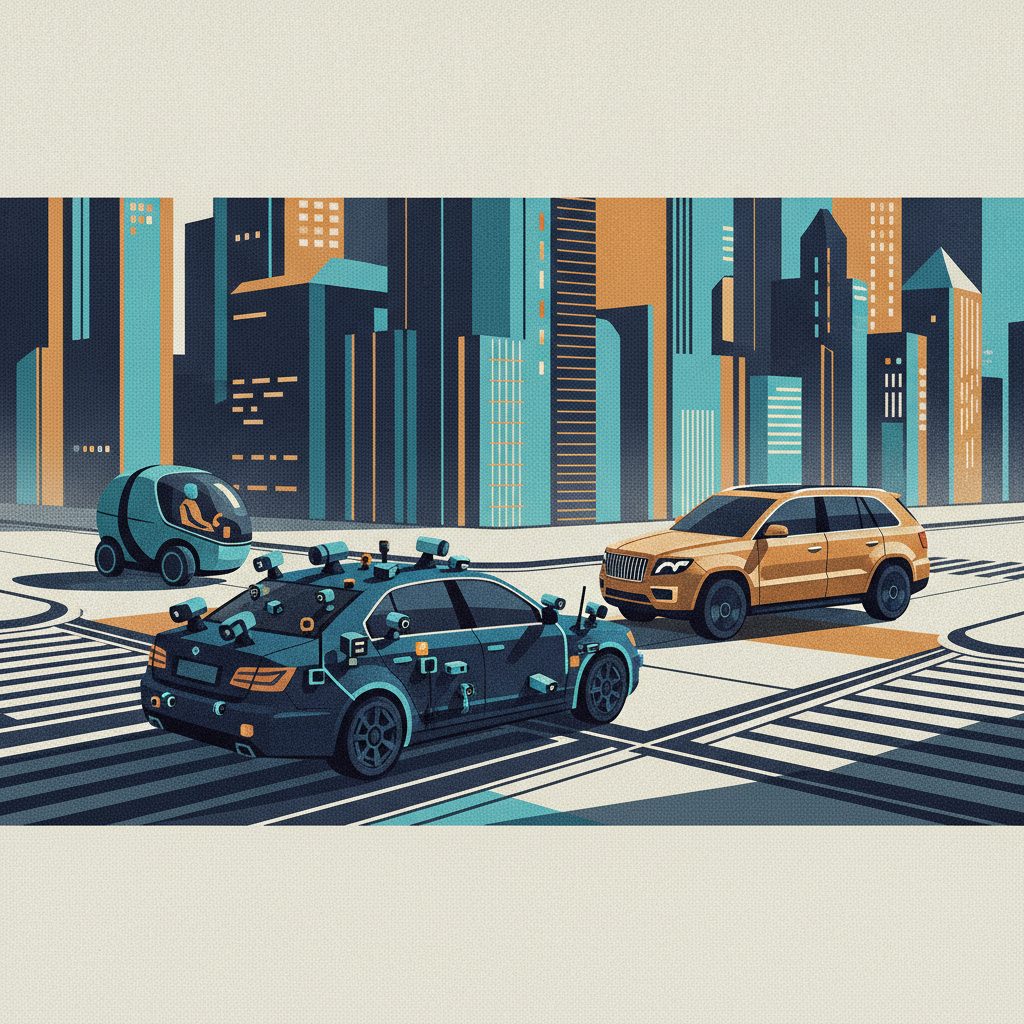
The race to put truly autonomous vehicles in private driveways accelerated sharply in 2026, as the industry finally began to move beyond advanced driver-assistance systems toward certified Level 4 autonomy for personal ownership. While most new cars still ship with Level 2+ technology that requires constant human supervision, a small but significant group of vehicles now promises to let owners legally hand over the driving task entirely — at least in specific conditions or geographies. The shift is not just a technical milestone; it is reshaping how automakers, technology suppliers, and regulators think about liability, data, and the very definition of a car.
The distinction matters because it separates systems that assist a human driver from those that replace one. For years, “self-driving” has been a marketing term stretched across a wide spectrum of capability. In 2026, that spectrum has finally produced a commercially available upper tier. According to Fifth Level Consulting, three models are now available for private purchase with genuine Level 4 capability: the Tensor Robocar, the Lucid Gravity, and the Tesla Cybercab. Each takes a fundamentally different technical and business approach, and each carries distinct implications for buyers, cities, and competitors.
The state of advanced driver assistance
Before examining the Level 4 newcomers, it is important to understand the baseline. Tesla, Mercedes-Benz, and Ford continue to lead the market for advanced driver-assistance systems (ADAS), but none of their flagship offerings crosses into full autonomy. Their systems are widely deployed and commercially significant, yet they remain firmly in the category of supervised driving aids rather than true autonomous operation.
Tesla’s Full Self-Driving (Supervised) v14 remains the most widely deployed and aggressively updated Level 2+ system. It can navigate city streets, handle intersections, and manage complex urban scenarios in beta mode, but it still requires an attentive human driver ready to intervene at any moment. Tesla’s approach relies on a vision-only sensor stack and constant over-the-air software updates, which has allowed it to scale rapidly across its existing fleet. However, the “Supervised” label is explicit: the driver remains legally responsible for the vehicle’s behavior at all times.
Mercedes-Benz holds a different distinction. Its Drive Pilot system, available in the S-Class, is the first certified Level 3 system on the market. Under specific conditions — heavy highway traffic at speeds up to 40 mph — the driver can legally take their eyes off the road and engage in other activities. The vehicle assumes liability during that window, which represents a fundamental legal shift from Level 2 systems. But the operational design domain is narrow, and the system hands control back to the human when conditions change, such as when traffic speeds up or the vehicle approaches a construction zone. Ford’s BlueCruise, featured prominently in the 2026 F-150, offers hands-free driving on designated highways but remains a Level 2 system, meaning the driver must still monitor the road and be prepared to take over.
These systems represent the ceiling of what most consumers can buy today. They are impressive, but they are not autonomous. The vehicles that follow are attempting to cross that line, and they do so with fundamentally different technical architectures and business models.
Three paths to Level 4
The Tensor Robocar is the most audacious entry. Developed by U.S. startup Tensor and manufactured by VinFast in Hai Phong, Vietnam, it is marketed as the world’s first personal Level 4 vehicle. The hardware is extreme: over 100 sensors, including 37 cameras and 5 LiDAR units, feeding an NVIDIA-powered supercomputer rated at 8,000 TOPS of processing power. That is an order of magnitude more compute than most current ADAS platforms, which typically operate in the hundreds of TOPS. Deliveries are scheduled for the second half of 2026. The company has not yet disclosed pricing, but the sensor and compute stack suggests a premium product aimed at early adopters and technology enthusiasts who prioritize capability over cost.
The Lucid Gravity takes a partnership route. Lucid has integrated Nuro’s autonomous driving system into its luxury SUV platform, combining Nuro’s software and hardware with Lucid’s vehicle architecture. Nuro, which has focused primarily on autonomous delivery vehicles, reports over 1.4 million autonomous miles driven with zero at-fault incidents. That safety record is a key selling point, particularly for a consumer vehicle that will operate in dense urban environments. The commercial launch is planned for the San Francisco Bay Area in 2026, with Uber as a major partner. Uber has invested $300 million in the program and plans to deploy at least 20,000 units. The Gravity is not a purpose-built robotaxi; it is a consumer SUV that can also operate autonomously, which positions it differently from the other two vehicles. Buyers get a conventional luxury vehicle for personal use, with the option to activate autonomous operation in supported areas.
The Tesla Cybercab is the most radical departure from conventional car design. It is a two-passenger vehicle with no steering wheel and no pedals. It relies entirely on Tesla’s vision-only approach, eschewing LiDAR and radar in favor of cameras and neural network processing. The Cybercab also features an inductive wireless charging system, demonstrated at a 19 kW charge rate, eliminating the need for a physical plug. Tesla targets a price below $30,000, which would make it the most affordable Level 4 vehicle announced to date. Owners would be able to place their Cybercab on Tesla’s planned ride-hailing network, generating revenue when they are not using it. That business model — private ownership combined with fleet-style monetization — is unprecedented at this scale and could fundamentally alter the economics of car ownership.
Why this matters beyond the car
The arrival of purchasable Level 4 vehicles has consequences that extend well beyond automotive engineering. For one, it forces a rethinking of liability. In a Level 4 vehicle operating within its designated domain, the manufacturer or operator — not the occupant — assumes responsibility for accidents. Insurance models, legal frameworks, and consumer expectations must all adapt. Mercedes-Benz has already navigated this with Drive Pilot in Germany and select U.S. states, but the Level 4 vehicles push the question further: what happens when there is no human driver at all? The Cybercab, with no steering wheel or pedals, makes this question impossible to avoid.
Data privacy is another concern. Autonomous vehicles generate enormous volumes of sensor data, including high-resolution video of public spaces and detailed location histories. The Lucid Gravity’s integration with Uber’s network and the Tesla Cybercab’s ride-hailing ambitions mean that personal vehicles will increasingly feed data into commercial platforms. Who owns that data, how it is stored, and who can access it remain largely unresolved in most jurisdictions. For international professionals who travel across borders, the regulatory patchwork adds another layer of complexity: data collected in one country may be subject to entirely different rules than data collected in another.
Infrastructure adaptation is also urgent. Inductive wireless charging, as demonstrated by the Cybercab, requires new physical infrastructure that does not exist at scale. Level 4 systems rely on high-definition maps and reliable connectivity, which are unevenly available across global markets. The San Francisco Bay Area launch for the Lucid Gravity is telling: early deployments are concentrated in regions with favorable regulatory environments and dense urban data. Global expansion will be uneven, and cities that fail to adapt risk being left behind in the mobility transition.
Market implications and reactions
The competitive landscape is shifting. Traditional automakers like Ford and Mercedes-Benz are investing heavily in Level 3 and Level 4 research, but they face pressure from technology-first companies that treat autonomy as a software problem. Tesla’s vertically integrated approach, Tensor’s sensor-heavy design, and Lucid’s partnership model represent three distinct strategic bets. None has yet proven commercially viable at scale, and each carries different risks: Tesla’s vision-only approach must overcome skepticism about its robustness in edge cases, Tensor must deliver on an aggressive production timeline, and Lucid must manage a complex multi-party integration.
For international professionals in logistics, urban planning, and mobility services, the signal is clear: the transition from driver assistance to true autonomy is no longer theoretical. Fleet operators are watching the Cybercab’s price point and Uber’s deployment plans closely. City planners are beginning to model scenarios where privately owned autonomous vehicles reduce parking demand but increase curb congestion, as vehicles circle or reposition between trips. Insurers are developing new products for vehicles that can operate without a human fallback, but the actuarial data is still thin. The next 18 to 24 months will be decisive. If the Tensor Robocar delivers on its second-half 2026 timeline, if the Lucid Gravity’s Bay Area launch meets Uber’s deployment targets, and if Tesla hits its sub-$30,000 price, the market for personal autonomous vehicles will move from novelty to genuine competition. If any of these programs slips — and autonomous vehicle timelines have a long history of slipping — the industry’s credibility will face another test. What is certain is that the vehicles on sale in 2026 have permanently blurred the line between driver and passenger, and there is no going back.
Sources
- The best self-driving tech on the market in 2026
- Best Self Driving Cars in 2026: Top Autopilot Systems Compared
- Autonomous Vehicles and Self-Driving Cars in 2026
- Top 3 U.S. Level 4 Self-Driving Cars You Can Buy in 2026 - Fifth Level Consulting
- Vehicles That Are Almost Self-Driving in 2026 | U.S. News
Written by an AI editorial process from the sources above. Errors may occur.
Newsletter
Get the AI news that matters
One short brief with the day's most important AI stories — written for professionals.
We send a confirmation link. No spam. Unsubscribe anytime.
Read next
Gemini's New AI Model Transforms Photo Editing with Multi-Turn Control
Google's Gemini 2.5 Flash Image enables precise, context-aware edits across multiple steps, advancing creative workflows for professionals.
27 Sep 2026
Autonomous AI Agents: The Rise of Digital Workforce
How self-reasoning AI systems are transforming business workflows and redefining automation across industries.
26 Sep 2026
Adobe Launches AI Video Generation in Creative Cloud
Adobe unveils Firefly Video Model and faster image generation, embedding AI deeply into professional creative workflows.
26 Sep 2026