Autonomous AI Agents: The Rise of Digital Workforce
How self-reasoning AI systems are transforming business workflows and redefining automation across industries.
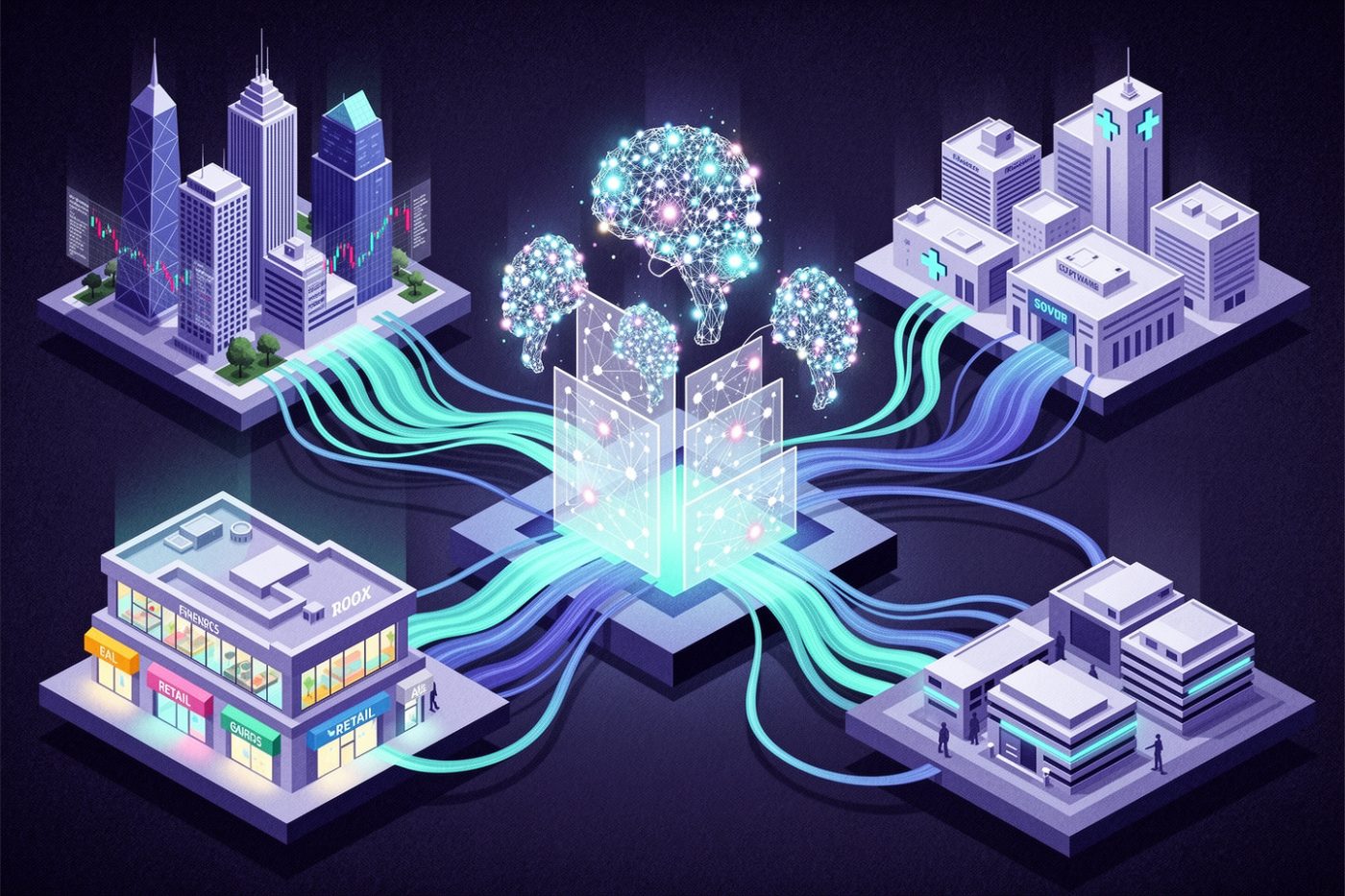
Autonomous AI agents are no longer a speculative concept—they are actively reshaping how businesses operate, manage workflows, and deliver value. Unlike traditional AI tools that respond to direct commands, these systems interpret high-level goals, reason through complex scenarios, plan multi-step actions, and execute tasks with minimal human intervention. They function through a continuous loop of observation, reasoning, and action, adapting in real time to new inputs and outcomes. This marks a fundamental shift: from AI as a reactive assistant to AI as an independent digital workforce capable of owning end-to-end processes.
Why does this matter? For executives, founders, and technology leaders, autonomous AI agents represent a transformative leap in operational efficiency and scalability. They enable organizations to automate not just individual tasks, but entire workflows—spanning customer service, sales, software development, and compliance—while reducing human error and freeing employees for higher-order strategic work. However, this autonomy also introduces new challenges around governance, security, and accountability. Understanding the architecture, capabilities, and real-world applications of these systems is essential for leaders navigating the next phase of AI integration.
How Autonomous Agents Work: Beyond Prompt-Based AI
Traditional AI assistants operate within a narrow, prompt-response framework: a user asks a question or issues a command, and the system generates a reply. Autonomous agents, by contrast, are goal-directed systems that initiate and manage sequences of actions independently. They use large language models (LLMs) not just for generating text, but as reasoning engines to parse objectives, break them into subtasks, and determine optimal execution paths.
At the core of these systems is a feedback loop: observe, reason, act. An agent receives a high-level instruction—such as “increase customer retention by 10% this quarter”—and autonomously devises a strategy. It might analyze customer data, identify at-risk accounts, generate personalized outreach campaigns, and coordinate with CRM systems to deploy them. Throughout this process, the agent maintains persistent memory, tracking progress, learning from outcomes, and adjusting tactics as needed.
Crucially, these agents are not standalone models. They integrate with external tools—APIs, databases, enterprise software—through which they execute actions. For example, an agent in a retail environment might pull inventory data from a warehouse management system, update pricing via an e-commerce platform, and send personalized offers through a marketing automation tool—all without human input. This orchestration of models and systems is what enables true workflow ownership.
Key Players and Platforms Driving Adoption
Major technology companies are rapidly advancing autonomous agent capabilities, embedding them into enterprise ecosystems. Salesforce’s Agentforce platform allows businesses to build and deploy agents within its CRM environment. According to Marc Benioff, CEO of Salesforce, this marks “the third wave of the AI revolution,” following automation and machine learning. Clara Shih, CEO of Salesforce AI, emphasizes that Agentforce agents can autonomously pursue business objectives—such as meeting sales quotas—by determining necessary actions and executing them across sales, service, and marketing workflows. The platform is designed for low-code or no-code deployment, enabling rapid integration without deep technical expertise.
Snowflake frames autonomous AI as a shift from task assistance to workflow ownership. Its vision centers on agents that operate continuously across data pipelines and enterprise systems, governed by strict security and compliance protocols. By connecting to Snowflake’s data cloud, agents can access real-time analytics to inform decisions, making them particularly valuable in regulated industries like finance and healthcare.
NVIDIA defines autonomous agents as systems that coordinate multiple AI models with external tools to manage secure, end-to-end workflows. The company emphasizes the importance of goal-directed behavior and robust orchestration, particularly in high-stakes environments such as manufacturing and logistics. Meanwhile, Kimi, developed by Moonshot AI, offers an ecosystem where a primary agent can recruit specialized sub-agents—such as a product manager, designer, or data analyst—to execute complex, multi-phase projects. Kimi’s K2.6 model supports up to 300 parallel sub-agents performing 4,000 collaborative steps, demonstrating significant scalability.
Real-World Applications Across Industries
Autonomous agents are already being deployed in practical, high-impact scenarios. In banking, they manage transaction disputes by analyzing transaction histories, verifying identities, and escalating cases when necessary—all while adhering to compliance protocols. In healthcare, agents streamline administrative workflows: scheduling patient appointments, retrieving medical records, and summarizing clinical notes for providers, reducing clinician burnout and improving care coordination.
Retail has seen the rise of personal shopper agents that analyze customer preferences, inventory availability, and pricing trends to deliver tailored recommendations. These agents can even negotiate discounts or bundle offers, enhancing customer experience while driving sales. In software development, autonomous agents assist with code generation, debugging, and testing. They can identify bugs, suggest fixes, and deploy patches across environments, significantly accelerating development cycles.
What unites these use cases is the ability of agents to operate continuously. Kimi Agent, for instance, enables 24/7 task execution across time zones, allowing businesses to maintain momentum without human oversight. This persistent operation is particularly valuable for global enterprises managing distributed teams and customer bases.
Challenges and the Path Forward
Despite their promise, autonomous AI agents introduce significant challenges. Reliability remains a concern: while agents can handle routine workflows, unexpected edge cases or ambiguous inputs may lead to errors or unintended actions. Governance is equally critical. As agents gain more autonomy, organizations must establish clear guardrails—ensuring data privacy, regulatory compliance, and ethical decision-making. Most platforms incorporate escalation protocols, where agents defer to human oversight when encountering high-risk or uncertain situations.
Security is another priority. Because agents interact with multiple systems and data sources, they represent potential attack vectors. Companies like Snowflake and NVIDIA emphasize secure orchestration, ensuring that agents operate within defined permissions and audit trails. Reinforcement learning, used by Kimi to refine decision-making over time, must also be carefully monitored to prevent reward hacking or misaligned behavior.
For executives and founders, the strategic value lies in scaling operations without proportional increases in headcount. However, success depends on implementing robust governance frameworks from the outset. This includes defining clear objectives, monitoring agent performance, and maintaining human-in-the-loop oversight for critical decisions.
Looking ahead, autonomous AI agents are poised to become foundational components of digital infrastructure. As models grow more capable and integration with enterprise systems deepens, these agents will move beyond workflow automation to strategic execution—anticipating needs, optimizing resources, and driving innovation. The transition from AI as a tool to AI as an agent of action is underway, and for organizations ready to embrace it, the opportunity to redefine productivity has already arrived.
Sources
- What Are Autonomous AI Agents? A Complete Guide - Kimi
- What are Autonomous Agents? A Complete Guide
- Autonomous AI Agents: The Complete Guide to Self-Directed Intelligence | by Gaston Aps | Medium
- What Are Autonomous AI Agents?
- What are Autonomous AI Agents? | NVIDIA Glossary
Written by an AI editorial process from the sources above. Errors may occur.
Newsletter
Get the AI news that matters
One short brief with the day's most important AI stories — written for professionals.
We send a confirmation link. No spam. Unsubscribe anytime.
Read next

Gemini's New AI Model Transforms Photo Editing with Multi-Turn Control
Google's Gemini 2.5 Flash Image enables precise, context-aware edits across multiple steps, advancing creative workflows for professionals.
27 Sep 2026
Adobe Launches AI Video Generation in Creative Cloud
Adobe unveils Firefly Video Model and faster image generation, embedding AI deeply into professional creative workflows.
26 Sep 2026
OpenAI, Google, and Anthropic Unveil Superhuman AI Models
In September 2026, leading AI labs released next-gen models with superhuman capabilities in cybersecurity and simulation—ushering in a new era of restricted access and safety-driven deployment.
25 Sep 2026