Robotaxis Hit Europe as Uber Launches in Zagreb and London
Uber's first European self-driving service in Zagreb and a landmark London licence signal a new phase for autonomous ride-hailing, with Chinese and British AI firms entering the market.
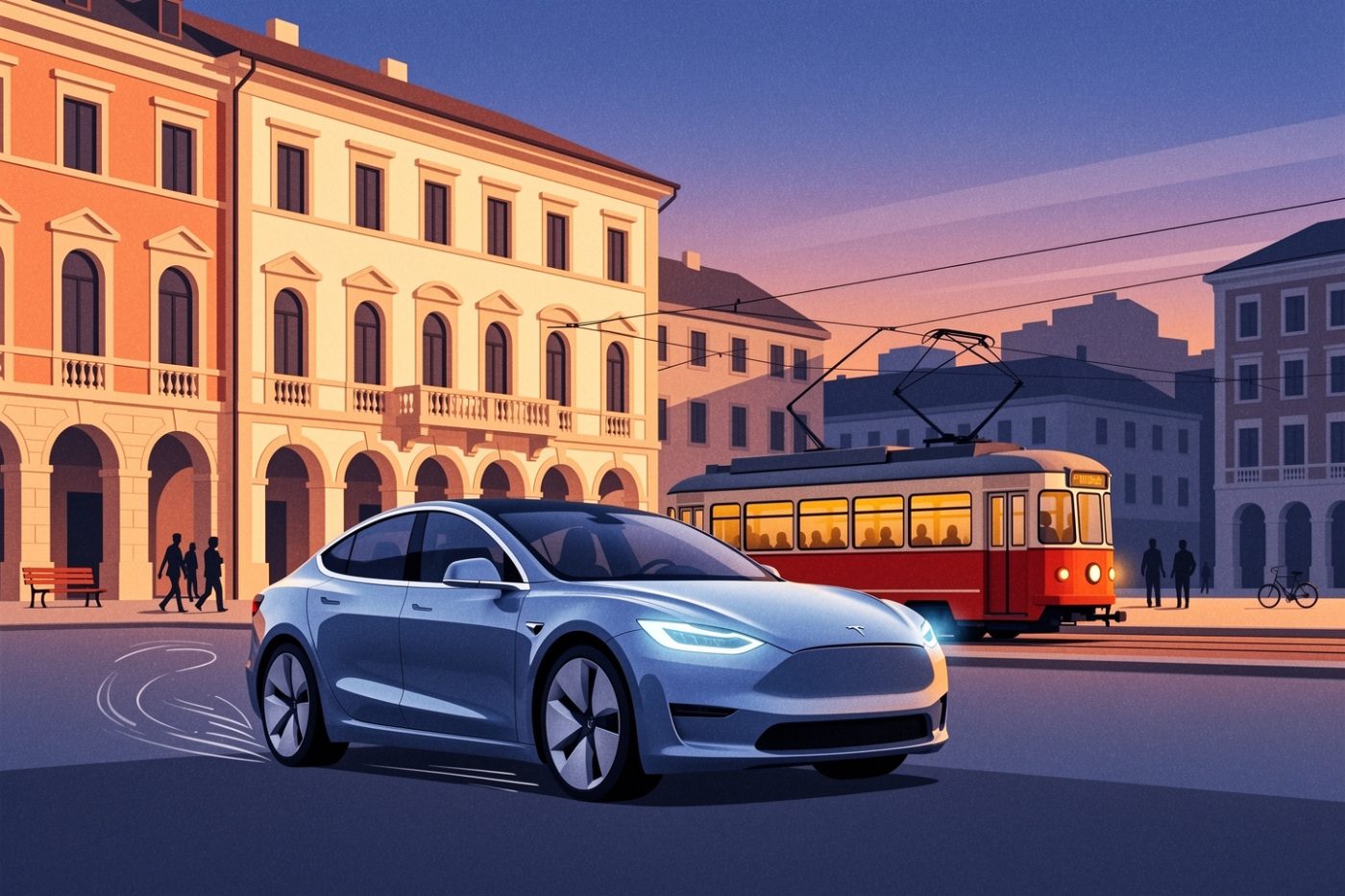
Uber has begun offering autonomous rides in Zagreb, Croatia, marking the company’s first commercial self-driving service in Europe. The launch, which took place on August 19, 2026, uses technology from Chinese autonomous driving firm Pony.ai and a fleet operated by Croatian startup Verne. The move comes just weeks after Transport for London granted Uber and UK-based AI developer Wayve the first minicab licences for self-driving taxis in the British capital, covering an initial fleet of 15 Ford Mustang Mach-E vehicles.
These twin deployments signal a decisive shift in the autonomous vehicle industry. After years of pilot projects, regulatory hesitation, and high-profile setbacks, 2026 has become the year that robotaxi services moved from controlled testing grounds to public streets in major European cities. For executives and investors tracking the sector, the developments in Zagreb and London illustrate how the competitive landscape is being redrawn—not only between traditional automakers and technology companies, but also across geopolitical lines, with Chinese firms gaining a foothold in European markets.
A European Opening for US and Chinese Players
Uber’s Zagreb service is built on a partnership announced in March 2026 with Pony.ai and Verne. Pony.ai, a Chinese company with extensive robotaxi operations in China, supplies the autonomous driving software, while Verne owns and operates the vehicles. This structure allows Uber to integrate autonomous rides into its existing app without owning or maintaining a dedicated fleet—a model the company has pursued in other markets. The Croatian launch is particularly notable because it represents the first time a major Western ride-hailing platform has deployed Chinese autonomous technology in Europe at commercial scale. Pony.ai has already accumulated significant operational experience in China, where robotaxi services run in multiple cities, and the Zagreb deployment gives the company a direct entry point into European mobility markets.
The London approval, announced in early August 2026, follows a different technological path. Wayve, a UK-based AI company co-founded by Alex Kendall, provides the autonomous software for the Uber-branded service. Wayve has pursued an approach based on end-to-end deep learning, training its systems directly on driving data rather than relying on hand-coded rules. The initial London fleet is small—15 vehicles—and safety drivers will remain behind the wheel during the first phase of operations. But the regulatory green light from Transport for London is significant: it is the first time the authority has issued minicab licences for self-driving taxis, and it positions the UK capital as a competitive arena for US and Chinese technology firms. The decision also reflects a broader easing of European regulatory stances, which have historically been cautious about autonomous vehicle deployment.
Investment, Demand, and the Push Toward Scale
The financial stakes are substantial. Uber has said it plans to spend more than $10 billion on autonomous vehicle development in the coming years, though it has not provided a specific timeline. That figure underscores how seriously the company views autonomy as a long-term threat and opportunity: if self-driving technology matures, the cost of human drivers—currently the largest single expense in ride-hailing—could be eliminated, but only if Uber controls or partners with the technology providers rather than being displaced by them. The $10 billion commitment is not tied to a single project or partner; it spans multiple geographies and technology stacks, reflecting Uber’s strategy of hedging its bets across different autonomous software providers.
Consumer demand appears robust, at least in London. According to The Guardian, more than 100,000 people have reportedly joined the waiting list for Uber and Wayve’s self-driving service. That level of interest suggests that public curiosity, if not yet full trust, is high. However, the initial rollout will be limited in scope. Safety drivers will be present in both Zagreb and London during the early phases, and full driverless operations will require additional regulatory approval. Neither Uber nor Wayve has provided a firm timeline for removing safety drivers, and the path to fully autonomous commercial service remains subject to both technical validation and political oversight. The waiting list figure, while impressive, does not guarantee sustained usage once the novelty fades; pricing, reliability, and safety performance will ultimately determine whether early interest converts into regular ridership.
General Motors Bets on Consumer Vehicles, Not Robotaxis
While Uber, Pony.ai, and Wayve focus on ride-hailing services, General Motors is taking a different route. In March 2026, GM began supervised on-road testing of its “eyes-off” autonomous technology in Michigan and California. The company has made clear that it is prioritising embedding autonomous capabilities in consumer vehicles—such as the Escalade IQ—rather than building dedicated robotaxi fleets. This strategy reflects a broader industry debate: whether autonomous driving will be monetised primarily through mobility services or through the sale of personally owned vehicles with increasingly capable driver-assistance features. GM’s decision to test in both Michigan and California gives it exposure to different regulatory environments and road conditions, from winter weather to dense urban traffic.
GM’s approach carries its own risks. Consumer vehicles must operate across vastly more diverse environments than geofenced robotaxi fleets, and the regulatory pathway for selling “eyes-off” systems to private owners is far less developed than the licencing frameworks emerging for commercial ride-hailing. But the potential market is also much larger. If GM can deliver a vehicle that allows drivers to disengage from the road in defined conditions, it could transform the economics of car ownership and create a new premium feature category. The company has not announced a timeline for commercial availability, and the supervised testing phase is expected to be lengthy, with safety drivers monitoring system performance and collecting data across thousands of miles of real-world driving.
Patent Growth and the Rise of Physical AI
Underpinning these deployment milestones is a surge in intellectual property activity. Patent data analysed by law firm Foley & Lardner shows exponential growth in filings related to autonomous systems, with NVIDIA, Waymo, and Baidu among the most active filers alongside traditional automakers. The filings cover not only vehicle control algorithms but also sensor fusion, edge computing, and simulation environments—technologies that extend well beyond cars. The pace of patent growth reflects both the technical complexity of autonomous systems and the strategic importance of controlling foundational IP as the industry consolidates.
This broader trend is increasingly described as “physical AI”: the convergence of artificial intelligence with machines that operate in the real world. Autonomous vehicles are the most visible application, but the same underlying capabilities are being applied to warehouse robotics, agricultural equipment, construction machinery, and industrial automation. For companies building patent portfolios in these areas, the strategic value lies not just in protecting specific vehicle features but in controlling foundational technologies that could become industry standards across multiple sectors. NVIDIA’s position is particularly notable: its GPU and edge computing platforms are already used widely in autonomous vehicle development, and its patent activity suggests an ambition to extend that dominance into broader physical AI applications.
Regulatory Shifts and Labour Concerns
Europe’s regulatory environment has become notably more accommodating to autonomous vehicle deployment. Chinese robotaxi firms, including Pony.ai and Baidu’s Apollo Go, have seen reduced red tape in European markets as local authorities seek to attract investment and accelerate technological adoption. This shift has enabled faster market entry for Chinese companies that have already accumulated extensive operational experience in China, where robotaxi services operate in multiple cities at scale. The contrast with earlier European caution is stark: just a few years ago, most European regulators were reluctant to permit even limited autonomous vehicle testing on public roads, but the competitive pressure to keep pace with US and Chinese developments has forced a rethink.
But the expansion is not without friction. The GMB union in the UK has raised concerns about job losses among minicab drivers, warning that the introduction of self-driving taxis could displace tens of thousands of workers in London alone. These concerns are not merely hypothetical: if autonomous vehicles achieve cost parity with human-driven taxis, the economic pressure on professional drivers would be severe. Regulators in both London and Zagreb have so far proceeded cautiously, requiring safety drivers and phased rollouts, but the long-term labour implications remain unresolved. The GMB has called for a managed transition that includes retraining programmes and income protections for affected drivers, but no concrete policy framework has yet emerged from either national or local authorities.
The autonomous driving industry is now entering a period of real-world validation. The launches in Zagreb and London, the scale of Uber’s investment, and GM’s consumer-focused strategy all point to a sector that has moved beyond hype and into operational deployment. Yet the most difficult questions—how quickly safety drivers can be removed, how regulators will respond to incidents, and how labour markets will absorb the disruption—remain unanswered. What is clear is that the competitive map has expanded: Chinese technology firms are now active in European cities, US platforms are integrating multiple autonomous software providers, and automakers are racing to define what autonomy means for the vehicles people actually buy. The next phase will be defined less by technological breakthroughs than by execution, regulation, and public acceptance.
Sources
- Autonomous Driving: Self-Driving Technology
- Uber launches autonomous rides in Zagreb, its first in Europe
- Chinese robotaxi firms see reduced red tape in Europe as deployment picks up
- From Self-Driving Vehicles to Physical AI: The Inventions Behind Autonomous Systems
- ‘Leicester Square, please guv’: Self-driving taxis cleared for London streets ‘later this summer’
Written by an AI editorial process from the sources above. Errors may occur.
Newsletter
Get the AI news that matters
One short brief with the day's most important AI stories — written for professionals.
We send a confirmation link. No spam. Unsubscribe anytime.
Read next

The AI Cloud Race: Big Tech's $130B Power Play
Amazon, Microsoft, and Alphabet are spending billions to dominate AI through cloud infrastructure, reshaping global tech, security, and market dynamics.
19 Sep 2026
AI Inference Market to Hit $255B by 2030
Global demand for real-time AI decision-making drives explosive growth in inference infrastructure, with NVIDIA, Intel, and Siemens Healthineers leading diverse applications.
18 Sep 2026
Autonomous AI Agents Become Core Enterprise Infrastructure in 2026
The market for autonomous AI agents is projected to surge from $7.92 billion in 2025 to $236.03 billion by 2034, as enterprises shift from experimentation to governing systems that perform operational work.
14 Sep 2026