Autonomous AI Agents Become Core Enterprise Infrastructure in 2026
The market for autonomous AI agents is projected to surge from $7.92 billion in 2025 to $236.03 billion by 2034, as enterprises shift from experimentation to governing systems that perform operational work.
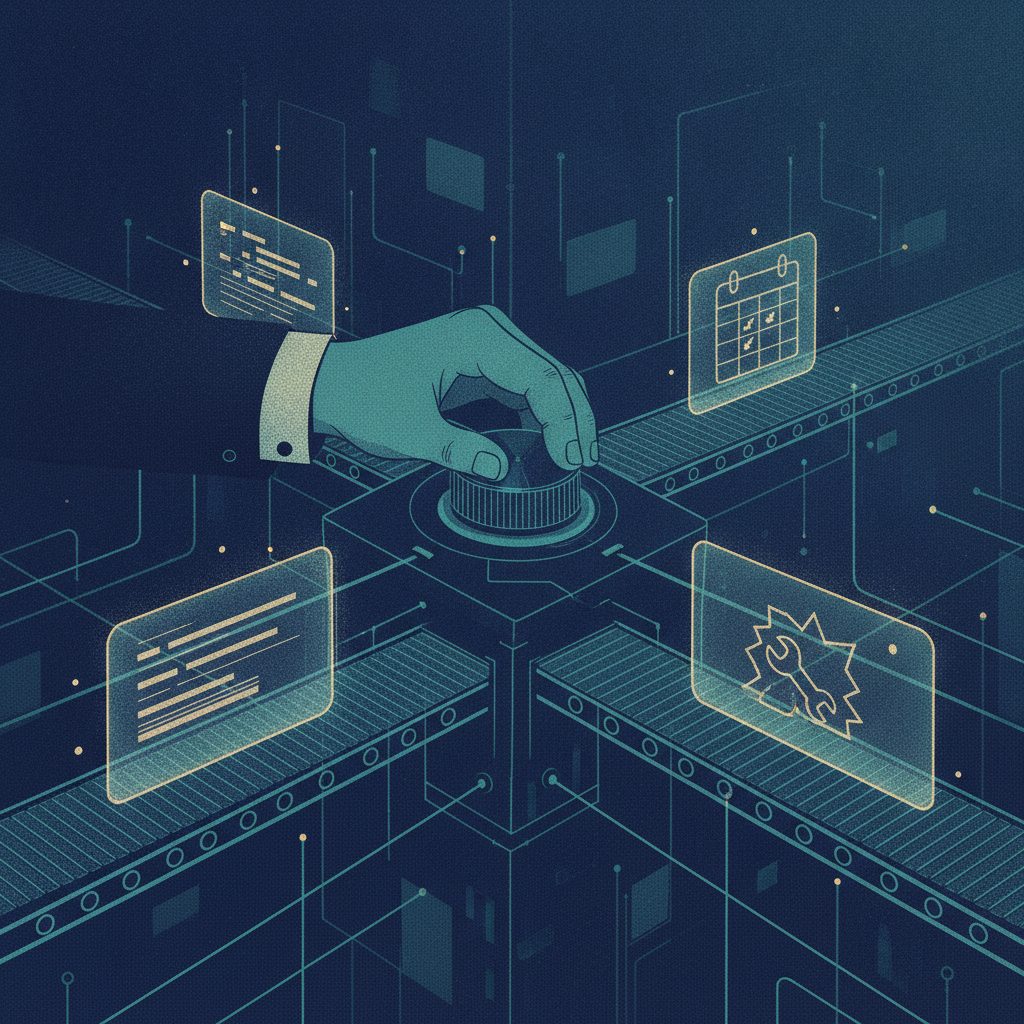
Autonomous AI agents have crossed a threshold in 2026, moving from experimental assistants to core enterprise infrastructure. These systems can now execute complex, multi-step workflows — cloning code repositories, updating customer records, triaging support tickets, and scheduling meetings — with minimal human oversight. The market is projected to grow from USD 7.92 billion in 2025 to USD 236.03 billion by 2034, a compound annual growth rate of 45.82%, with North America leading adoption.
The shift matters because it changes what enterprise software is for. Instead of simply retrieving information or generating text, agents can act: opening pull requests, resolving cases, and orchestrating other agents. For executives and operations leaders, the question is no longer whether to experiment, but how to govern systems that increasingly perform operational work.
Organizations report an average 171% return on investment from agentic systems, according to industry research cited in the 2026 guide.
From chatbots to autonomous operators
Autonomous AI agents differ from earlier chatbots and copilots in one fundamental way: they pursue goals across multiple steps and tools without a human prompting each action. A coding agent does not just suggest a fix; it clones a repository, reproduces a bug, edits files, runs tests, and opens a pull request. A CRM agent does not just draft a reply; it updates records, routes the case, and closes the ticket when resolved.
Adoption has moved quickly. By 2028, 68% of customer interactions are expected to be handled autonomously, according to the research compiled in the guide. Already, 57.3% of organizations have agents in production, and 78% are planning deployment. The North American market leads, but the underlying drivers — pressure to reduce manual work, improve response times, and scale operations without linear headcount growth — are global.
The platform landscape: coding, CRM and enterprise control
Several platforms now define distinct enterprise functions. Devin AI, developed by Cognition Labs, operates as a fully autonomous software engineering agent in a cloud sandbox. It can clone repositories, debug code, and open pull requests. Its SWE-1.7 model scores 77.8% on SWE-bench Multilingual, a benchmark for multilingual software engineering tasks, though it trails some competitors on the FrontierCode 1.1 benchmark. Devin is priced from $20 per month for individuals, with team plans at an $80 monthly base plus $40 per seat. It is considered strongest for well-scoped, repetitive work such as migrations and CI/CD triage.
IBM has taken a different approach, focusing on governance rather than a single task. Its Agentic Control Plane, launched within watsonx Orchestrate, provides centralized visibility, scheduling, and governance for multi-agent systems running on AWS and IBM Cloud. The move signals that enterprise-scale management, not just agent capability, is becoming a competitive battleground.
Salesforce Agentforce, powered by the Atlas Reasoning Engine, autonomously updates CRM records and resolves support cases. Salesforce reports that Agentforce has closed 18,500 deals across 12,500 companies, a concrete indicator that autonomous agents are moving from pilot projects to revenue-impacting workflows.
Consolidation and specialized tools reshape the market
The market is also consolidating rapidly. Aisera, which automates IT, HR, and customer service on a single platform, was acquired by Automation Anywhere in 2025. Moveworks, a conversational AI provider for employee support, became part of ServiceNow following a $2.85 billion acquisition. These deals show that large enterprise software vendors are buying agentic capabilities rather than building everything in-house.
Specialized tools continue to emerge for narrower use cases. Reclaim.ai, acquired by Dropbox, offers AI-driven focus time and habit scheduling for calendars, with a free tier and paid plans starting at $10 per seat per month. Lindy targets small and medium-sized businesses with AI agents for email and meeting automation, priced from $49.99 to $199.99 per month. The spread of price points — from free tiers to enterprise per-seat models — reflects a maturing market that serves both individual professionals and global operations teams.
The connective tissue: MCP and the remaining risks
A critical enabler behind many of these systems is the Model Context Protocol (MCP), which allows agents to securely connect to internal systems. Open-source platforms such as EpicStaff are built around MCP, enabling engineers to integrate systems via Python while giving operations teams a visual interface to manage and audit workflows. This separation of concerns — engineers wire the connections, operations controls the guardrails — is becoming a standard pattern for enterprise agent deployment.
Despite the momentum, significant challenges remain. Autonomous agents can fall into infinite loops, repeating actions without reaching a goal. Security is a persistent concern because agents with access to internal systems can also become attack surfaces. Compute costs for autonomous agents are high, especially for multi-step reasoning. According to the guide, the technology is currently most valuable for automating tedious, well-defined tasks — freeing human teams for strategic work — rather than replacing complex judgment. Organizations that scope agent projects narrowly and invest in centralized governance are seeing the strongest returns.
Looking ahead, the next phase of autonomous AI agents will likely be defined less by individual model performance and more by how well enterprises connect, monitor, and constrain them. As MCP adoption grows and vendors embed agentic control planes into their platforms, the technology could shift from a collection of point tools to a coordinated layer of digital labor. The 2028 projection that 68% of customer interactions will be handled autonomously may prove conservative if governance and security concerns are addressed. For now, the most successful deployments share a common trait: they automate the repetitive, not the ambiguous.
Sources
- Autonomous AI Agents: 2026 Guide — Techno Believe
- Build Your First Autonomous AI Agent in Python (2026 Guide)
- The 2026 Guide to AI Agents
- The Best Autonomous AI Agents of 2026: Top Tools for Automation
- Medium
Written by an AI editorial process from the sources above. Errors may occur.
Newsletter
Get the AI news that matters
One short brief with the day's most important AI stories — written for professionals.
We send a confirmation link. No spam. Unsubscribe anytime.
Read next

Enterprise AI’s 2026 Roadmap Splits Between Knowledge and Governance
Enterprise AI World in Washington and The AI Enterprise Conference in New York lay out complementary paths from pilots to production—one focused on knowledge and culture, the other on governance and ROI.
14 Sep 2026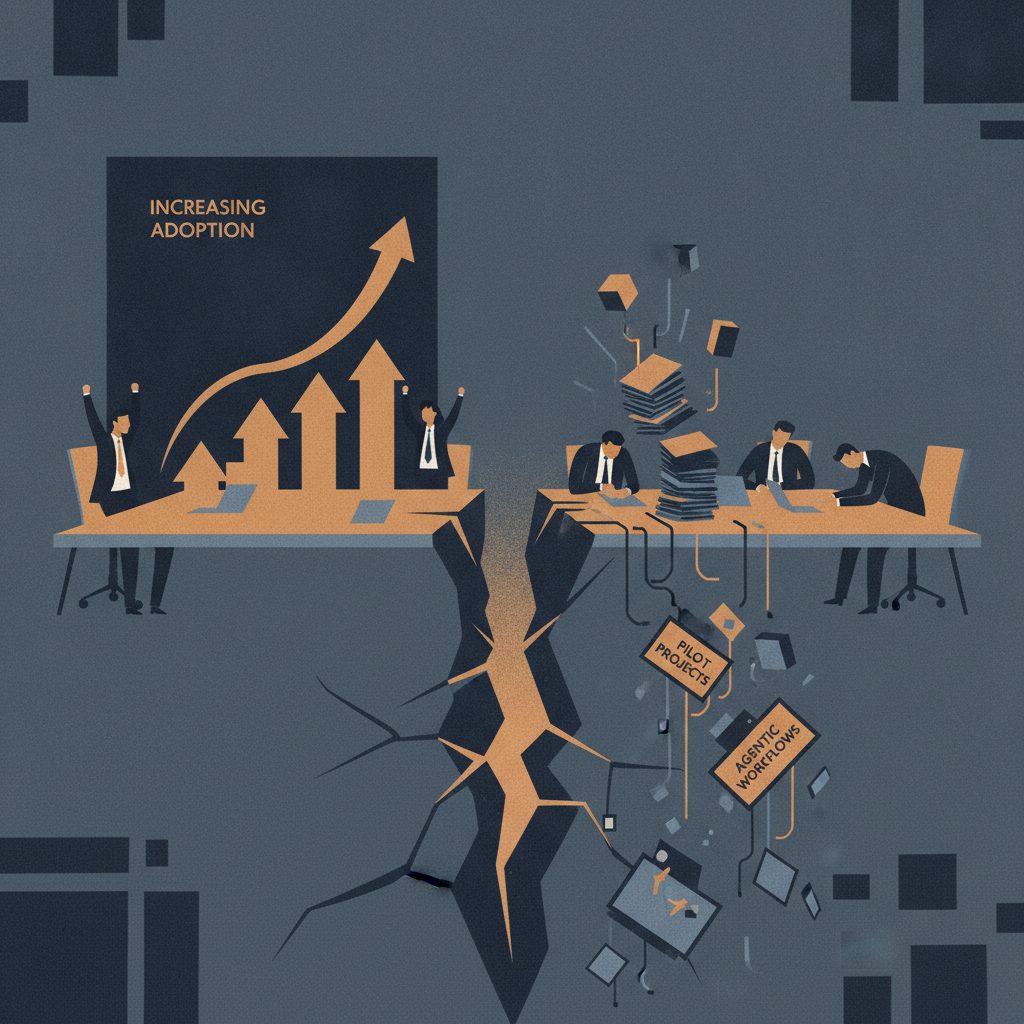
AI Adoption Hits 72% Production, but the Real Story Is the ROI Gap
Nearly nine in ten organizations now use AI, yet only a minority reach production with measurable returns—and over 40% of agentic projects may be cancelled by 2027.
14 Sep 2026
Pharma’s AI Shift: From Pilot Projects to Core Drug Discovery
At a London industry conference, pharma leaders showed how generative AI, LLMs and autonomous labs are becoming operational R&D tools—while data quality and regulation lag behind.
14 Sep 2026