Nvidia to cut GeForce RTX 50 production by up to 40% amid memory crunch
Supply chain sources say GDDR7 and GDDR6 shortages are forcing Nvidia to scale back consumer GPU output, prioritizing data center and AI products.
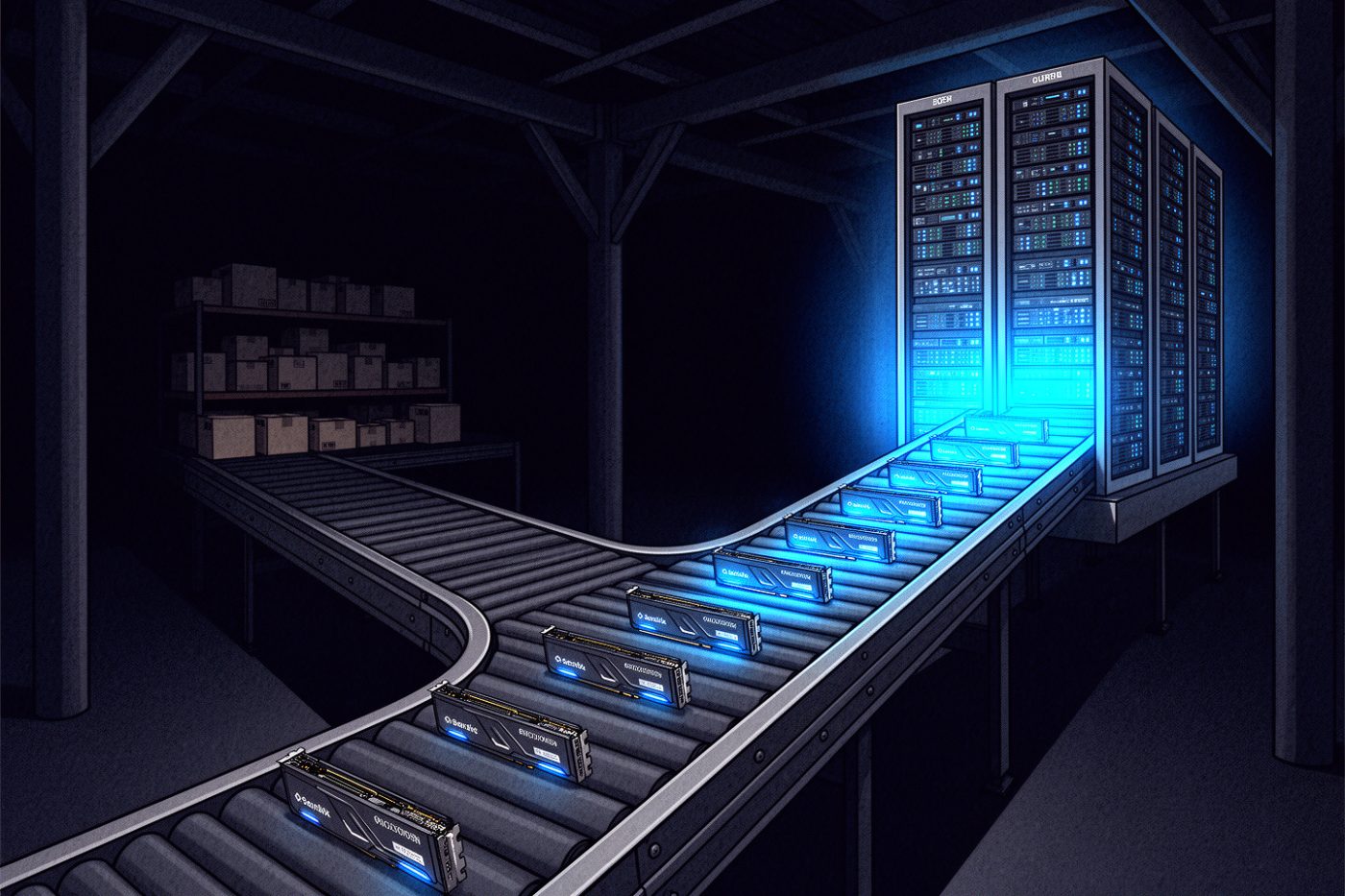
Nvidia is preparing to significantly scale back production of its GeForce RTX 50 series graphics cards during the first half of 2026, with output expected to fall by 30 to 40 percent compared to the same period in 2025. The reduction, reported by supply chain sources in Asia, is being driven by persistent shortages of GDDR7 and GDDR6 memory, the high-bandwidth components essential to modern GPU performance. The cuts are expected to begin with higher-value models that use 16 GB of GDDR7 memory, specifically the RTX 5070 Ti and RTX 5060 Ti.
The decision, if confirmed, would mark a significant shift in Nvidia’s consumer graphics strategy at a time when the company is enjoying record revenue from data center and AI accelerator sales. For professionals who depend on consumer GPUs for workstation tasks, edge computing, or AI prototyping, the supply contraction introduces a new layer of procurement risk heading into 2026. It also highlights how memory allocation decisions made upstream—often favoring enterprise and AI customers—can cascade into the DIY and gaming hardware markets.
Memory shortages are the primary constraint
Multiple reports originating from Chinese tech forums Board Channels and Benchlife, citing unnamed supply chain sources and add-in board (AIC) partners, point to a severe tightening in memory availability as the root cause of the planned cuts. GDDR7, the newest generation of graphics memory, is used in Nvidia’s RTX 50 series cards, while GDDR6 remains in high demand for both graphics and other high-performance applications. The shortage is not limited to graphics memory. Broader memory supply constraints are also affecting DDR5 and DDR4 modules used in motherboards, squeezing the entire DIY PC ecosystem.
Memory manufacturers have been shifting production capacity toward high-bandwidth memory (HBM) used in AI accelerators and data center GPUs, where margins are substantially higher. This reallocation leaves less capacity for commodity GDDR and DDR products. For Nvidia, the shortage creates a difficult trade-off: continue shipping consumer GPUs at reduced volumes, or redirect scarce memory to more profitable enterprise products. The reported 30–40 percent cut suggests Nvidia is choosing the latter, at least in the short term.
According to the supply chain reports, the initial supply adjustments will target models equipped with 16 GB of GDDR7 memory. The RTX 5070 Ti and RTX 5060 Ti are both popular mid-to-high-end cards, and reducing their availability could push buyers toward lower-tier models or force them to wait. There is no indication that Nvidia plans official price increases. Instead, the company appears to be managing supply to stabilize the market and avoid a sharp price spike that would draw regulatory or consumer backlash.
Regional impact and unconfirmed status
While the reports are considered credible by industry observers due to the track record of the sources, Nvidia has not officially confirmed the production cuts. Some reports suggest the impact may be more pronounced in localized markets, particularly mainland China, where allocation strategies for AIC partners could be adjusted to match regional demand shifts. China remains a significant market for consumer GPUs, but it is also a market where Nvidia faces export restrictions on its highest-end data center products, complicating the company’s overall supply planning.
Even if the cuts are concentrated in specific regions, global availability of RTX 50 series cards could still be affected. Modern GPU supply chains are tightly integrated, and a reduction in production anywhere can ripple through distribution channels worldwide. For international buyers, the practical consequence is that obtaining an RTX 5070 Ti or RTX 5060 Ti in early 2026 may become more difficult, with longer lead times and potentially higher street prices driven by scarcity rather than official list price changes.
The situation is reminiscent of the GPU shortages seen during the cryptocurrency mining boom and the COVID-19 pandemic, when consumer graphics cards became scarce and expensive for extended periods. However, the current driver is fundamentally different: it is not a surge in demand from miners or remote workers, but a structural shift in memory allocation toward AI and data center products. That shift is unlikely to reverse quickly, suggesting the supply constraints could persist beyond the first half of 2026.
What it means for professionals and enterprises
For international professionals in technology, enterprise IT, and AI development, the reported production cuts are a signal that high-performance consumer hardware remains vulnerable to supply chain volatility. Many organizations rely on GeForce RTX cards for GPU-intensive workflows, including computer-aided design, scientific research, video rendering, and local AI inference. These use cases often do not require the expensive, specialized features of Nvidia’s data center GPUs, making consumer cards a cost-effective alternative.
If RTX 50 series supply tightens, organizations may need to adjust procurement timelines, secure inventory earlier, or consider alternative hardware. Some may shift to Nvidia’s professional RTX or data center products, but those carry significantly higher price tags and may not be justified for every workload. Others may explore AMD’s Radeon offerings or Intel’s Arc GPUs, though those alternatives also depend on the same constrained memory supply chain.
The broader implication is that Nvidia’s consumer GPU business is increasingly subordinate to its data center ambitions. In the company’s most recent fiscal quarters, data center revenue has dwarfed gaming revenue, and Nvidia has repeatedly emphasized AI as its primary growth engine. When memory is scarce, the company has a clear incentive to prioritize the products that generate the highest margins and strategic value. Consumer GPUs, while still important, are no longer the center of Nvidia’s business.
Looking ahead: a constrained 2026
The reported production cuts, if they materialize, would extend a period of tight supply for consumer graphics cards into 2026. Nvidia is expected to continue ramping production of its Blackwell-based data center GPUs, which consume enormous quantities of HBM and other advanced memory. That ramp will likely keep pressure on the memory supply chain, leaving less room for consumer products. At the same time, demand for gaming and workstation GPUs remains steady, creating a persistent imbalance between supply and demand.
For now, the reports remain unconfirmed by Nvidia, and the company could adjust its plans if memory availability improves or if market conditions change. But the underlying dynamics—memory makers prioritizing high-margin HBM, Nvidia prioritizing data center revenue, and consumer GPUs competing for the same upstream resources—suggest that volatility in the consumer GPU market is not a temporary anomaly. It is a structural feature of an industry increasingly oriented toward AI.
Professionals and organizations that depend on consumer GPUs should treat the early 2026 supply outlook with caution. Planning ahead, diversifying hardware options, and monitoring official Nvidia communications will be essential. The era of abundant, inexpensive consumer graphics cards may be giving way to a new reality in which supply is managed, constrained, and shaped by forces far beyond the gaming market.
Sources
- Nvidia to cut gaming GPU production by 30-40% starting ...
- Nvidia Might Cut RTX 50 GPU Supply by Up to 40% in 2026 Due to Memory Shortages | PCMag
- Nvidia is hinting it will cut consumer RTX supply in 2026 by up to 40%
- Nvidia plans heavy cuts to GPU supply in early 2026 - OC3D
- Nvidia reportedly plans 30-40% cut in GeForce GPU ...
Written by an AI editorial process from the sources above. Errors may occur.
Newsletter
Get the AI news that matters
One short brief with the day's most important AI stories — written for professionals.
We send a confirmation link. No spam. Unsubscribe anytime.
Read next

The AI Cloud Race: Big Tech's $130B Power Play
Amazon, Microsoft, and Alphabet are spending billions to dominate AI through cloud infrastructure, reshaping global tech, security, and market dynamics.
19 Sep 2026
AI Inference Market to Hit $255B by 2030
Global demand for real-time AI decision-making drives explosive growth in inference infrastructure, with NVIDIA, Intel, and Siemens Healthineers leading diverse applications.
18 Sep 2026
Autonomous AI Agents Become Core Enterprise Infrastructure in 2026
The market for autonomous AI agents is projected to surge from $7.92 billion in 2025 to $236.03 billion by 2034, as enterprises shift from experimentation to governing systems that perform operational work.
14 Sep 2026