Inaccessible 3D-Printable Delivery Robot Listing Shows Platform Verification Gaps
A Cults3D model for a toy autonomous delivery rover returns a 403 error, leaving only unverified secondary descriptions. The case highlights risks for professionals sourcing open 3D-printable designs.
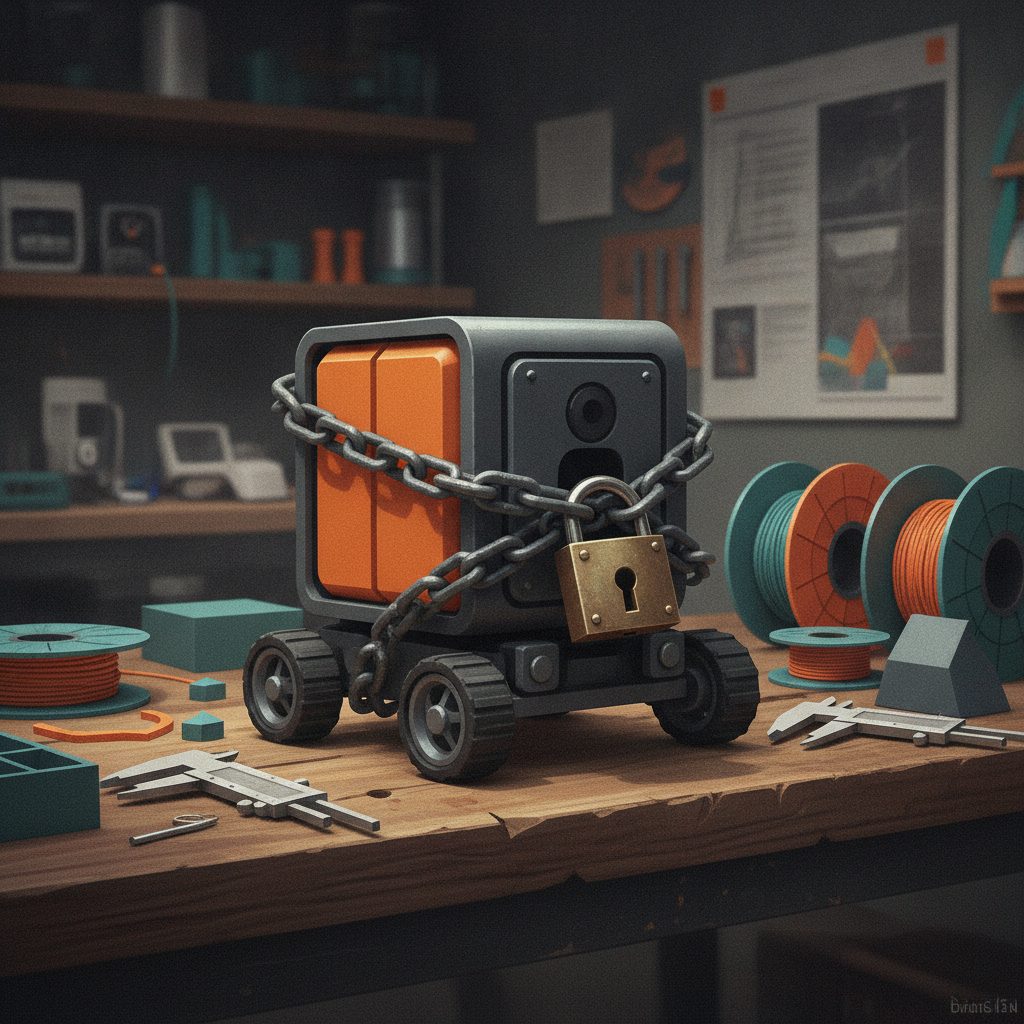
On Cults3D, a widely used online marketplace for 3D-printable files, a model called “09. Toy Autonomous Delivery Vehicle V1 – AI-Pace Delivery Crawler” is listed as a downloadable STL file aimed at hobbyists and designers interested in autonomous delivery concepts. The direct listing page, however, is not currently accessible: it returns an HTTP 403 error, leaving only secondary index descriptions to explain what the file contains.
The case is a small but telling example of how open-access 3D models are beginning to mirror advanced AI-driven logistics systems at miniature scale. For engineers, supply-chain analysts and product developers, such files can offer a low-cost way to prototype form factors, sensor placement and cargo handling without investing in commercial hardware. At the same time, the blocked primary listing and the absence of verifiable technical data illustrate a persistent risk in relying on third-party platforms for design sourcing.
A listing that is partly visible, partly blocked
According to secondary indexing sites such as Yeggi, the model is described as “a scale, functional toy vehicle with features such as a lockable cargo compartment, simulated sensors, and multi-material print compatibility.” The description positions it as an educational or prototyping aid, reflecting real-world autonomous delivery robots in miniature form. The listed features point to a design intended for hands-on learning and mechanical experimentation rather than functional autonomy.
But the original Cults3D page cannot be reached. An HTTP 403 status code means the server understood the request but is refusing to authorize access, which can result from permissions settings, geographic restrictions, or content removal. It is unclear whether the file was taken down by the creator, removed by the platform, or hidden due to regional or account-level restrictions. Cults3D has not publicly commented on this specific model.
Cults3D is one of several online marketplaces where independent designers publish STL files for download, often under paid or free licenses. Other platforms include Printables, Thingiverse and MyMiniFactory. Listings on such sites can change quickly: creators may remove files, update licenses, or have accounts suspended, and platform moderation can also take down content. A 403 error on a single page does not necessarily mean the design is gone permanently, but it does mean that potential users cannot currently access the primary source. Without a cached or mirrored primary page, any evaluation of the model must rely on secondary descriptions, which may be incomplete or outdated.
What the listing claims—and what remains unverified
Beyond the broad description, almost no concrete technical or commercial information is available from accessible sources. The following details are unverified:
- No specific dimensions, print time, or material requirements
- No named creator or company behind the design
- No release date, pricing, or user base
- No evidence of commercial deployment, partnerships, or technical specifications such as battery life, range, or autonomy level
A second URL provided in some references, a WordPress JSON endpoint for Duplo USA, contains no relevant information about the model and appears to be unrelated event data. This kind of metadata mismatch is not uncommon when third-party indexes scrape or aggregate 3D model listings, and it can further complicate efforts to verify a design’s origin or capabilities. The presence of an unrelated endpoint in search results suggests that automated aggregation tools sometimes associate a model with incorrect or irrelevant sources, making it harder for users to trace the original file or its documentation.
Why professionals should care about printable delivery robots
The existence of a toy autonomous delivery vehicle as a printable STL file is part of a broader trend: open-access 3D models that simulate advanced AI-driven logistics systems are enabling low-cost experimentation. Designers can test cargo compartment layouts, wheel configurations, sensor housing shapes and multi-material assembly techniques without needing access to proprietary hardware or expensive simulation software.
Real-world autonomous delivery systems—ranging from sidewalk robots to larger self-driving cargo vehicles—have attracted significant investment and regulatory attention in multiple regions. Miniature, printable versions cannot replicate the autonomy software, battery systems or safety mechanisms of commercial units, but they can help teams visualise physical layouts and test mechanical ideas in a low-risk environment. For educators, they offer a tangible introduction to the design language of delivery robots without requiring access to industrial prototypes.
For teams working on last-mile delivery, warehouse robotics or educational STEM kits, such models can serve as conceptual starting points. They allow rapid iteration on physical form factors and can be used in design reviews, client demonstrations or classroom settings. However, the value of any individual file depends heavily on the quality of its documentation and the reliability of the platform hosting it.
Verification gaps and platform risk
This case underscores a practical risk for professionals who source 3D-printable components from open marketplaces: content availability and metadata completeness are inconsistent. A promising listing can become inaccessible without warning, and secondary indexes may retain outdated or incomplete descriptions. Without a named creator, version history, or technical specifications, it is difficult to assess whether a model is suitable for a given project or whether it can be legally and safely used.
For procurement and engineering managers, the inability to confirm basic parameters such as print material, tolerances or assembly instructions can be a red flag. In professional workflows, undocumented models may require reverse engineering or trial-and-error printing, which increases cost and time. The absence of a named creator also makes it difficult to clarify licensing terms or request design files in other formats.
The lack of recorded critiques, differing viewpoints, or broader implications tied to this specific model in the public domain means there is no independent validation of its functionality or build quality. In professional settings, that absence of documentation can be as important as the design itself.
For now, the “09. Toy Autonomous Delivery Vehicle V1 – AI-Pace Delivery Crawler” remains a conceptual artifact rather than a measurable innovation. If the original listing becomes accessible again or the creator publishes additional technical details, the model could gain practical value for prototyping teams. Until then, it serves as a reminder that the growing ecosystem of printable autonomy models is still uneven—full of potential, but often short on the verifiable data that professionals need before they commit time, materials and trust.
Sources
- 📦 09. Toy Autonomous Delivery Vehicle V1 - 09. Autonomous Delivery Vehicle V1 - AI‑Pace Delivery Crawler - Toy Autonomous Delivery Robot Vehicle - Neighborhood Self‑Driving Rover -・ STL File for 3D printing・Cults
- https://www.duplousa.com/wp-json/tribe/events/v1/
Written by an AI editorial process from the sources above. Errors may occur.
Newsletter
Get the AI news that matters
One short brief with the day's most important AI stories — written for professionals.
We send a confirmation link. No spam. Unsubscribe anytime.
Read next

Gemini's New AI Model Transforms Photo Editing with Multi-Turn Control
Google's Gemini 2.5 Flash Image enables precise, context-aware edits across multiple steps, advancing creative workflows for professionals.
27 Sep 2026
Autonomous AI Agents: The Rise of Digital Workforce
How self-reasoning AI systems are transforming business workflows and redefining automation across industries.
26 Sep 2026
Adobe Launches AI Video Generation in Creative Cloud
Adobe unveils Firefly Video Model and faster image generation, embedding AI deeply into professional creative workflows.
26 Sep 2026