Google Merges Gemini App Team with DeepMind to Speed AI Development
Google integrates its consumer-facing Gemini app team into DeepMind, aiming to accelerate AI innovation and close the gap with rivals like OpenAI and Anthropic.
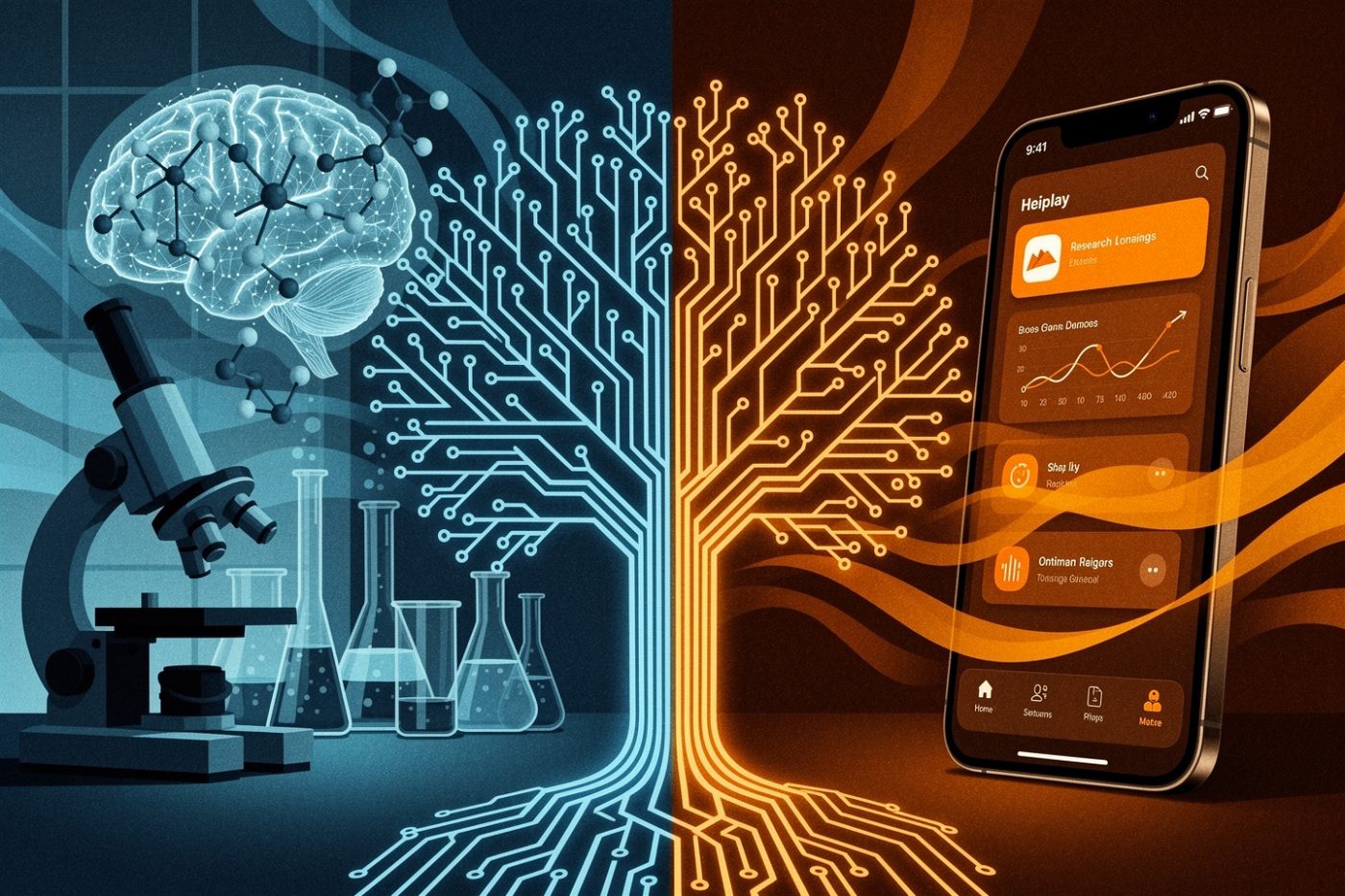
Google has formally integrated the team behind its flagship consumer AI product, the Gemini app, into Google DeepMind, the company’s elite artificial intelligence research division. The move, announced on 17 October 2024 by CEO Sundar Pichai, signals a strategic pivot to accelerate the deployment of cutting-edge AI models into real-world applications. By placing the Gemini app under the leadership of DeepMind CEO Demis Hassabis, Google aims to tighten the feedback loop between research and product development—a structural shift designed to close the gap with rivals like OpenAI and Anthropic, who have demonstrated faster time-to-market for advanced AI capabilities.
The reorganization matters because it reflects a broader industry trend: the fusion of frontier AI research with consumer product teams to compress innovation cycles. For executives and founders navigating the AI landscape, Google’s move underscores how organizational design can become a competitive lever. By consolidating control of both model development and application under one roof, Google is betting that tighter integration will yield faster iteration, better model refinement, and ultimately, a stronger position in the race for AI dominance. Yet the shift also comes amid internal turbulence, including high-profile departures and product delays, raising questions about execution and retention in an era of intense talent competition.
Leadership Reshuffle and Reporting Lines
At the center of the reorganization is a clear realignment of leadership. Sissie Hsiao, who previously led the Gemini app team, now reports directly to Demis Hassabis. This change embeds the consumer-facing AI product within DeepMind’s research ecosystem, enabling closer collaboration between engineers building models and those deploying them in user-facing applications. Hassabis, a co-founder of DeepMind and a key architect of Google’s AI strategy, gains expanded oversight, positioning him as one of the most powerful figures in the company’s AI hierarchy.
Meanwhile, Prabhakar Raghavan, who had led the Knowledge & Information (K&I) organization overseeing Search, Ads, Maps, and Gemini, transitioned into a new role as Chief Technologist, reporting directly to Pichai. Raghavan, a 12-year veteran in leadership roles at Google, stepped back from day-to-day product oversight, a shift Axios noted as removing him from direct control of core revenue-generating and strategic products. His successor, Nick Fox, a 21-year Google veteran known for launching Google Fi and leading RCS messaging initiatives, assumed the title of Senior Vice President of K&I. The move suggests a recalibration of priorities, with Fox expected to focus on integration and execution rather than foundational research.
The Assistant teams responsible for device-based and home experiences were moved to the Platforms & Devices group, further streamlining responsibilities. Pichai described the changes as part of an ongoing effort to “simplify” Google’s structure, following earlier consolidations that merged DeepMind with Google Brain and unified hardware and software teams under Platforms & Devices.
Strategic Rationale: Closing the Research-Product Gap
Google’s decision to fold the Gemini app team into DeepMind is rooted in a persistent challenge: translating breakthrough AI research into timely, competitive products. Despite DeepMind’s scientific achievements—including AlphaFold and breakthroughs in reinforcement learning—Google has often lagged in bringing such advances to market at pace. In contrast, OpenAI and Anthropic have demonstrated an ability to rapidly deploy new models like GPT-4 and Claude 3 into consumer and enterprise products.
By integrating the Gemini team into DeepMind, Google aims to shorten the “feedback loop” between model development and real-world use. As Pichai stated in the internal memo, the shift will “enable fast deployment of our new models in the Gemini app” and improve efficiency in post-training processes, such as fine-tuning and safety alignment. This structural alignment allows model developers to observe how their systems perform in production, gather user interaction data, and iterate more quickly—a cycle critical for maintaining relevance in fast-moving AI markets.
The move also reflects a broader industry shift toward centralized AI organizations. Microsoft’s tight integration of OpenAI with Azure and Microsoft 365, and Meta’s unified AI and product teams under Yann LeCun and Mark Zuckerberg, suggest that siloed research labs are no longer sufficient. For Google, placing Gemini under Hassabis signals a commitment to treating AI not as a standalone research endeavor, but as a core product engine.
Performance and Competitive Pressure
Despite the strategic logic, Google’s AI efforts have faced setbacks. By August 2026, the Gemini app had reached over 950 million monthly users, a significant milestone, but not without turbulence. According to a TIME report from that period, the app had suffered repeated delays and struggled to match the capabilities of frontier models from OpenAI and Anthropic. Internal sources cited in the report described a product pipeline hampered by bureaucratic friction and shifting priorities.
Talent attrition has compounded these challenges. High-profile departures included John Jumper, the Nobel laureate who led the AlphaFold project, who left for Anthropic. Even more significant was the exit of Jeff Dean, Google’s longtime chief scientist, who departed to launch a startup with Sanjay Ghemawat, another foundational figure in Google’s early infrastructure. These losses underscore the intense competition for AI talent, where startups and well-funded rivals can lure top researchers with promises of agility and impact.
Despite these headwinds, Google has maintained strong adoption metrics. The Gemma family of open models surpassed 900 million downloads by mid-2026, indicating robust developer engagement. However, usage does not necessarily equate to leadership in capability. Industry analysts continue to debate whether Google’s vast research output can be effectively productized at the speed required to compete with leaner, more focused organizations.
Future Trajectory and Leadership Evolution
The integration of Gemini into DeepMind set the stage for further leadership changes. By 2026, Demis Hassabis transitioned into the role of Chair of Google DeepMind and Chief Scientist of Alphabet, stepping back from day-to-day management. Operational leadership passed to Koray Kavukcuoglu, a 13-year DeepMind veteran and former VP of Research, who became SVP of Google DeepMind reporting directly to Pichai. This succession plan suggests a maturation of DeepMind’s role within Google, evolving from a research outpost into a central pillar of the company’s AI strategy.
The reorganization also raises broader questions about the future of AI development in large tech firms. While integration can accelerate deployment, it risks over-centralizing control, potentially stifling innovation in other product areas. Raghavan’s move to a strategic advisory role, for instance, removes a seasoned product leader from direct oversight of Search and Ads—businesses that still generate the majority of Google’s revenue. Whether this trade-off pays off will depend on whether the tighter research-product loop translates into measurable improvements in Gemini’s performance, reliability, and user engagement.
Sources
- Google shifts Gemini app team to DeepMind
- Google shifts Gemini app team to DeepMind | Reuters
- Google merges Gemini with DeepMind | Digital Watch Observatory
- Exclusive: Google moves Gemini app team to DeepMind unit in latest reorg
- Changes across Knowledge & Information and Gemini app teams
Written by an AI editorial process from the sources above. Errors may occur.
Newsletter
Get the AI news that matters
One short brief with the day's most important AI stories — written for professionals.
We send a confirmation link. No spam. Unsubscribe anytime.
Read next

Dell Unveils High-Density AI Servers at Supercomputing 2025
Dell launches the PowerEdge XE8712 and expands its AI Factory platform, enabling unprecedented on-premises AI scalability with 144 Blackwell GPUs per rack.
30 Sep 2026
The Rise of AI Video Generation Platforms
AI video models are no longer standalone tools but part of integrated platforms that prioritize workflow efficiency and cost over raw performance.
29 Sep 2026
Gemini's New AI Model Transforms Photo Editing with Multi-Turn Control
Google's Gemini 2.5 Flash Image enables precise, context-aware edits across multiple steps, advancing creative workflows for professionals.
27 Sep 2026