Dell Unveils High-Density AI Servers at Supercomputing 2025
Dell launches the PowerEdge XE8712 and expands its AI Factory platform, enabling unprecedented on-premises AI scalability with 144 Blackwell GPUs per rack.
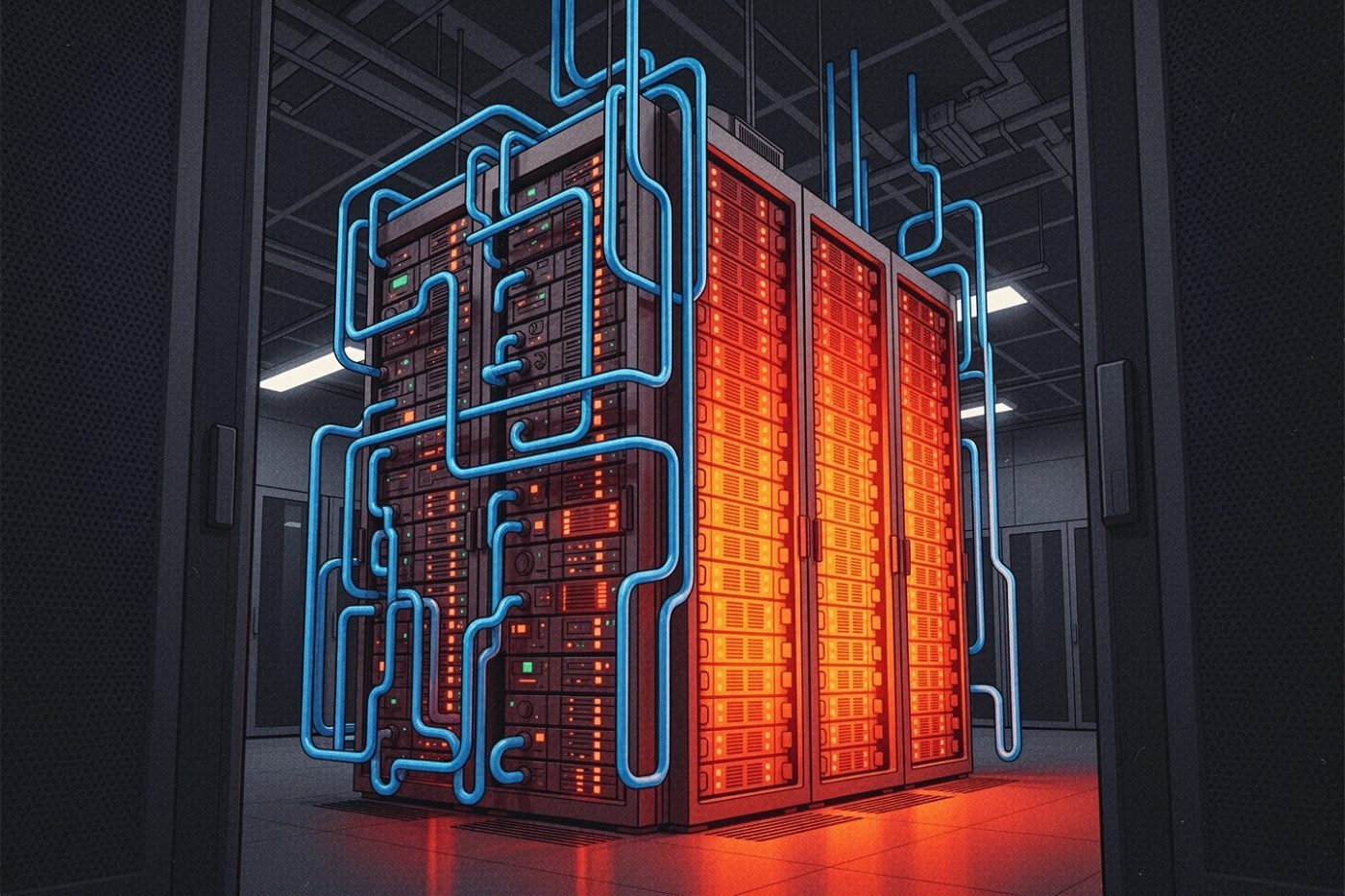
At Supercomputing 2025 in St. Louis, Dell Technologies unveiled a sweeping set of upgrades to its Dell AI Factory platform, delivering over 20 new advancements designed to streamline enterprise AI deployment from pilot to full-scale production. The centerpiece of the announcement is the PowerEdge XE8712 server, which enables a record-breaking 144 NVIDIA Blackwell GPUs in a single Dell IR7000 rack—marking the highest GPU density ever achieved in a standard x86 rack configuration. This leap in compute density, combined with new automation tools and expanded ecosystem integrations, signals a major shift in how enterprises can deploy and manage large-scale AI workloads on-premises, challenging the dominance of public cloud AI infrastructure.
The significance of Dell’s SC25 announcements lies in their direct response to one of the most pressing challenges facing enterprise AI: scalability. While many organizations have launched AI pilots, few have successfully scaled them into production due to infrastructure complexity, power constraints, and operational overhead. Dell’s new AI Factory enhancements aim to close that gap by offering a fully integrated, validated, and automated stack that reduces deployment time, lowers total cost of ownership (TCO), and minimizes operational risk. For CIOs, AI architects, and data science leaders, these updates represent a viable alternative to cloud-based AI, particularly for industries with strict data governance, latency, or sovereignty requirements.
Unprecedented Density with the PowerEdge XE8712
The PowerEdge XE8712 is the technological cornerstone of Dell’s latest AI push. Engineered specifically for NVIDIA’s GB200 NVL4 architecture, the server integrates Grace CPU and B200 GPU superchips interconnected via NVLink, enabling ultra-high bandwidth communication essential for large language models (LLMs) and other AI-intensive workloads. Each XE8712 supports multiple GB200 modules, and when deployed across the full IR7000 rack, the system can house up to 144 Blackwell GPUs—a density no other vendor has matched in a standard 42U rack.
This extreme density is made possible through advanced thermal and power engineering. The system employs Direct Liquid Cooling (DLC), a necessity given the thermal load of high-performance AI clusters. Dell reports the rack can handle up to 264kW of continuous power, with shared bus bar architecture supporting up to 480kW across multiple racks—critical for data centers aiming to scale AI without overhauling electrical infrastructure. The combination of liquid cooling, high-density packaging, and modular design allows enterprises to deploy AI clusters with significantly reduced footprint, a key advantage in space-constrained or energy-regulated environments.
End-to-End Integration and Ecosystem Expansion
Dell’s strategy extends beyond hardware. The AI Factory platform now includes expanded support for NVIDIA’s full software stack, including NVIDIA AI Enterprise and the newly introduced Dynamo orchestration framework, which optimizes AI workload scheduling and resource allocation. This deep integration ensures that enterprises can deploy AI applications with predictable performance and support, reducing the burden on internal IT teams.
Networking has also been upgraded to meet the demands of AI-scale data movement. Dell now offers PowerSwitch solutions with 800Gb Ethernet via NVIDIA’s ConnectX-8 adapters, enabling high-throughput, low-latency communication between nodes. This is particularly critical for distributed training of large models, where inter-node bandwidth can become a bottleneck. Full support for SONiC (Software for Open Networking in the Cloud) on Spectrum-X networks is expected in the first half of 2026, giving enterprises greater flexibility in network automation and management.
On the software and automation front, Dell has expanded its Automation Platform with validated blueprints for Cohere and Tabnine. These integrations allow enterprises to deploy secure, agentic AI workflows—where AI agents perform multi-step tasks autonomously—while maintaining compliance and data governance. The Cohere integration supports enterprise-grade natural language processing, while Tabnine enables AI-powered code generation within secure development environments. Both are pre-validated on Dell infrastructure, reducing deployment risk and accelerating time-to-value.
Strategic Partnerships and Market Positioning
Dell’s announcements underscore the deepening strategic partnership with NVIDIA, which provides the core AI silicon and software stack. The collaboration allows Dell to deliver tightly integrated systems optimized for Blackwell-based workloads, positioning the company as a leading provider of on-premises AI infrastructure. According to StockTitan.net, Dell is now the world’s top-selling AI infrastructure provider, a claim supported by growing enterprise demand for private AI deployments.
Ecosystem partnerships further strengthen the platform’s appeal. Red Hat’s OpenShift is now fully supported on Dell AI Factory systems, enabling Kubernetes-based orchestration of AI workloads in hybrid environments. This is particularly valuable for enterprises already invested in Red Hat’s enterprise Linux and container platforms. By aligning with major software vendors, Dell ensures that its hardware is not just powerful, but also compatible with existing enterprise IT workflows and DevOps practices.
The inclusion of Cohere and Tabnine reflects a broader trend: the move from isolated AI models to integrated AI agents that can act on behalf of users. Dell’s automation blueprints provide guardrails for these deployments, addressing concerns around security, auditability, and resource consumption. For CIOs, this means they can enable innovation without sacrificing control—a critical balance in regulated industries such as finance, healthcare, and government.
Implications for Enterprise AI Adoption
The timing of these announcements is significant. As enterprises move beyond proof-of-concept AI projects, they face mounting pressure to scale responsibly. Public cloud providers have dominated this space, but rising costs, data egress fees, and compliance concerns are driving interest in on-premises alternatives. Dell’s AI Factory upgrades directly address these pain points by offering a turnkey, scalable, and secure platform that can match or exceed cloud performance for certain workloads.
Industries with high-performance computing (HPC) traditions—such as pharmaceuticals, energy, and financial services—are likely early adopters. For example, a pharmaceutical company running molecular simulations can now deploy a 144-GPU cluster in a single rack, reducing time-to-insight for drug discovery while keeping sensitive research data on-site. Similarly, financial institutions can train risk models on proprietary data without exposing it to third-party clouds.
However, challenges remain. Deploying liquid-cooled systems requires facility modifications, and not all data centers are equipped to handle 264kW per rack. Dell acknowledges this and offers consulting services through its AI Advisory team to help customers plan and deploy these systems. The December 2025 shipment date for the PowerEdge XE8712 gives enterprises time to prepare, but infrastructure readiness will be a key gating factor.
Looking ahead, Dell’s focus on integration, automation, and density positions it as a central player in the enterprise AI infrastructure race. As AI workloads grow more complex and data volumes explode, the ability to scale efficiently—without sacrificing security or control—will define competitive advantage. Dell’s SC25 announcements don’t just offer more compute; they offer a more manageable, predictable, and enterprise-ready path to AI at scale. For organizations serious about owning their AI future, the Dell AI Factory may now be the most compelling option on the market.
Sources
- SC25: Accelerating Enterprise AI with the Dell AI Factory | Dell
- Dell Technologies Unveils AI Factory Upgrades, Up to 144 GPUs | DELL Stock News
- SC25: Accelerating Enterprise AI with the Dell AI Factory | Dell | Sam Grocott
- Dell and NVIDIA expand AI factory to speed enterprise adoption By Investing.com
Written by an AI editorial process from the sources above. Errors may occur.
Newsletter
Get the AI news that matters
One short brief with the day's most important AI stories — written for professionals.
We send a confirmation link. No spam. Unsubscribe anytime.
Read next
Google Merges Gemini App Team with DeepMind to Speed AI Development
Google integrates its consumer-facing Gemini app team into DeepMind, aiming to accelerate AI innovation and close the gap with rivals like OpenAI and Anthropic.
3 Oct 2026
The Rise of AI Video Generation Platforms
AI video models are no longer standalone tools but part of integrated platforms that prioritize workflow efficiency and cost over raw performance.
29 Sep 2026
Gemini's New AI Model Transforms Photo Editing with Multi-Turn Control
Google's Gemini 2.5 Flash Image enables precise, context-aware edits across multiple steps, advancing creative workflows for professionals.
27 Sep 2026