Google DeepMind's Pivot from Research Lab to Product Engine
Demis Hassabis steps aside as Koray Kavukcuoglu takes charge of Google DeepMind, signaling a decisive shift from research exploration to product velocity in the AI race.
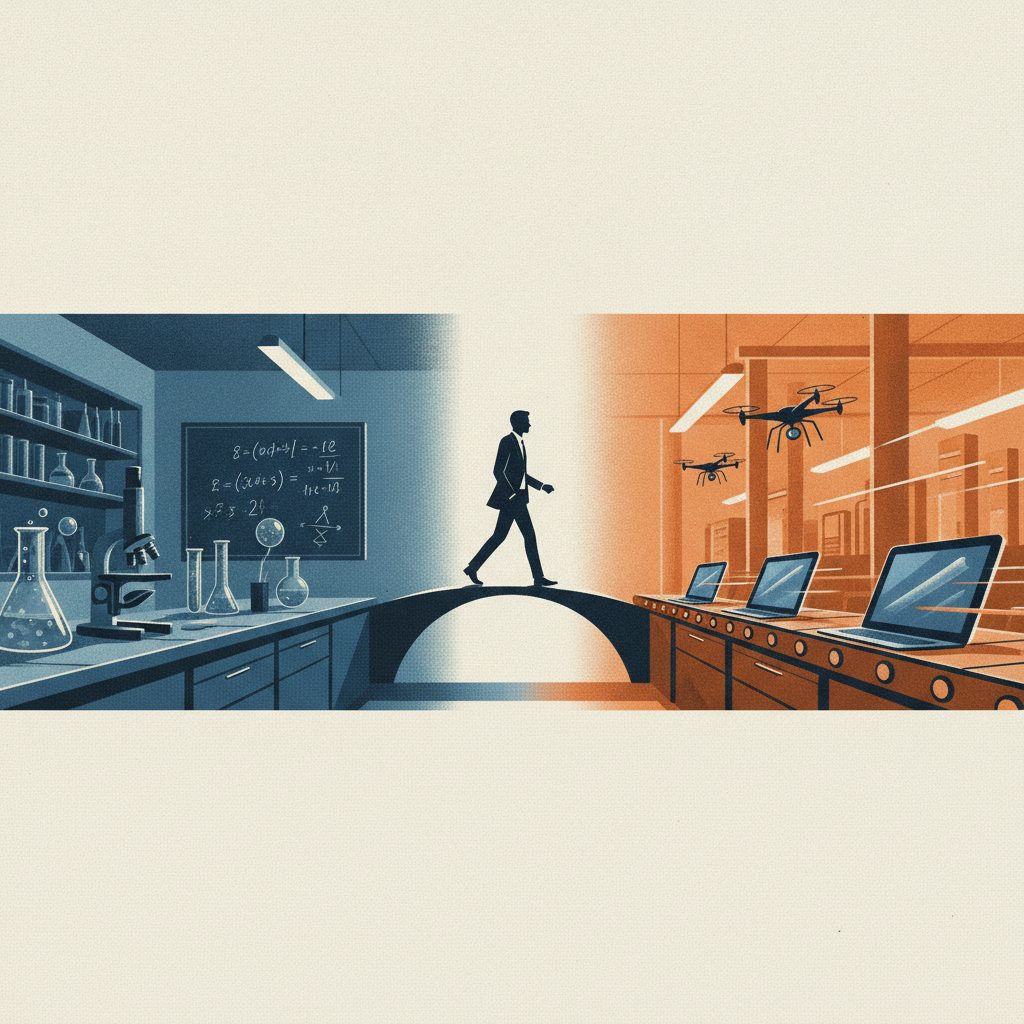
Google DeepMind’s leadership structure has shifted decisively from research exploration to product execution. On August 5, 2026, Demis Hassabis stepped down as chief executive of Google DeepMind to become chair of the unit and chief scientist of Alphabet, while Koray Kavukcuoglu, the organisation’s long-time chief technology officer and Google’s chief AI architect, was promoted to senior vice president of Google DeepMind. Kavukcuoglu now reports directly to Alphabet and Google CEO Sundar Pichai and oversees Gemini model development, frontier AI research, and consumer and developer product teams. The move completes a multi-year transformation from a research-first laboratory to a product-driven AI engine competing head-on with OpenAI and Anthropic.
The reshuffle matters far beyond Google’s internal organisation. It is one of the clearest signals yet that the commercial AI race is no longer decided by who publishes the most groundbreaking research, but by who can ship models into widely used products fastest. For executives, founders and technical leaders worldwide, the restructuring offers a concrete case study in how to align research, engineering and product teams under a single accountable leader when competitive pressure intensifies.
A leadership reset built for product velocity
The new structure centralises responsibility for turning research into market-ready products. Kavukcuoglu’s remit is unusually broad: he controls the full pipeline from frontier research to the Gemini family of models and the consumer and developer products that expose those models to users. That is a deliberate departure from earlier arrangements, where research leadership and product delivery were often separated or shared across multiple executives. By placing one person in charge of the entire chain, Google is betting that tighter feedback loops between research breakthroughs and product deployment will help close the gap with faster-moving rivals.
Hassabis, meanwhile, will focus on artificial general intelligence, scientific research and AI policy as Alphabet’s chair and chief scientist. He continues to lead Isomorphic Labs, the Alphabet subsidiary applying AI to drug discovery. The division of labour is significant: the scientist who personified DeepMind’s long-term ambition is now positioned above the day-to-day product organisation, while an engineering and product-focused leader runs the core AI unit. The change follows the 2023 merger of DeepMind and Google Brain into a single unit, which was intended to accelerate AI progress. The latest move goes further by making one executive accountable for both research and product outcomes.
The scale of Google’s AI product machine
The product machine Kavukcuoglu inherits is already operating at enormous scale. Gemini Flash is seeing strong demand, and the open-source Gemma model family has surpassed 900 million downloads. The Gemini application now has more than 950 million monthly users, integrated across Google Search, Workspace and Android. Those figures reflect a strategy that no longer treats models as standalone research artifacts but as infrastructure embedded in products used by hundreds of millions of people daily.
- Gemini Flash: strong demand for the model.
- Gemma: more than 900 million downloads of the open-source model family.
- Gemini app: over 950 million monthly users across Search, Workspace and Android.
Google’s financial commitment remains massive. Alphabet spent more than $31 billion on research and development in 2025. Yet the leadership change suggests that spending alone is not enough. The company is now prioritising the speed and scale of product integration over the slower rhythms of foundational research, even as it continues to fund long-horizon scientific projects.
Brain drain and the founding of Discovery Loop
The reorganisation coincides with the departure of several of Google’s most influential AI researchers. Jeff Dean, Google’s long-time chief scientist and a key architect of its AI infrastructure, is leaving alongside researchers Sanjay Ghemawat, Quoc Le and Oriol Vinyals. They are founding Discovery Loop, a public benefit corporation focused on automating scientific research. Google is a founding investor and cloud provider for the new venture.
The timing is striking. Even as Google centralises AI leadership to accelerate product delivery, some of its most senior research figures are choosing a different path—one explicitly organised around scientific discovery rather than consumer product cycles. Discovery Loop’s public benefit structure signals a broader movement among top researchers who want to build AI systems for science without being bound to advertising or consumer product metrics. It also raises questions about whether Google’s product-centric pivot is pushing some of its best scientific talent out the door.
Research culture vs. market pressure
The restructuring has drawn scrutiny from observers who question whether a product-centric focus will erode the foundational research culture that produced breakthroughs such as AlphaFold, the protein-structure prediction system that has become a global reference point for AI’s scientific impact. DeepMind’s reputation was built on long-horizon projects—AlphaGo, AlphaZero, AlphaFold—that did not have immediate commercial returns. Under the new structure, those projects must coexist with the relentless cadence of Gemini releases and consumer product updates.
Google faces intense competitive pressure from OpenAI and Anthropic, both of which have moved aggressively to capture developer and enterprise markets. The company’s response is not to retreat from research but to integrate it more tightly with product execution. Whether that integration preserves the conditions for breakthrough science remains an open question. The departure of senior researchers to Discovery Loop suggests that some believe the two goals are increasingly difficult to pursue inside a single product-driven organisation.
For global executives and AI specialists, the message is clear: the AI race is no longer won by research alone. Organisations that cannot align research, engineering and product teams under unified leadership risk being out-executed, even if they employ some of the world’s best scientists. Google’s restructuring is a high-stakes experiment in whether a company can maintain deep scientific ambition while shipping at the speed the market now demands.
The next 12 to 24 months will test whether Google’s new structure can deliver both. Kavukcuoglu must prove that Gemini can keep pace with frontier models from OpenAI and Anthropic while extending Google’s reach across Search, Workspace and Android. Hassabis, from his Alphabet role, must show that the company can still produce the kind of scientific breakthroughs—perhaps in drug discovery through Isomorphic Labs or in AGI research—that justify its long-term ambitions. If both succeed, the reorganisation will be remembered as the moment Google stopped treating DeepMind as a separate research institution and started running AI as a core business. If not, it may be seen as the point where foundational research lost its protected status inside one of the world’s most important AI companies.
Sources
- DeepMind as we know it is no more - Sync #583
- Google's DeepMind: All That We Need to Know - Datafloq
- Welcome to the DeepMind podcast — Google DeepMind
- DeepMind: can we ever trust a machine to diagnose cancer?
- We are very excited to announce the launch of DeepMind Health — Google DeepMind
Written by an AI editorial process from the sources above. Errors may occur.
Newsletter
Get the AI news that matters
One short brief with the day's most important AI stories — written for professionals.
We send a confirmation link. No spam. Unsubscribe anytime.
Read next

The AI Cloud Race: Big Tech's $130B Power Play
Amazon, Microsoft, and Alphabet are spending billions to dominate AI through cloud infrastructure, reshaping global tech, security, and market dynamics.
19 Sep 2026
AI Inference Market to Hit $255B by 2030
Global demand for real-time AI decision-making drives explosive growth in inference infrastructure, with NVIDIA, Intel, and Siemens Healthineers leading diverse applications.
18 Sep 2026
Autonomous AI Agents Become Core Enterprise Infrastructure in 2026
The market for autonomous AI agents is projected to surge from $7.92 billion in 2025 to $236.03 billion by 2034, as enterprises shift from experimentation to governing systems that perform operational work.
14 Sep 2026