CES 2026: Autonomous Driving Hits an Inflection Point
AI-driven autonomy overtakes electrification as the industry's core narrative, with production timelines, open-source platforms, and explainable AI reshaping the road ahead.
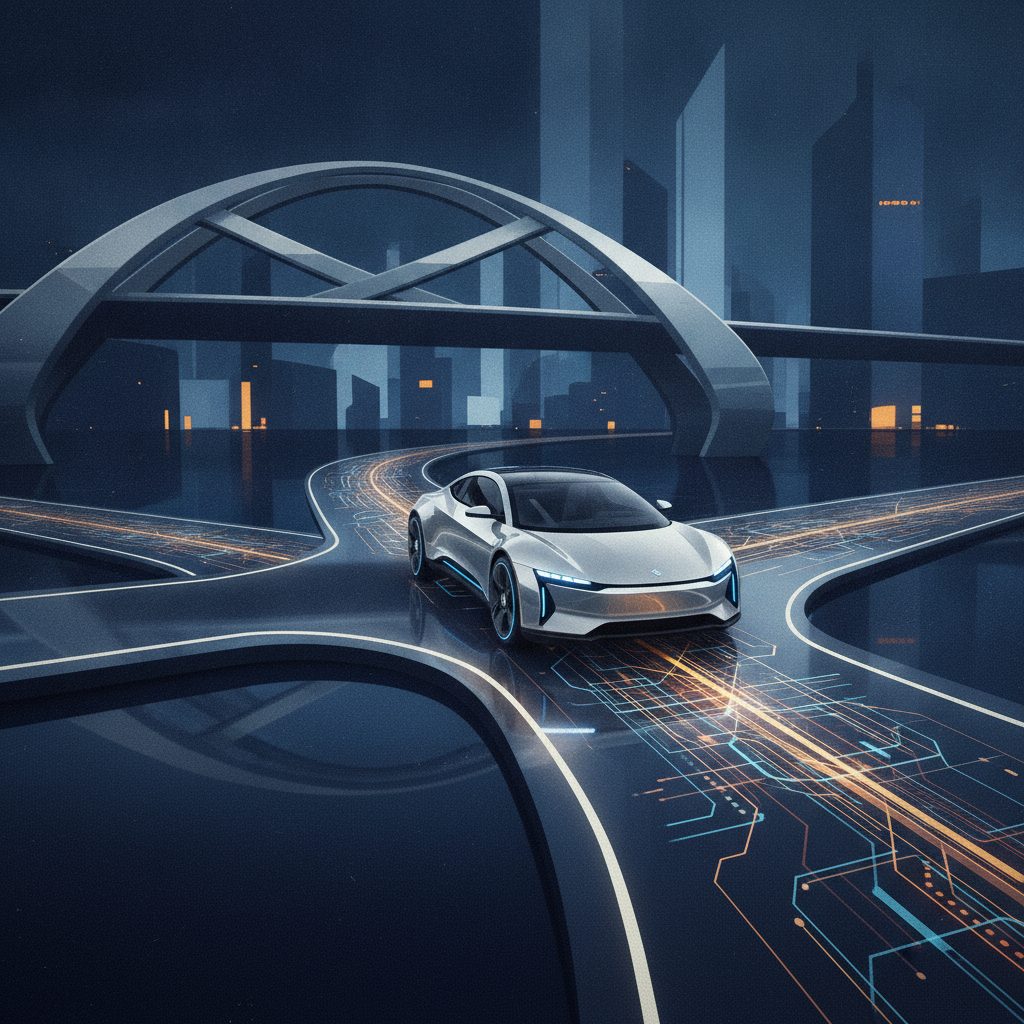
The consumer electronics industry’s loudest annual gathering has long been a battleground for dashboard screens and battery range claims. But at CES 2026, the conversation shifted decisively. Electric vehicles, the sector’s dominant narrative for nearly a decade, were no longer the headline act. Instead, the floor belonged to autonomous driving, which returned with a new generation of hardware, software, and strategic alliances that signal a maturing industry. According to a January 2026 analysis by Global X ETFs, the event marked an inflection point driven by rapid advancements in artificial intelligence, particularly in hardware and software, enabling higher levels of vehicle autonomy than previously feasible at commercial scale.
This shift matters for executives, engineers, and investors far beyond the automotive sector. The transition from electrification to AI-driven autonomy is not merely a product upgrade; it is a reordering of value chains, safety paradigms, and competitive moats. The integration of large-scale AI models into vehicles raises fundamental questions about how safety is validated, how regulators approve systems that learn from data, and how consumer trust is built when a machine makes life-or-death decisions. The announcements at CES 2026 suggest the industry is beginning to answer those questions with concrete deployments, open ecosystems, and a new emphasis on explainability.
From Prototypes to Production Timelines
The most tangible evidence of the inflection point came from companies announcing not just concepts, but specific launch dates and operational metrics. Waymo, the Alphabet-owned autonomous driving unit, showcased its Ojai robotaxi, a purpose-built vehicle manufactured by Geely. The company said the Ojai will launch commercial service in late 2026, backed by more than 100 million miles of Level 4 (L4) autonomous driving experience. The vehicle’s sensor suite includes 13 cameras, six radar units, and four LiDAR sensors, a configuration that reflects the industry’s ongoing reliance on redundant sensing modalities for high-autonomy operations. Waymo also stated plans to expand into more than a dozen cities, a significant step from its current footprint concentrated in a handful of U.S. metropolitan areas.
Uber, which had scaled back its own autonomous ambitions after a fatal 2018 incident, re-entered the arena with a partnership announcement. Its Gravity robotaxi, developed with electric vehicle maker Lucid and autonomous technology firm Nuro, is slated for a late 2026 launch in San Francisco. The move positions Uber as a fleet operator rather than a technology developer, leveraging its ride-hailing network to deploy vehicles built by specialists. Traditional automakers also signaled their roadmaps. Ford said it plans to offer Level 3 (L3) autonomy—where the vehicle can handle all driving tasks under certain conditions but a human must be ready to take over—by 2028. BMW, meanwhile, showcased its iX3 with Level 2 driver assistance, a reminder that the gap between assisted driving and true autonomy remains wide for most mass-market vehicles.
Beyond passenger cars, Caterpillar reinforced the commercial case for autonomy in construction and mining. The company displayed AI-powered heavy equipment designed to operate in constrained, high-risk environments where labor shortages and safety concerns are acute. This broadening of autonomous applications beyond robotaxis underscores a key point: the technology’s near-term economic value may be as significant in industrial settings as on public roads.
The Open-Source Gambit: NVIDIA’s Alpamayo Platform
The most consequential technological announcement came not from an automaker but from NVIDIA, the chipmaker that has become a central player in AI infrastructure. The company unveiled Alpamayo, an open-source “physical AI” platform designed specifically for autonomous driving. Unlike earlier perception-focused systems that primarily identify objects and plan paths, Alpamayo is described as a “reasoning-based” AI. It aims to solve rare and complex driving scenarios by not only making decisions but also explaining the logic behind them. The flagship model, Alpamayo 1, is a 10-billion-parameter Vision-Language-Action system, a scale that would have been impractical for on-vehicle deployment just a few years ago.
NVIDIA’s decision to release the model weights, a simulation framework called AlpaSim, and more than 1,700 hours of driving data is a strategic departure from the proprietary approaches that have dominated the field. The move is widely interpreted as an attempt to position NVIDIA as the “Android of Autonomy,” in contrast to Tesla’s vertically integrated, closed system. By giving developers, automakers, and researchers access to a capable foundation model and the tools to adapt it, NVIDIA is betting that the resulting ecosystem will drive demand for its hardware and cloud services. The first production vehicle to feature the new stack is the 2025 Mercedes-Benz CLA, which began shipping in the United States in the first quarter of 2026. That timeline suggests the open-source platform is not a research project but a commercial product already reaching consumers.
The implications of this open approach are significant. If advanced driver-assistance systems (ADAS) and autonomous driving stacks become commoditized through open-source models, the competitive differentiation may shift from software development to data acquisition, simulation quality, and hardware integration. Automakers that have spent billions building proprietary autonomy teams may find themselves reassessing those investments. At the same time, open-source models raise new questions about liability, security, and the consistency of safety validation across different implementations.
Explainable AI and the Regulatory Hurdle
One of the most persistent barriers to widespread autonomous vehicle deployment has been the opacity of deep learning systems. Regulators and safety investigators have struggled to understand why an autonomous vehicle made a particular decision in a critical moment. The emphasis on “explainable AI” at CES 2026—embodied in NVIDIA’s reasoning-based Alpamayo platform—addresses this directly. If a vehicle can articulate the logic behind an evasive maneuver or a braking decision, it becomes easier to audit, certify, and defend in the event of an incident.
This shift is not merely technical; it is regulatory and legal. The European Union’s AI Act and emerging frameworks in other jurisdictions require a degree of transparency for high-risk AI systems. Autonomous vehicles fall squarely into that category. A system that can generate human-readable explanations of its actions may satisfy regulatory requirements that a purely statistical model cannot. According to industry analysts, this could accelerate the approval process for L3 and L4 systems in markets that have been cautious about granting operational permits.
However, explainability is not a panacea. The explanations generated by AI models are themselves probabilistic and may not always reflect the true causal factors behind a decision. Regulators will need to develop standards for validating these explanations, and courts will eventually have to decide how much weight to give them in liability cases. The industry is entering a period where the technical capability to explain decisions is advancing faster than the legal and institutional frameworks to evaluate those explanations.
A Reordered Competitive Landscape
The developments at CES 2026 suggest a reordering of the autonomous driving competitive landscape. The early leaders—companies that invested heavily in proprietary sensor stacks and custom software—now face competition from open-source platforms that lower the barrier to entry. NVIDIA’s move could enable smaller automakers and new entrants to offer advanced autonomy features without building a full in-house AI team. At the same time, the established players with deep operational experience, such as Waymo, retain advantages in fleet management, mapping, and regulatory relationships that cannot be replicated by downloading model weights.
For international professionals, the key takeaway is that autonomous driving is no longer a speculative technology or a niche research endeavor. It is a commercial reality with defined launch dates, measurable safety performance, and a growing ecosystem of open tools. The transition from electrification to AI-driven autonomy will reshape not only the automotive industry but also adjacent sectors including insurance, logistics, urban planning, and semiconductor design. The companies that succeed will be those that can navigate the complex interplay of open-source innovation, regulatory scrutiny, and the persistent challenge of earning public trust on real roads.
Sources
- CES 2026: Autonomous Driving Hits an Inflection Point - Global X ETFs
- 20 August 2026
- Autonomous Vehicles & AI USA 2026 | Explainable Cars
Written by an AI editorial process from the sources above. Errors may occur.
Newsletter
Get the AI news that matters
One short brief with the day's most important AI stories — written for professionals.
We send a confirmation link. No spam. Unsubscribe anytime.
Read next

The AI Cloud Race: Big Tech's $130B Power Play
Amazon, Microsoft, and Alphabet are spending billions to dominate AI through cloud infrastructure, reshaping global tech, security, and market dynamics.
19 Sep 2026
AI Inference Market to Hit $255B by 2030
Global demand for real-time AI decision-making drives explosive growth in inference infrastructure, with NVIDIA, Intel, and Siemens Healthineers leading diverse applications.
18 Sep 2026
Autonomous AI Agents Become Core Enterprise Infrastructure in 2026
The market for autonomous AI agents is projected to surge from $7.92 billion in 2025 to $236.03 billion by 2034, as enterprises shift from experimentation to governing systems that perform operational work.
14 Sep 2026