Big Tech's $600B AI Bet: Spending Surge, Revenue Lag, and Power Crunch
Amazon, Alphabet, Microsoft, Meta, and Oracle are set to pour more than $600 billion into AI infrastructure next year, but with direct AI services revenue at just $25 billion, investors are questioning whether the buildout can be justified.
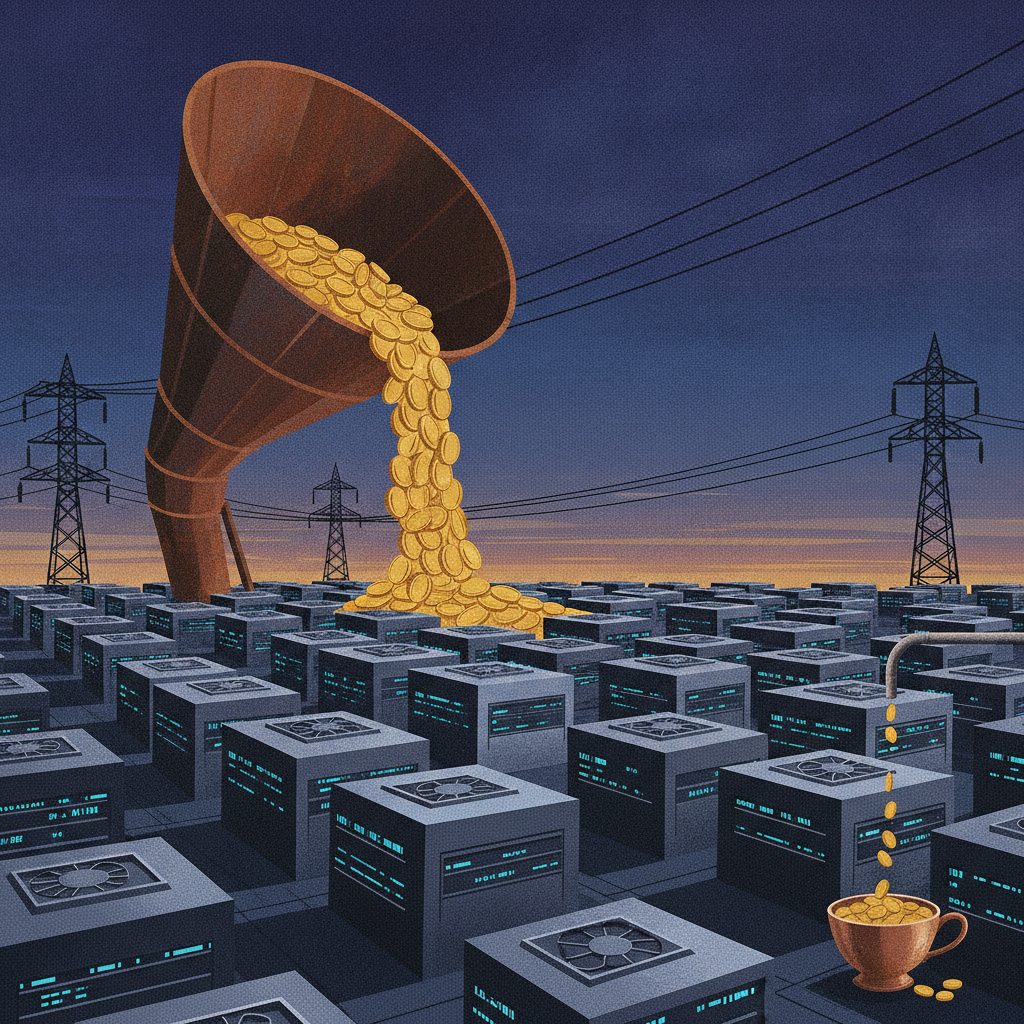
Big Tech’s five hyperscalers are on track to spend more than $600 billion on AI infrastructure in 2026, a 36% increase from $443 billion in 2025 and a near-doubling of capital deployment in just two years. The Big Five—Amazon, Alphabet (Google), Microsoft, Meta, and Oracle—are driving this surge, with Amazon leading at roughly $200 billion in capital expenditure, followed by Alphabet at $175–185 billion, Meta at $115–135 billion, Microsoft at more than $120 billion, and Oracle at about $50 billion. The buildout dwarfs the annual investment of the entire U.S. energy sector and is reshaping global supply chains for chips, power, and data centers.
For executives and investors worldwide, the figure is more than a milestone. It signals a structural shift from software-led growth to an infrastructure-led AI race, with profound implications for energy markets, semiconductor supply, and corporate balance sheets across borders. But the spending surge also raises urgent questions about returns, debt, and concentration. The market is beginning to separate companies that can demonstrate AI revenue from those burning cash without a clear path to monetization.
The scale of the hyperscaler buildout
The combined capital expenditure of the five companies is expected to exceed $600 billion in 2026. Roughly 75%—about $450 billion—of this capex targets AI-specific infrastructure: GPUs, servers, networking, and data centers. The rest goes to broader cloud and technical infrastructure that supports AI workloads indirectly.
- Amazon: approximately $200 billion
- Alphabet (Google): $175–185 billion
- Meta: $115–135 billion
- Microsoft: more than $120 billion
- Oracle: about $50 billion
These figures represent total capital spending, not just AI-specific outlays. But the scale is unprecedented. In 2025, the same group spent $443 billion, and the jump to over $600 billion marks one of the fastest accelerations in technology infrastructure investment ever recorded. The pace has left even seasoned industry observers warning that supply chains for power, land, and skilled labor are becoming the real constraint on AI expansion. The remaining 25% goes to broader cloud and technical infrastructure that supports AI workloads indirectly, but the AI-specific share is the primary driver of the acceleration.
Where the money is going: chips, custom silicon, and power
The AI-specific capex flows heavily into accelerators. Nvidia dominates the GPU market, capturing more than 90% of accelerator spending, according to the analysis. That makes it the primary beneficiary of the hyperscaler buildout: for every $100 spent on AI accelerators, more than $90 goes to Nvidia. Broadcom and TSMC are central to custom silicon and advanced manufacturing, as hyperscalers increasingly design their own chips to reduce dependence on off-the-shelf GPUs and improve cost efficiency.
But the most critical bottleneck is power. Microsoft alone faces an $80 billion Azure backlog that it attributes to power constraints, illustrating how electricity availability now gates cloud capacity. Data center electricity demand is colliding with grid limitations in many regions, pushing hyperscalers to sign long-term power purchase agreements and invest directly in generation assets. Companies such as Vistra and GE Vernova are benefiting from nuclear and grid infrastructure deals, as operators seek reliable, carbon-free power to run AI clusters around the clock.
The Stargate effect and the ROI gap
The Stargate project, a $500 billion joint venture announced in January 2025 by OpenAI, SoftBank, Oracle, and MGX, adds further momentum to the buildout. Stargate aims to deploy 10 gigawatts of AI compute by 2029, a target that would require an enormous expansion of data center construction, power generation, and networking equipment. Even without Stargate, the hyperscalers’ own plans already strain global supply chains.
Yet the revenue side remains thin. In early 2026, direct AI services revenue was roughly $25 billion, equal to only about 4% of the infrastructure spending. Hyperscalers are bridging the gap with debt: they raised $108 billion in 2025, and some projections see $1.5 trillion in AI-related debt over the next few years. That has raised concerns among credit analysts and investors about whether the capital deployment can be justified by future revenue.
The key question is no longer if AI will transform industries, but whether the unprecedented capital deployment can be justified by future revenue.
Market differentiation and what comes next
The market is already rewarding proof of revenue. Oracle, for example, rebounded after disclosing a $29 billion AI backlog, a signal that investors are looking beyond raw capex to contracted demand. Companies that cannot show similar visibility may face pressure on valuations and credit spreads. Concentration risk is also rising: a handful of suppliers—Nvidia, Broadcom, and TSMC—account for much of the critical hardware, while a few power providers hold key grid assets. Any supply disruption, export control change, or power shortage could ripple across the global AI buildout.
For executives outside the hyperscalers, the spending wave is both an opportunity and a warning. Demand for AI infrastructure is real, but the financing and energy constraints are equally real. The analysis identifies Nvidia, Broadcom, TSMC, Vistra, and GE Vernova as among the companies most directly exposed to this spending, but that exposure cuts both ways if the buildout slows or if power constraints delay projects.
The next 12 to 24 months will test whether the $600 billion bet can generate enough AI services revenue, enterprise adoption, and efficiency gains to justify the debt. If power constraints ease and enterprise AI spending accelerates, the buildout could look prescient. If not, the industry may face a period of write-downs, delayed projects, and consolidation. For now, the AI infrastructure race remains the world’s largest concentrated capital deployment in technology, with implications for energy markets, semiconductor supply chains, and global corporate balance sheets.
Sources
- Big Tech Will Spend $600B on AI in 2026: 5 Stocks Cashing the ...
- Big Tech is spending trillions on AI. But will it ever make that ...
Written by an AI editorial process from the sources above. Errors may occur.
Newsletter
Get the AI news that matters
One short brief with the day's most important AI stories — written for professionals.
We send a confirmation link. No spam. Unsubscribe anytime.
Read next

The AI Cloud Race: Big Tech's $130B Power Play
Amazon, Microsoft, and Alphabet are spending billions to dominate AI through cloud infrastructure, reshaping global tech, security, and market dynamics.
19 Sep 2026
AI Inference Market to Hit $255B by 2030
Global demand for real-time AI decision-making drives explosive growth in inference infrastructure, with NVIDIA, Intel, and Siemens Healthineers leading diverse applications.
18 Sep 2026
Autonomous AI Agents Become Core Enterprise Infrastructure in 2026
The market for autonomous AI agents is projected to surge from $7.92 billion in 2025 to $236.03 billion by 2034, as enterprises shift from experimentation to governing systems that perform operational work.
14 Sep 2026