Anthropic API vs AWS Bedrock: Enterprise AI Trade-offs in 2026
Identical model outputs but divergent in security, scaling, and resilience force enterprises to adopt both gateways. July 2026 outages cemented multi-cloud failover as best practice.
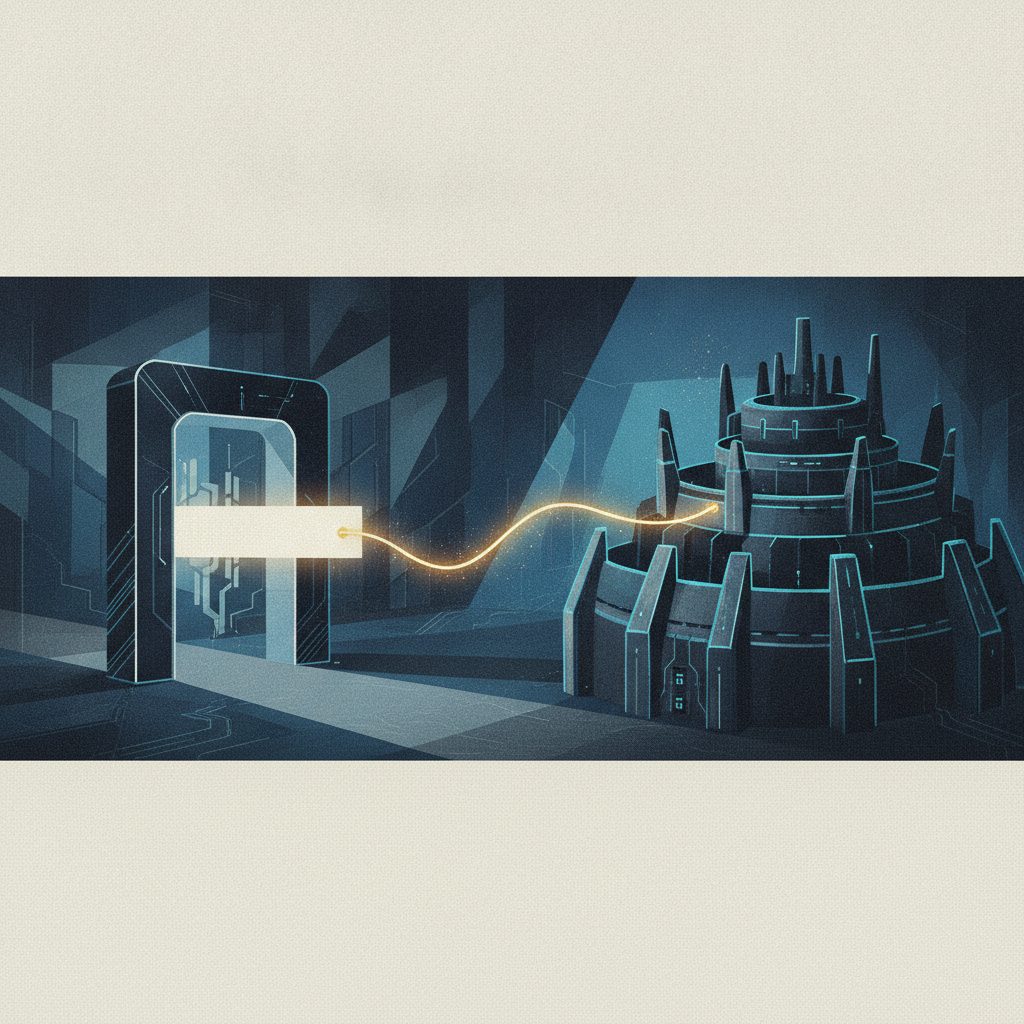
Anthropic’s Claude models now deliver identical outputs whether accessed through Anthropic’s direct API (api.anthropic.com) or AWS Bedrock, yet the two gateways diverge sharply in model rollout timing, security controls, rate-limit design, and operational resilience—differences that are forcing enterprise teams to treat them as complementary rather than competing routes.
For global executives and AI specialists, the choice is no longer binary. The July 2026 outage cluster at Anthropic, which saw seven documented incidents in a single week, including a 2.5-hour full-model failure on July 29 (7:53–10:23 PM UTC) and a 4-hour cascading outage on July 30 (6:03–10:08 AM UTC), has cemented multi-cloud failover as a production best practice. Meanwhile, AWS Bedrock’s native integration with IAM, VPC PrivateLink, and HIPAA BAA compliance makes it the default for regulated workloads, even as Anthropic’s direct API offers first access to new capabilities like Opus 4.7’s extended thinking mode.
Pricing Parity with Hidden Cost Levers
As of May 2026, list pricing is identical across both providers for all major Claude tiers. Opus 4.7 costs $5 per million input tokens (MTok) and $25 per million output tokens. Sonnet 4.6 is priced at $3/MTok input and $15/MTok output, while Haiku 4.5 sits at $1/MTok input and $5/MTok output. Batch inference receives a 50% discount on both platforms for asynchronous workloads, reflecting a shared push toward cost-efficient, non-real-time processing.
Yet net costs diverge once enterprise commitments enter the picture. AWS Bedrock offers committed-use discounts (EDPs) that can reduce costs by 20–40% for six-month commitments, a lever that can swing economics for large-scale deployments. Anthropic, by contrast, uses an automatic tier advancement system based on credit purchased, with Build Tiers 1–4 scaling up to 10 million input tokens per minute on Opus at Tier 4. The result is a trade-off: AWS favors predictable, long-term workloads, while Anthropic rewards rapid, mid-scale scaling without advance planning.
Model Freshness vs. Production Stability
Anthropic’s direct API remains the first port of call for new model releases. Opus 4.7 launched on Anthropic’s platform first, with Bedrock availability rolling out region by region in the days and weeks that followed. By May 2026, Sonnet 4.6 and Haiku 4.5 were broadly available on both, but teams requiring day-one access to cutting-edge features—such as extended thinking, computer use, or fast mode—must route through Anthropic direct.
This freshness advantage comes with a caveat. The July 2026 outage cluster, which included three separate Opus 5 incidents on July 27 totaling ~2.5 hours of degraded performance, underscored the risks of early adoption. Network capacity failures were cited as the primary cause, highlighting the growing pains of AI platforms under surging demand. For production workloads, Bedrock’s lag in model availability is often a feature, not a bug: it allows AWS to validate stability before exposing new models to enterprise traffic.
Security and Compliance: Bedrock’s Enterprise Edge
For AWS-native organizations, Bedrock holds clear advantages in security and compliance. It supports IAM authentication via AWS roles, eliminating the need for separate API key rotation. VPC PrivateLink enables access without traversing the public internet, a critical requirement for sensitive workloads. HIPAA Business Associate Agreements (BAAs) are included automatically through AWS, and CloudTrail audit logging is enabled by default. Regional data residency controls—such as us-east-1 and eu-central-1—provide explicit governance over where data is processed and stored.
Anthropic’s direct API, in contrast, relies on bearer tokens that require external secrets management and routes all traffic over public TLS. While this approach is sufficient for many use cases, it lacks the granular controls and compliance certifications that regulated industries demand. The gap is particularly stark for healthcare, finance, and government workloads, where Bedrock’s integration with AWS’s broader security ecosystem is often a deciding factor.
Rate Limits and Scaling: Two Philosophies
The two platforms also differ fundamentally in how they manage rate limits and scaling. Anthropic’s direct API uses a tiered system with automatic advancement based on spend. At the highest tier (Tier 4), users can process up to 10 million input tokens per minute on Opus, making it well-suited for mid-scale, rapidly growing workloads. The system is designed for agility, allowing teams to scale without manual intervention.
Bedrock, on the other hand, uses AWS service quotas that require manual ticket submission. While this can be a bottleneck for rapid scaling, it also allows AWS to support larger enterprise workloads with advance planning. For organizations with predictable, high-volume needs, Bedrock’s approach can accommodate greater scale—provided they are willing to engage in the quota request process. The trade-off is clear: Anthropic offers ease of use for dynamic scaling, while Bedrock caters to planned, large-scale deployments.
Resilience in Practice: The Failover Imperative
The July 2026 outages at Anthropic have accelerated a shift in enterprise strategy. Leading teams now route primary traffic to Anthropic’s direct API while maintaining automatic failover to Bedrock on 529 "Overloaded" errors. This multi-cloud approach mitigates the risk of single-provider downtime, ensuring continuity even during extended incidents. The seven documented outages between July 25–31 served as a wake-up call for organizations relying solely on one provider.
For security-conscious workloads, the choice is often dictated by compliance requirements. HIPAA-covered workloads and those requiring VPC isolation gravitate toward Bedrock, despite the identical model performance. Meanwhile, teams prioritizing access to the latest features and rapid scaling continue to favor Anthropic’s direct API, accepting the trade-off in stability for the sake of innovation.
Looking ahead, the question for enterprises is not which provider to use, but how to operate both effectively. The same model weights, served through two distinct front doors, demand a dual-provider strategy to balance freshness, security, cost, and resilience. As AI demand continues to surge, the ability to navigate these trade-offs will separate the leaders from the laggards in production-grade deployments.
Sources
- Anthropic API vs AWS Bedrock Claude (2026): Which to Use
- Debatten om ai er drevet af frygt og pessimisme – men teknologien kan give os fantastiske muligheder
- Anthropic's Claude AI Experiences Brief Service Outage
- Anthropic’s Claude & Elastic: Open inference API for Anthropic
Written by an AI editorial process from the sources above. Errors may occur.
Newsletter
Get the AI news that matters
One short brief with the day's most important AI stories — written for professionals.
We send a confirmation link. No spam. Unsubscribe anytime.
Read next
The AI Cloud Race: Big Tech's $130B Power Play
Amazon, Microsoft, and Alphabet are spending billions to dominate AI through cloud infrastructure, reshaping global tech, security, and market dynamics.
19 Sep 2026
AI Inference Market to Hit $255B by 2030
Global demand for real-time AI decision-making drives explosive growth in inference infrastructure, with NVIDIA, Intel, and Siemens Healthineers leading diverse applications.
18 Sep 2026
Autonomous AI Agents Become Core Enterprise Infrastructure in 2026
The market for autonomous AI agents is projected to surge from $7.92 billion in 2025 to $236.03 billion by 2034, as enterprises shift from experimentation to governing systems that perform operational work.
14 Sep 2026