AI in Drug Discovery: Promise and Pitfalls
Artificial intelligence is transforming drug development, but challenges in data quality, model transparency, and integration remain barriers to real-world impact.
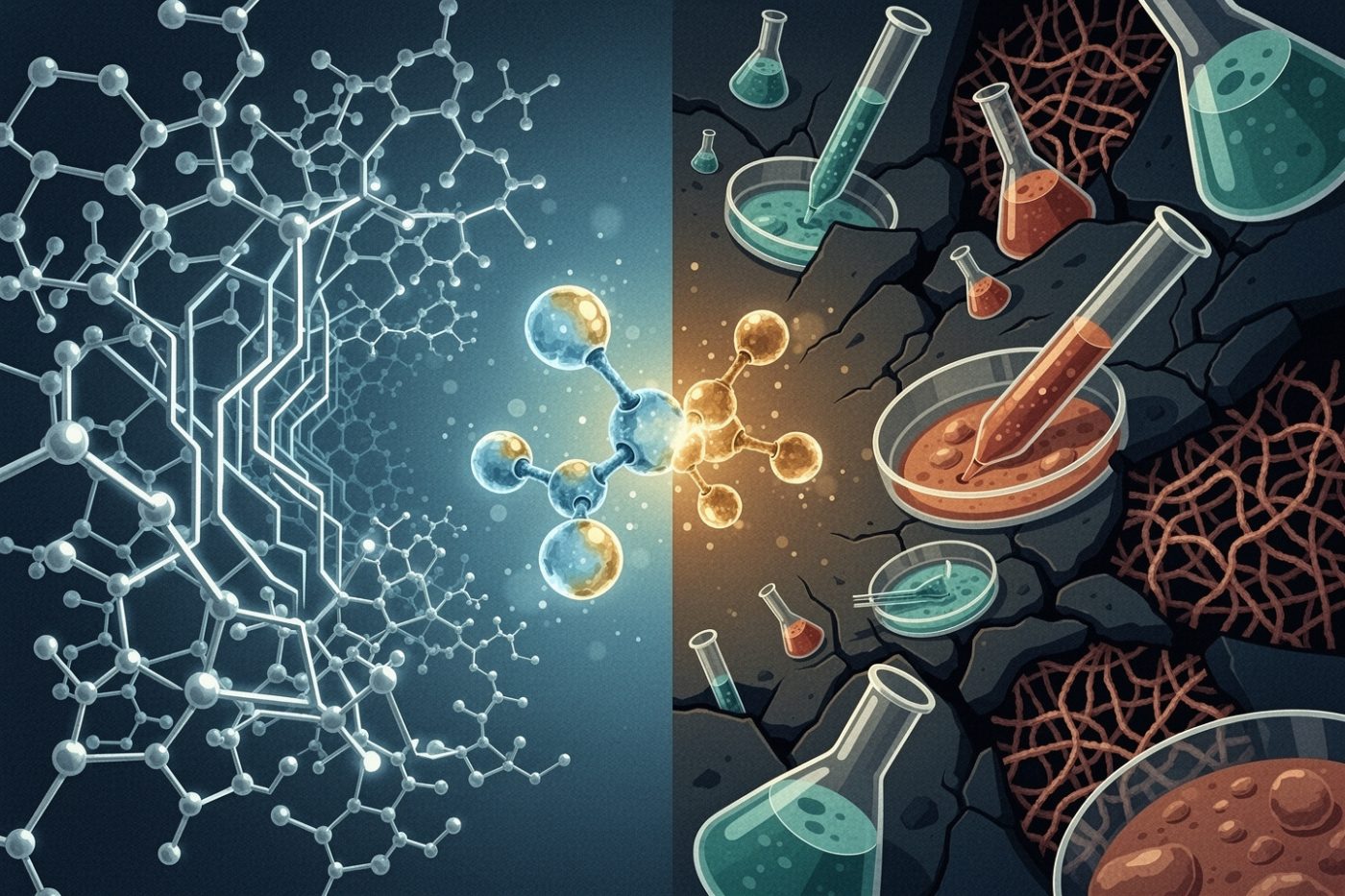
Artificial intelligence is reshaping the landscape of drug discovery, promising to accelerate timelines, reduce costs, and improve the success rate of bringing new therapies to patients. Once a domain defined by serendipity and labor-intensive screening, drug development is increasingly being guided by machine learning algorithms, natural language processing, and generative AI models capable of analyzing vast biological datasets and predicting molecular behavior. Yet despite the optimism, the integration of AI into pharmaceutical R&D faces persistent hurdles—data quality, model interpretability, and regulatory uncertainty—challenges that must be addressed if the technology is to fulfill its transformative potential. As pharmaceutical companies, academic researchers, and regulatory agencies deepen their engagement with AI, the field stands at a critical juncture: between overhyped expectations and tangible scientific advancement.
The stakes could not be higher. For decades, the drug discovery pipeline has been plagued by inefficiency. Success rates from candidate to approval hover around 10%, with phase II and III clinical trials representing the most common points of failure. These late-stage setbacks are not only scientifically disappointing but financially devastating, often costing hundreds of millions of dollars. AI offers a way to de-risk this process by identifying more promising drug targets earlier, predicting toxicity and pharmacokinetics before compounds enter human trials, and optimizing molecular design with unprecedented precision. According to a 2023 review published in Pharmaceuticals by Blanco-González et al., AI has the potential to improve efficiency, accuracy, and speed across the discovery pipeline—yet its success hinges on access to high-quality, standardized data and the ability to integrate computational insights with experimental validation.
From Target Identification to Clinical Trials: AI’s Expanding Role
AI is now being applied across the entire drug discovery workflow. In the earliest stages, machine learning models analyze genomic, proteomic, and transcriptomic data to identify novel disease targets—biological pathways or proteins implicated in illness. Natural language processing tools mine millions of scientific papers and clinical records to uncover hidden associations, while graph neural networks map complex biological interactions that might escape traditional analysis. Once a target is identified, AI accelerates lead compound discovery by screening virtual libraries of millions of molecules, predicting which structures are most likely to bind effectively and safely.
Generative AI, in particular, has emerged as a powerful tool for de novo drug design. These models can generate entirely new molecular structures optimized for desired properties such as solubility, metabolic stability, and target affinity. Reinforcement learning further refines this process by iteratively improving molecular candidates based on simulated feedback. Beyond small molecules, AI is proving especially valuable in the development of biologics—large, complex molecules like antibodies and peptides—which now account for a growing share of FDA-approved drugs. Their development involves optimizing multiple physicochemical properties simultaneously, a multidimensional challenge well-suited to AI’s pattern recognition capabilities.
AI’s influence extends into clinical development as well. Algorithms analyze data from early-phase trials to detect subtle signals of efficacy or adverse effects, helping companies decide which candidates to advance. Predictive models can also optimize trial design by identifying patient subgroups most likely to respond, supporting the shift toward personalized medicine. As noted in Drug Target Review, AI is being used not only to discover targets and design drugs but also to validate them in preclinical models—closing the loop between computational prediction and biological confirmation.
Data, Quality, and the Benchmarking Problem
Despite these advances, the reliability of AI in drug discovery remains constrained by data limitations. Machine learning models are only as good as the data they are trained on, and much of the available biological and chemical data is fragmented, inconsistent, or biased toward well-studied targets. Public datasets like MoleculeNet, often used to benchmark AI models, have been criticized for containing flaws that lead to inflated performance metrics and poor generalizability. As one analysis notes, some AI chemistry models may be doing little more than compressing molecular representations rather than generating meaningful predictive insights.
The lack of standardized benchmarks makes it difficult to compare models or assess real-world utility. Moreover, proprietary data held by pharmaceutical companies is often siloed, limiting opportunities for collaboration and external validation. Addressing these issues requires not only better data curation but also incentives for data sharing and the development of more rigorous evaluation frameworks. Some researchers advocate for the creation of independent, industry-wide benchmarks that reflect real-world discovery challenges, including off-target effects, metabolic degradation, and manufacturability.
Data augmentation techniques—methods that synthetically expand training datasets—offer one strategy to mitigate data scarcity. However, such approaches must be carefully validated to avoid introducing artifacts or reinforcing existing biases. Ultimately, high-quality, diverse, and ethically sourced data will be foundational to building trustworthy AI systems in drug discovery.
Explainability, Integration, and the Human Factor
Another major challenge is the “black box” nature of many AI models. Deep learning systems can make accurate predictions, but they often do so without providing clear explanations—posing a problem for scientists who need to understand the biological rationale behind a recommendation. This lack of transparency can hinder adoption, especially in regulated environments where decisions must be justified. Explainable AI (XAI) methods, which aim to make model outputs interpretable, are gaining traction as a way to bridge this gap. Techniques such as attention maps, feature importance scoring, and rule-based approximations help researchers understand which molecular features or biological signals drove a prediction, increasing confidence in AI-generated hypotheses.
Equally important is the integration of AI with traditional experimental methods. AI should not replace wet-lab science but augment it. The most successful applications occur when computational predictions are rapidly tested and refined through iterative cycles of synthesis, assay, and feedback. Collaborative frameworks that bring together AI researchers, medicinal chemists, and biologists are essential to ensure that models are grounded in biological reality. As Blanco-González and colleagues emphasize, the synergy between AI and experimental validation is key to overcoming current limitations.
Regulatory and Ethical Considerations
As AI becomes more embedded in drug development, regulatory agencies are beginning to grapple with how to evaluate AI-driven discoveries. Questions remain about how to validate AI models, document their training data, and ensure reproducibility. The U.S. FDA and other bodies have started exploring regulatory pathways for AI in healthcare, but clear guidelines for drug discovery applications are still evolving. There are also ethical concerns around data privacy, algorithmic bias, and the potential for AI to reinforce existing inequities in drug development—such as the underrepresentation of certain populations in training datasets.
Moreover, the rapid pace of AI innovation raises concerns about whether healthcare systems can keep up, particularly in the context of personalized medicine. If AI enables the development of highly targeted therapies, will they be accessible and affordable? The answer may depend on whether AI is used not only to discover drugs but also to streamline manufacturing, reduce costs, and improve global health equity. As noted in a 2025 Trends in Biotechnology review by Li et al., AI-enhanced biomanufacturing could play a crucial role in making advanced therapies more scalable and economically viable.
The integration of AI into drug discovery represents one of the most significant shifts in modern pharmaceutical science. While challenges around data, interpretability, and regulation remain, the convergence of advanced algorithms, growing biological datasets, and cross-disciplinary collaboration is laying the groundwork for a new era of innovation. If these efforts are guided by scientific rigor, ethical responsibility, and a commitment to real-world impact, AI may finally begin to deliver on its promise: transforming the stubbornly low success rates of drug development and bringing more effective, personalized treatments to patients faster than ever before.
Sources
- The Role of AI in Drug Discovery: Challenges, Opportunities, and Strategies
- The Role of AI in Drug Discovery: Challenges, Opportunities, and Strategies.
- Artificial intelligence in drug discovery and development: transforming challenges into opportunities | Discover Pharmaceutical Sciences | Springer Nature Link
- From Data to Drugs: The Role of Artificial Intelligence in Drug Discovery
- Navigating the challenges and opportunities of AI in drug development and personalised medicine | Article | Drug Target Review
Written by an AI editorial process from the sources above. Errors may occur.
Newsletter
Get the AI news that matters
One short brief with the day's most important AI stories — written for professionals.
We send a confirmation link. No spam. Unsubscribe anytime.
Read next

Autonomous AI Agents vs. Collaborative Agentic Systems: A Strategic Divide
As AI evolves from single agents to collaborative systems, organizations must understand the architectural and governance implications of distributed intelligence.
2 Oct 2026
Evolution Strategies Challenge Reinforcement Learning in LLM Training
Cognizant AI Lab's breakthrough shows an older optimization method can outperform RL with far less compute—while AI-generated research floods preprint servers, raising quality concerns.
30 Sep 2026
AI Powers Next-Gen Autonomous Vehicles Through Simulation and Edge Computing
From synthetic data to real-time decision-making, AI is transforming how self-driving cars learn, adapt, and interact with smart mobility ecosystems.
29 Sep 2026