AI Coding Assistants: Developers Use Several at Once, Trust Falls
GitHub Copilot leads in users, Cursor leads in revenue, and Claude Code leads in satisfaction—but most engineers now stack multiple tools, even as trust in AI-generated code declines.
The AI coding assistant market reached $12.8 billion in 2026, with 85% of developers using AI tools, according to Ideaplan.io and JetBrains. The market is projected to grow to $30.1 billion by 2032, a 27% compound annual growth rate. Yet the most striking feature of the market is not its size but its fragmentation. GitHub Copilot still claims the largest user base, Cursor has become the revenue leader, and Anthropic’s Claude Code now leads in both satisfaction and professional adoption. The answer to “which assistant are developers actually using” is increasingly: several at once, for different jobs.
Daily usage is common: 51% of professional developers rely on AI coding tools regularly, according to Stack Overflow’s 2025 survey and Uvik Software. At the same time, trust in AI-generated code is falling even as usage rises. Only 29% of developers trust AI-generated code for accuracy, down from 40% in 2024, according to Stack Overflow’s 2025 survey. That gap between adoption and confidence means governance, review processes and human oversight are becoming as important as tool selection.
The leaders by different measures
No single metric captures the market. GitHub Copilot remains the largest by raw user count, with 4.7 million paid subscribers and roughly 20 million total users, according to Ideaplan.io and Uvik. But its adoption at work declined from 29% in 2025 to 21% in mid-2026, according to JetBrains. That decline suggests that a large installed base does not automatically translate into deeper workplace reliance, especially as more specialized alternatives gain ground.
Cursor, by contrast, leads on revenue, surpassing $2 billion in annual recurring revenue by February 2026 with more than 1 million paying users, according to Uvik and Bloomberg. The contrast with Copilot’s larger subscriber count highlights how different business models and pricing can produce very different commercial outcomes. Cursor has built a revenue engine around a focused editing experience that developers are willing to pay for directly.
Claude Code has emerged as the satisfaction leader. In JetBrains’ April 2026 survey, 46% of developers named it their most-loved tool, compared with 19% for Cursor and 9% for Copilot. By mid-2026, 39% of professional developers globally said they used Claude Code at work, rising to 47% in the United States. That is a notable shift for a tool that is newer and less tied to a legacy IDE ecosystem than Copilot. The satisfaction gap suggests that developers are rewarding agentic capabilities and task depth over raw autocomplete speed.
Tool stacking is the default pattern
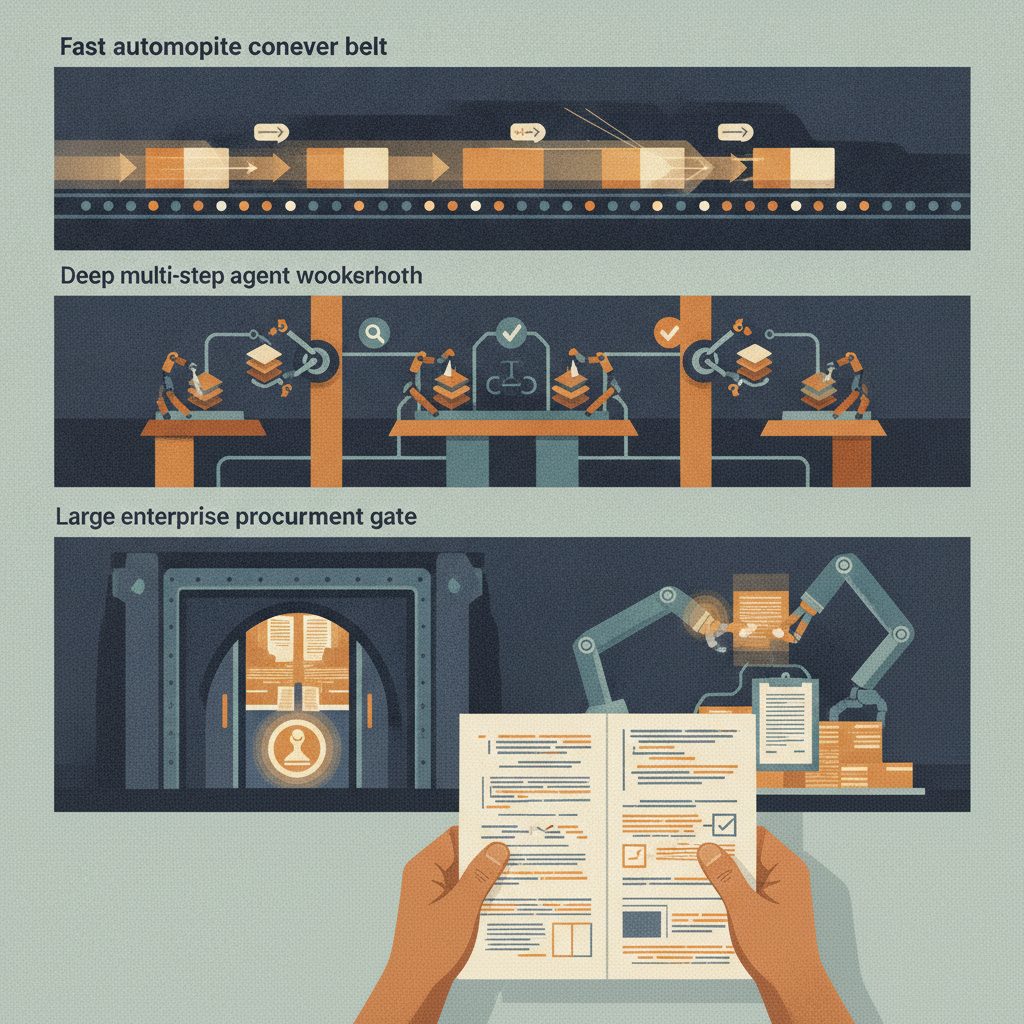
The most common answer to “which assistant do developers use” is not a single product. According to Ideaplan.io, 70% of engineers use between two and four AI tools simultaneously. The dominant pattern is:
- Cursor for daily editing
- Claude Code for complex, multi-step agentic tasks
- Copilot for fast autocomplete
Each tool occupies a different niche in the workflow, and developers are increasingly comfortable switching among them. This stacking behavior means that adoption metrics for any single tool can understate the real complexity of how AI is used in day-to-day engineering.
Organizational context shapes this mix. Microsoft’s distribution power keeps Copilot dominant in large enterprises: 90% of Fortune 100 companies use Copilot, according to Microsoft. Enterprises stick with Copilot at a 56% adoption rate, largely because of procurement, compliance and existing Microsoft contracts. Startups, meanwhile, favour Claude Code at a 75% adoption rate for its agentic capabilities, according to Ideaplan.io. The result is a two-speed market: established companies default to the incumbent, while smaller teams experiment with more autonomous tools. That split has practical consequences for vendors and buyers alike, because enterprise sales cycles and startup adoption patterns reward very different product strengths.
The trust gap and rising code churn
High adoption has not produced high confidence. Only 29% of developers trust AI-generated code for accuracy, down from 40% in 2024, according to Stack Overflow’s 2025 survey. The most common frustration, reported by 66% of developers, is output that is “almost right, but not quite.” That near-miss quality can be more costly than outright failure because it requires careful review to catch subtle errors. A developer who trusts a suggestion that is 95% correct may still spend significant time debugging the remaining 5%, and the error may not surface until later in the development cycle.
Code churn data supports the concern. GitClear found that code churn increased from 3.1% in 2020 to 5.7% in 2024, a rise that correlates with growing AI use. More churn can mean more rework, more review burden and, in some cases, lower long-term maintainability. For leaders, this is a warning that raw productivity metrics may hide quality costs. A team that measures only speed of delivery may look efficient while accumulating technical debt that slows future work.
What this means for executives and founders
For decision-makers, the data points to a strategic shift. The market is no longer about single-tool dominance but about orchestrating specialized agents across the development lifecycle. A team that standardizes on one assistant may miss the agentic strengths of Claude Code or the editing speed of Cursor, while a team that adopts tools without governance may absorb the trust and code-quality risks now visible in the data. The challenge is not choosing the best tool in the abstract, but designing a workflow that uses the right tool for the right task and keeps quality checks in place.
The practical implication is that governance, review processes and human oversight must be treated as first-class parts of AI adoption. High adoption alone does not deliver sustainable productivity gains if code churn rises and trust falls. Companies that build clear review workflows, measure quality alongside speed, and allow developers to use the right tool for the right task are better positioned to capture the market’s projected growth to $30.1 billion by 2032 without inheriting its hidden costs.
Looking ahead, the coding assistant market is likely to become even more specialized. The winners will not be the tools with the most users or the highest revenue alone, but the organizations that learn to manage a portfolio of AI agents with the same discipline they apply to human engineering teams. That is the real competitive question for 2026 and beyond.
Sources
- Which AI coding assistant are developers actually using in ...
- The Best AI Coding Assistants: 20 Tools Reviewed for 2026
- I Ranked Every AI Coding Assistant - YouTube
- Best AI Coding Agents for 2026: Real-World Developer Reviews
- Best AI Coding Assistants 2026: Our Picks - PE Collective
Written by an AI editorial process from the sources above. Errors may occur.
Newsletter
Get the AI news that matters
One short brief with the day's most important AI stories — written for professionals.
We send a confirmation link. No spam. Unsubscribe anytime.
Read next

The AI Cloud Race: Big Tech's $130B Power Play
Amazon, Microsoft, and Alphabet are spending billions to dominate AI through cloud infrastructure, reshaping global tech, security, and market dynamics.
19 Sep 2026
AI Inference Market to Hit $255B by 2030
Global demand for real-time AI decision-making drives explosive growth in inference infrastructure, with NVIDIA, Intel, and Siemens Healthineers leading diverse applications.
18 Sep 2026
Autonomous AI Agents Become Core Enterprise Infrastructure in 2026
The market for autonomous AI agents is projected to surge from $7.92 billion in 2025 to $236.03 billion by 2034, as enterprises shift from experimentation to governing systems that perform operational work.
14 Sep 2026