OpenAI president praises Moonshot AI’s Kimi K3 amid IP theft allegations
Greg Brockman calls the Chinese model 'pretty good' but stops short of confirming distillation claims, as US officials escalate accusations of industrial espionage.
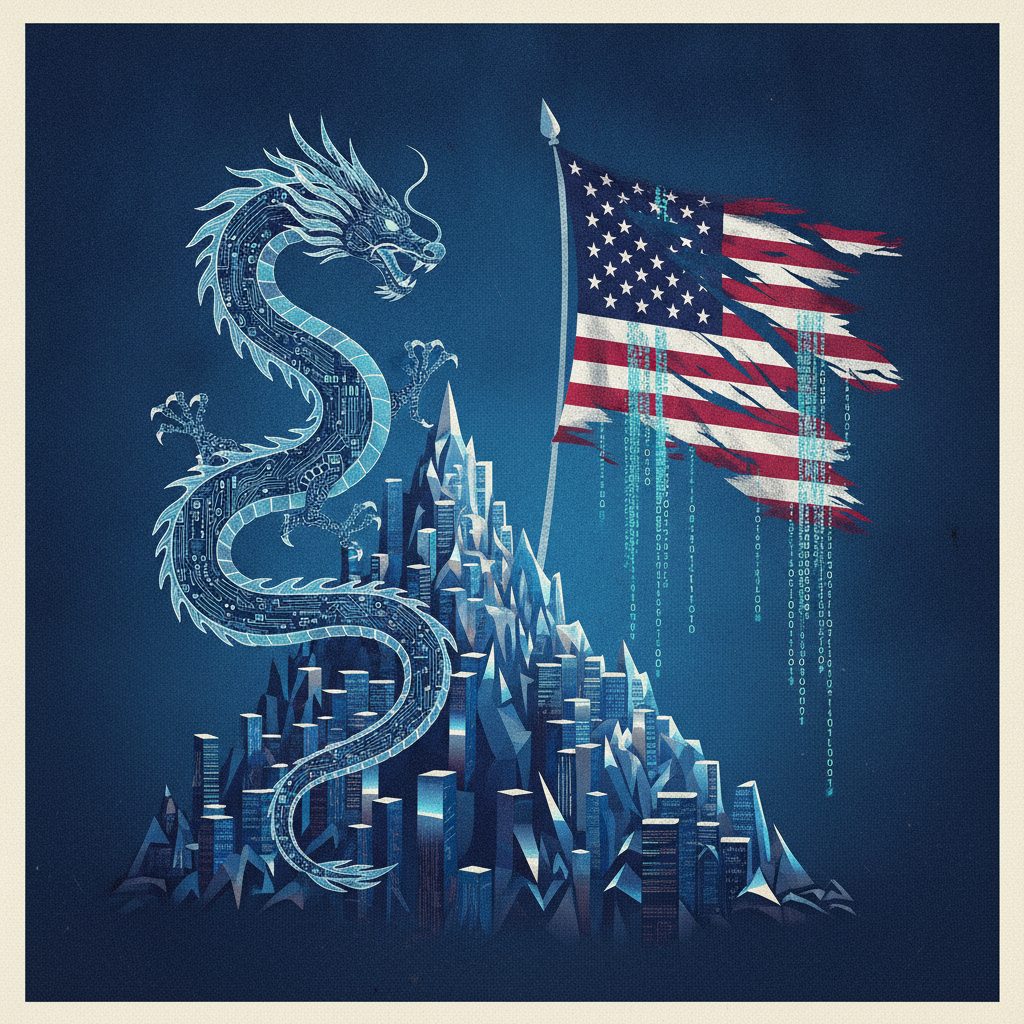
OpenAI President Greg Brockman has described Moonshot AI’s newly released Kimi K3 as a “pretty good model,” while explicitly stating he is unsure whether it was distilled from OpenAI’s proprietary data. The remark, made during interviews between July 22 and 24, 2026, captures the tension between admiration for the model’s technical achievements and suspicion about its origins, as US officials and industry leaders publicly accuse the Chinese startup of large-scale IP theft.
Why this matters: The debut of Kimi K3—ranked #3 globally on the Artificial Analysis Intelligence Index, behind only Anthropic’s Claude Fable 5 and OpenAI’s GPT-5.6 Sol—signals a rapid narrowing of the capability gap between US and Chinese AI labs. For global executives, the dispute raises urgent questions about IP security, regulatory exposure, and the strategic viability of integrating high-performance open-weight models from non-US developers.
Unprecedented performance, contested provenance
Moonshot AI unveiled Kimi K3 on July 16, 2026, at the World Artificial Intelligence Conference in Shanghai. The model, built on a Mixture-of-Experts architecture with 2.8 trillion parameters and a 1 million-token context window, immediately made waves in benchmark evaluations. It currently holds the #1 position in Frontend Code Arena, surpassing Claude Fable 5, and is scheduled for a full open-weight release by July 27, 2026—a move that would make it the most capable open-weight model available to date.
The technical accolades, however, have been overshadowed by allegations of illicit distillation. On July 22, Michael Kratsios, Director of the White House Office of Science and Technology Policy, accused Moonshot AI on X (formerly Twitter) of “large-scale, covert industrial distillation” of Anthropic’s Fable model. Kratsios claimed the company used a “sophisticated platform” to switch access methods and evade detection. Sarah Heck, Anthropic’s Head of Public Policy, reinforced these concerns, labeling the alleged practice as “IP theft and industrial espionage” with potential national security implications.
Moonshot AI, a Chinese startup backed by tech giants Alibaba and Tencent, has not directly addressed the distillation accusations. Instead, the company has emphasized that K3 is the result of “independent scaling in data and architecture,” including proprietary innovations such as Kimi Delta Attention. The model’s rapid rise has also triggered a tangible market reaction, with US AI stocks dropping amid fears of intensified competition and potential IP-related sanctions.
Industry split: Accusations vs. evidence
The White House’s certainty contrasts sharply with the caution expressed by OpenAI’s Brockman. In interviews, Brockman acknowledged Kimi K3’s strength but stressed it was “too early” to determine whether it had been distilled from OpenAI models. His stance highlights a critical uncertainty: no definitive public technical audit has yet confirmed the distillation claims.
This divide extends across the industry. On July 24, a coalition of 179 startups and major tech firms, including Microsoft and Meta, urged the US government to avoid broad bans on foreign open-source models. They argued that such measures would stifle competition and entrench incumbents like OpenAI and Anthropic. Jensen Huang, CEO of Nvidia, has publicly supported the use of high-quality open-source models, including those from China, stating they enhance safety and innovation.
On the opposing side, US officials are escalating their rhetoric. Treasury Secretary Scott Bessent hinted at potential sanctions against Moonshot AI, while the US government is already investigating possible export control violations related to Nvidia chips used by Chinese AI firms. The accusations against Moonshot follow earlier claims by Anthropic in February 2026, which alleged distillation attacks by Moonshot, DeepSeek, and MiniMax.
Independent analysts, such as Nathan Lambert, counter that Kimi K3’s performance demonstrates genuine architectural and scaling advancements. They caution that conflating all Chinese AI progress with illicit distillation is “reckless” without concrete public evidence. The lack of a technical audit leaves the debate unresolved, with both sides presenting compelling but unproven arguments.
Market impact and strategic implications
The launch of Kimi K3 has already sent ripples through the global AI market. US AI stocks experienced a notable drop as investors weighed the risks of intensified competition and potential IP-related sanctions. For executives and CTOs, the model’s emergence presents both opportunities and risks, requiring careful navigation of a complex landscape.
Cost and customization: Kimi K3’s open-weight release could provide a high-performance, low-cost alternative to proprietary US models, enabling customizable deployments for enterprises. However, the legal and reputational risks of using a model accused of IP theft cannot be ignored, particularly if US sanctions materialize. Companies must conduct rigorous due diligence to assess these risks before integration.
Regulatory volatility: The divergence between US government hostility and industry support signals a volatile regulatory environment. Companies integrating foreign AI models must prepare for potential export controls, blacklists, or outright bans, which could disrupt supply chains and compliance frameworks overnight. The lack of clarity on future regulations adds an additional layer of uncertainty for businesses.
Competitive pressure: Analysts estimate that the capability gap between US and Chinese AI models has narrowed to 3–5 months, down from previous estimates of 6–9 months. This acceleration forces global players to either step up their own innovation or risk being outpaced by open-source alternatives. For startups and smaller firms, open-weight models like Kimi K3 could democratize access to cutting-edge AI, leveling the playing field against well-funded incumbents.
Global stakes: IP, innovation, and geopolitics
The controversy over Kimi K3 is more than a technical dispute—it reflects broader geopolitical and economic tensions. At its core, the debate touches on IP security, due diligence, and the future of AI development.
For multinational corporations, the allegations raise critical questions about supply chain integrity. If Kimi K3 or similar models are found to have been distilled from proprietary US models, companies using them could face legal liability, reputational damage, and operational disruptions. Conversely, if the accusations prove unfounded, premature restrictions could stifle innovation and reinforce the dominance of a handful of US-based AI providers.
Meanwhile, the open-weight model movement challenges the traditional proprietary API model. Advocates argue that open-source approaches foster transparency, collaboration, and faster iteration—benefits that could outweigh the risks if proper safeguards are in place. Critics, however, warn that without strong IP protections, the incentives for original research and development could erode, ultimately harming the entire industry.
As the US government weighs its response, the global AI community is watching closely. The outcome of this dispute could set a precedent for how IP is protected—or contested—in the age of large-scale AI models. It may also determine whether the next wave of AI innovation will be driven by open collaboration or by closed, nationally siloed ecosystems.
Looking ahead, the next few weeks will be critical. If Moonshot AI proceeds with the open-weight release of Kimi K3 as planned on July 27, it will mark a significant milestone in the democratization of advanced AI. Yet the shadow of distillation allegations—and potential regulatory action—looms large. For now, the model’s technical prowess is undeniable, but its legal and ethical standing remains very much in question. The resolution of this dispute will have far-reaching implications for the global AI landscape, influencing everything from corporate strategy to international trade policy.
Sources
- OpenAI president calls Moonshot AI’s Kimi K3 ‘pretty good’, unsure if it was distilled from OpenAI models
- Debatten om ai er drevet af frygt og pessimisme – men teknologien kan give os fantastiske muligheder
- »I’ve preordered«, siger jeg med glimt i øjet til en kvinde, der kigger misfornøjet på mig
- 'LOL, jeg har stadig adgang til netværket', skrev tidligere ansat: Nu er der udbrudt krig mellem Apple og OpenAI
- Apple sagsøger Open AI for tyveri af forretningshemmeligheder
Written by an AI editorial process from the sources above. Errors may occur.
Newsletter
Get the AI news that matters
One short brief with the day's most important AI stories — written for professionals.
We send a confirmation link. No spam. Unsubscribe anytime.
Read next

The State of AI Security and Governance in 2026
As AI becomes embedded in core operations, security and governance gaps expose organizations to rising threats and regulatory risks.
28 Sep 2026
EU and U.S. AI Regulation Diverge in 2026
The EU enforces strict, rights-based AI rules while the U.S. embraces fragmented state-level policies, creating a transatlantic compliance divide.
23 Sep 2026
EU vs. U.S. State AI Laws: Compliance in a Divided Regulatory World
The EU’s binding AI Act contrasts sharply with the U.S.’s fragmented state laws, creating complex challenges for global businesses navigating divergent rules on risk, transparency, and enforcement.
22 Sep 2026