Fully Self-Driving Cars Are Decades Away, Expert Says
Despite years of hype, true autonomous driving remains far off due to data gaps and safety challenges, according to industry leaders.
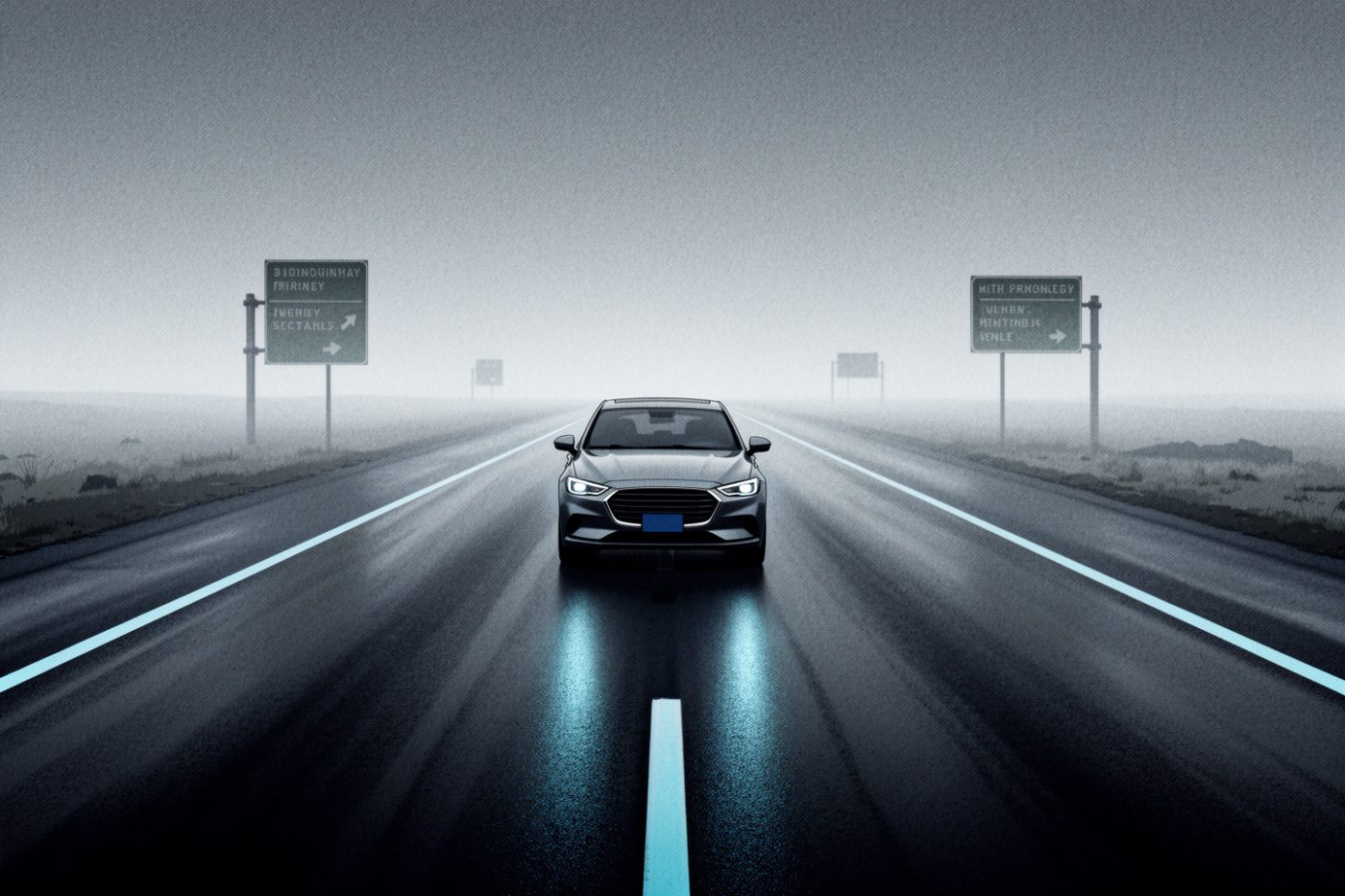
Despite years of bold promises and high-profile demonstrations, fully autonomous vehicles capable of driving anywhere without human intervention remain decades away, according to industry leaders. John Jackson, CEO of UK-based autonomous vehicle software company Oxa, emphasized that the technology required to achieve true, generalized self-driving capability is far from mature. “When it comes to generalized AI that can do that, we're so far away from that. We are decades away from that being possible today,” Jackson said in a recent interview.
His comments cut through years of speculation and over-optimistic projections that have long surrounded the self-driving industry. While automakers and tech companies have rolled out advanced driver-assistance systems—marketed with names like “Full Self-Driving” or “Autopilot”—these systems still require constant human supervision. The gap between these semi-autonomous features and a vehicle that can navigate any road, in any weather, without human input, is vast. Jackson’s assessment underscores a growing consensus among technical experts: the dream of robot chauffeurs is not imminent, and the path to full autonomy is far more complex than previously assumed.
The Data Problem at the Core of Autonomy
One of the primary obstacles to achieving full self-driving capability is the sheer volume and diversity of real-world driving scenarios. Jackson identified data as the central bottleneck. For a vehicle’s AI to operate safely under all conditions, it must be trained on an almost infinite number of edge cases—unusual, unpredictable events such as a child chasing a ball into the street, a fallen tree blocking a rural road, or a cyclist making an unexpected turn.
Collecting enough real-world data to cover every possible scenario is logistically and economically unfeasible. Even companies with large fleets of test vehicles have only gathered a fraction of the experiences needed. “The ultimate goal is to have software that has the experience, the knowledge, and the expertise to drive everywhere,” Jackson said. But achieving that level of competence requires more than just scaling up data collection—it demands a fundamental leap in how AI systems learn and generalize from limited information.
To address this, Oxa is turning to generative AI. By simulating rare or dangerous driving situations in virtual environments, the company can train its systems on scenarios that would be too risky or time-consuming to encounter in physical testing. This approach allows developers to stress-test software under extreme conditions, such as sudden brake failures or obscured road markings in heavy rain. Still, Jackson stressed that simulation alone cannot close the gap. Real-world validation remains essential, and the interplay between virtual training and physical testing will define the pace of progress.
High-Profile Incidents Highlight the Risks of Overreliance
Even as companies push forward with increasingly sophisticated systems, real-world incidents continue to expose the dangers of premature trust in automation. One recent example involved Kyle Shanahan, head coach of the San Francisco 49ers, who has used Tesla’s Full Self-Driving (FSD) features for years. In August, while driving in Palo Alto, California, Shanahan dropped his phone and bent over to retrieve it, assuming the car would maintain its lane and avoid collisions.
It did not. The vehicle veered into oncoming traffic, resulting in a crash that left Shanahan with broken bones and a concussion. In a statement to reporters, he acknowledged a critical misjudgment: “You don’t just turn it over to a computer.” The system, which relies primarily on cameras, was reportedly not actively engaged at the time of the incident, highlighting a recurring issue in semi-autonomous vehicles—drivers often misunderstand the system’s limitations.
This incident is not isolated. The National Highway Traffic Safety Administration (NHTSA) has opened multiple investigations into Tesla’s FSD software following crashes involving emergency vehicles, stationary objects, and traffic violations. Regulators have repeatedly warned that these systems are not self-driving in the true sense and require constant driver attention. Yet, marketing language and feature names continue to blur the line, contributing to a dangerous perception of capability.
Industry Shifts Focus to Limited-Use Cases
Faced with the technical and regulatory hurdles of full autonomy, many companies are reorienting their strategies. Oxa, for instance, is not pursuing consumer passenger vehicles. Instead, it focuses on autonomous systems for urban public transport and commercial vehicles operating on fixed routes. These applications benefit from predictable environments, structured infrastructure, and lower speeds—factors that significantly reduce complexity.
Other firms are following a similar path. Companies like Waymo and Cruise have launched limited robotaxi services in controlled urban areas, while others are targeting freight corridors or warehouse logistics, where routes are repetitive and environments are tightly managed. These niche deployments allow developers to gather data, refine software, and build operational experience without confronting the full chaos of open-road driving.
This shift reflects a broader recalibration in the industry. Early visions of mass-market self-driving cars replacing human drivers have given way to more pragmatic goals. “The technology is getting better,” said one automotive analyst, “but the risks are getting bigger as systems are deployed in more complex environments without sufficient safeguards.” The emphasis is now on incremental progress, safety validation, and regulatory compliance—not overnight transformation.
Why the Hype Doesn’t Match Reality
Despite the technical realities, public perception remains influenced by bold claims. A popular Reddit post from 2025 declared, “In 3-5 years most automakers will have a full self-driving option available. In 10 years we're not driving anymore.” Similar predictions have circulated for over a decade, yet none have materialized. The disconnect stems from conflating driver-assistance systems with full autonomy—a confusion that benefits marketing but undermines public understanding.
Experts argue that true autonomy requires more than just improved sensors or faster processors. It demands a level of artificial general intelligence that can interpret ambiguous situations, predict human behavior, and make ethical decisions in real time—capabilities that current AI lacks. “Nothing on the road today is truly autonomous,” notes a recent episode of the tech series “Pushing Limits,” which explores the engineering and societal challenges of self-driving technology.
Regulators are beginning to catch up. In the U.S., the NHTSA and Federal Trade Commission have scrutinized automakers’ use of terms like “Full Self-Driving,” urging clearer labeling to prevent consumer misunderstanding. Meanwhile, international safety standards are evolving to require more rigorous testing and transparency around system limitations.
As the industry moves forward, the focus is shifting from speed to safety, from hype to humility. While autonomous technology will continue to advance, the vision of a world where passengers can read, work, or sleep during any journey remains distant. For now, the road to full autonomy is not a sprint, but a long, cautious journey—one measured in decades, not years.
Sources
- Fully Self-Driving Cars Are Decades Away, Autonomous Vehicle Boss Says - Business Insider
- We are decades off having self-driving cars that ... - AV America
- Self-Driving Cars Are Getting Better. The Risks Are Getting Bigger. - The New York Times
- Self Driving Cars will be the norm in 3-5 years. And we'll ...
- Why Fully Self-Driving Cars Are Almost Impossible
Written by an AI editorial process from the sources above. Errors may occur.
Newsletter
Get the AI news that matters
One short brief with the day's most important AI stories — written for professionals.
We send a confirmation link. No spam. Unsubscribe anytime.
Read next
Enterprise Mobility Hits $35B Revenue in Global Expansion
Enterprise Mobility reports record revenue and expands its global footprint, diversifying beyond car rental into integrated mobility services.
1 Oct 2026
The AI Cloud Race: Big Tech's $130B Power Play
Amazon, Microsoft, and Alphabet are spending billions to dominate AI through cloud infrastructure, reshaping global tech, security, and market dynamics.
19 Sep 2026
AI Inference Market to Hit $255B by 2030
Global demand for real-time AI decision-making drives explosive growth in inference infrastructure, with NVIDIA, Intel, and Siemens Healthineers leading diverse applications.
18 Sep 2026