Dun & Bradstreet Settles FTC Charges While Pivoting to Enterprise AI
The $5.7M settlement over deceptive practices coincides with a $7.7B private equity buyout and the launch of D&B.AI, anchoring AI in verified business data.
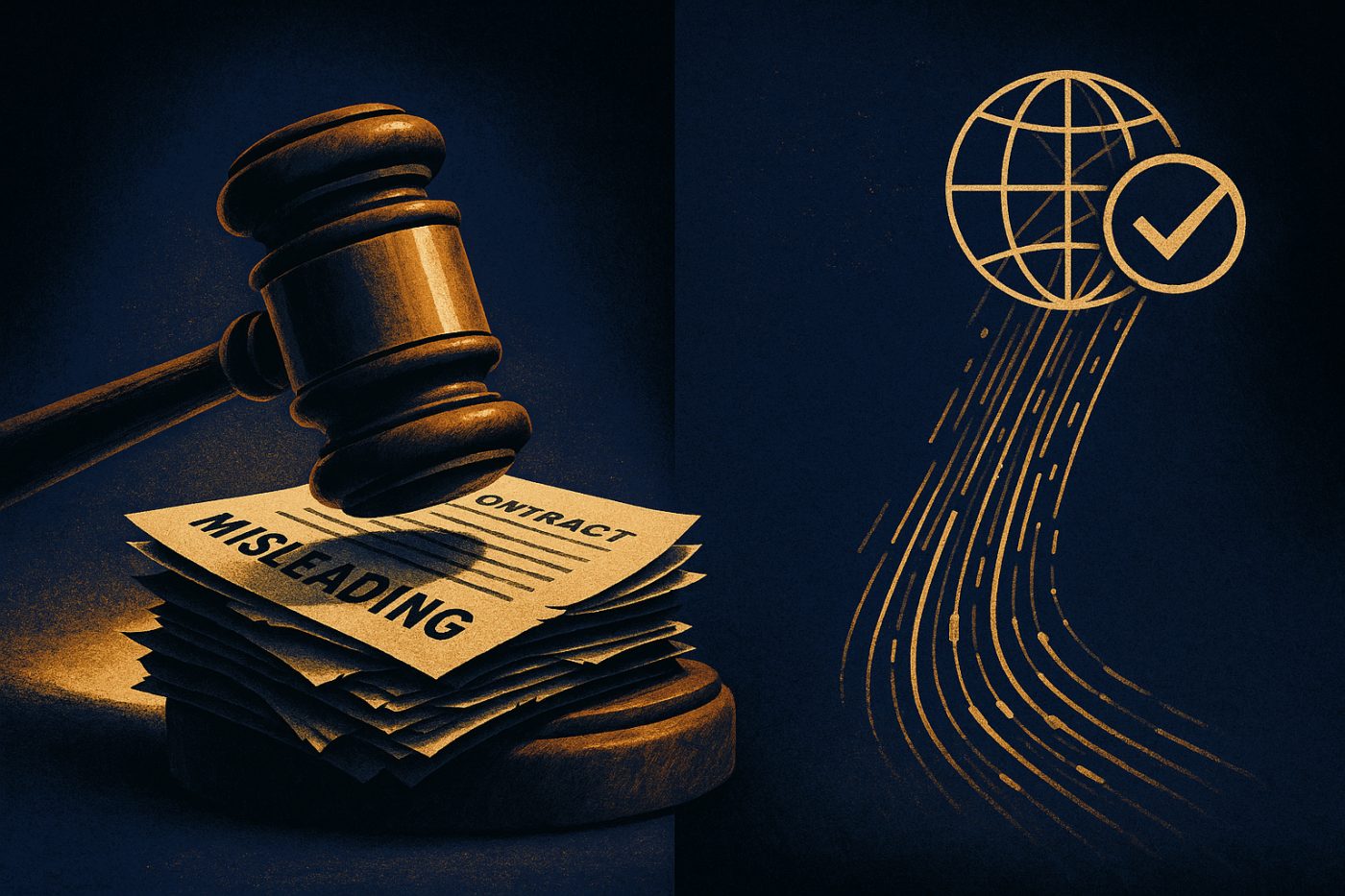
Dun & Bradstreet has agreed to pay $5.7 million to resolve Federal Trade Commission allegations that it violated a 2022 consent order, even as the company accelerates a high-stakes pivot toward enterprise AI under new private equity ownership. The settlement, finalized on September 29, 2025, allocates $3.7 million to consumer refunds and more than $2 million in civil penalties, addressing claims of deceptive auto-renewal practices and misleading assertions that fee-based products could improve credit scores. The case underscores the intensifying regulatory scrutiny of B2B data practices, particularly around transparency and accuracy in commercial offerings.
Simultaneously, Dun & Bradstreet is redefining its market position through a strategic transformation led by new ownership. In August 2025, private equity firm Clearlake Capital Group completed a $7.7 billion take-private acquisition of the company, delisting it at $9.15 per share. The deal installed Steve Tulenko as CEO the following month, with a mandate to shift the 185-year-old firm—founded in 1841 as the first commercial credit reporting agency—toward an "agentic AI" future. This dual narrative of regulatory correction and technological reinvention positions Dun & Bradstreet at a crossroads, where compliance and innovation must align to sustain its dominance in business data and analytics.
Regulatory Enforcement and a Change in Ownership
The FTC’s action against Dun & Bradstreet is not an isolated incident but the culmination of a pattern of non-compliance. In 2022, the company settled similar allegations, yet the FTC contended that Dun & Bradstreet failed to adhere to the terms of that order. Christopher Mufarrige, Director of the FTC’s Bureau of Consumer Protection, delivered a blunt assessment of the situation:
Our signed orders are not suggestions.The settlement now requires Dun & Bradstreet to revise its auto-renewal disclosures, ensuring they are clear and conspicuous, and to refrain from making unsupported claims about the ability of its products to enhance credit scores. These measures aim to protect small businesses and consumers from misleading practices that could lead to unintended financial commitments or false expectations.
The regulatory pressure coincided with a seismic shift in the company’s structure. Clearlake Capital’s $7.7 billion acquisition, which closed in August 2025, marked one of the largest private equity takeovers in the data and analytics sector that year. The deal removed Dun & Bradstreet from public markets, providing the new leadership team with the flexibility to execute a long-term strategy without the quarterly scrutiny of public investors. Steve Tulenko, appointed CEO in September 2025, was tasked with leading this transformation, focusing on leveraging the company’s vast data assets to build AI-driven solutions tailored for enterprise needs. The timing of the acquisition—just weeks before the FTC settlement—suggests that Clearlake Capital viewed the regulatory issue as a surmountable obstacle in the broader context of Dun & Bradstreet’s potential.
D&B.AI: Grounding Enterprise AI in Verified Data
By October 2025, Dun & Bradstreet introduced D&B.AI, a suite of enterprise AI capabilities designed to address one of the most pressing challenges in generative AI: the reliability of model outputs. The platform leverages the company’s proprietary D-U-N-S Number, a unique nine-digit identifier assigned to businesses worldwide, to anchor large language models (LLMs) in verified commercial data. This approach aims to reduce the risk of hallucinations—where AI systems generate plausible but incorrect information—a critical concern for enterprises deploying AI in high-stakes functions such as finance, procurement, and supply chain management.
The D&B Data Cloud, which underpins these AI tools, is one of the most comprehensive business datasets in the world. It includes insights on more than 600 million public and private businesses across 200+ countries, serving over 90% of the Fortune 500. This vast repository enables D&B.AI to provide accurate, context-rich outputs for a wide range of enterprise applications. Among the suite’s specialized capabilities is the Match Agent, which enhances multi-agent workflows by ensuring precise entity resolution across disparate datasets. For global enterprises, this functionality is particularly valuable in cross-border operations, where inconsistent or incomplete business data can lead to errors in vendor selection, risk assessment, or compliance checks.
Dun & Bradstreet has moved swiftly to integrate D&B.AI with leading AI platforms and hyperscalers. In May 2026, the company announced a partnership with Anthropic’s Claude, followed in June 2026 by collaborations with OpenAI and Databricks. The latter recognized Dun & Bradstreet as the 2026 ISV Banking Partner of the Year, highlighting the platform’s growing influence in financial services. These partnerships reflect a broader industry trend: the convergence of proprietary data assets with advanced AI models to create specialized, high-margin solutions that address specific enterprise needs. For Dun & Bradstreet, these alliances also validate its strategy of positioning the D-U-N-S Number as a global standard for grounding AI outputs in trusted data.
Competitive Landscape and Strategic Positioning
The $5.7 million FTC settlement, while financially significant, represents a fraction of the $7.7 billion investment made by Clearlake Capital. This disparity suggests that the new ownership views the regulatory setback as a manageable cost in the context of Dun & Bradstreet’s long-term transformation. However, the settlement serves as a stark reminder for the broader B2B data industry about the importance of compliance, particularly in areas such as auto-renewal practices and product claims. For competitors like Experian and Creditsafe, the case highlights the potential reputational and financial risks of failing to adhere to regulatory standards.
Competitively, Dun & Bradstreet’s pivot to AI positions it to differentiate itself in a crowded market. The company’s historical depth—celebrating its 185th anniversary on July 1, 2026—and its extensive Data Cloud provide a foundation that few rivals can match. The D-U-N-S Number, already a global standard for business identification, further strengthens its AI offerings by providing a consistent, reliable anchor for model outputs. This is particularly advantageous in industries like banking, where accuracy and trust are paramount. By grounding LLMs in verified data, Dun & Bradstreet aims to address a critical pain point for enterprises: the need for AI systems that can be trusted to deliver accurate, actionable insights in high-stakes decision-making scenarios.
Moreover, the company’s partnerships with OpenAI, Anthropic, and Databricks demonstrate its ability to integrate with cutting-edge AI technologies, giving it an edge in delivering solutions that combine the scale of its data with the sophistication of modern AI models. For enterprises, this means access to tools that can not only process vast amounts of data but also provide reliable, context-aware outputs tailored to specific business needs.
The Broader Shift: Data Integrity as the Foundation of Enterprise AI
The developments at Dun & Bradstreet reflect broader trends in the B2B data and AI landscape. Private equity firms are increasingly targeting data-rich companies, betting that AI can unlock new revenue streams and margin expansion outside the scrutiny of public markets. Clearlake Capital’s acquisition of Dun & Bradstreet exemplifies this strategy, as the firm seeks to transform a traditional credit reporting agency into a leader in enterprise AI infrastructure. Meanwhile, regulators like the FTC are signaling that compliance with existing orders is non-negotiable, even for long-established players with deep industry roots.
For global executives, the lesson is clear: the future of enterprise AI depends not only on advanced models but also on the quality and integrity of the data that powers them. Dun & Bradstreet’s ability to balance innovation with compliance will be critical as it continues to roll out D&B.AI and deepen its partnerships with hyperscalers. The company’s vast Data Cloud, strategic pivot, and commitment to grounding AI in verified data position it at the forefront of this evolution. However, the path forward will require navigating both technological and regulatory challenges with precision, ensuring that its AI solutions meet the highest standards of accuracy, transparency, and reliability.
As Dun & Bradstreet moves forward, its success will hinge on its ability to maintain the trust of its enterprise clients while continuing to push the boundaries of what AI can achieve in the realm of business data. The company’s 185-year history provides a strong foundation, but its future will be defined by how well it can adapt to the demands of the AI era—delivering solutions that are not only innovative but also dependable.
Sources
- Latest Press Releases from Dun & Bradstreet
- Dun & Bradstreet Agrees to Pay $5.7 Million to Resolve Alleged Violations of FTC Order | Federal Trade Commission
- Dun & Bradstreet Signals New Era for Enterprise AI with Launch of D&B.AI Suite of Capabilities
Written by an AI editorial process from the sources above. Errors may occur.
Newsletter
Get the AI news that matters
One short brief with the day's most important AI stories — written for professionals.
We send a confirmation link. No spam. Unsubscribe anytime.
Read next

The State of AI Security and Governance in 2026
As AI becomes embedded in core operations, security and governance gaps expose organizations to rising threats and regulatory risks.
28 Sep 2026
EU and U.S. AI Regulation Diverge in 2026
The EU enforces strict, rights-based AI rules while the U.S. embraces fragmented state-level policies, creating a transatlantic compliance divide.
23 Sep 2026
EU vs. U.S. State AI Laws: Compliance in a Divided Regulatory World
The EU’s binding AI Act contrasts sharply with the U.S.’s fragmented state laws, creating complex challenges for global businesses navigating divergent rules on risk, transparency, and enforcement.
22 Sep 2026