A National Standard Arrives for Self-Driving Cars
The U.S. government launches ASCEND, a three-year consortium to create the first national performance standards for autonomous vehicles, aiming to replace fragmented state rules.
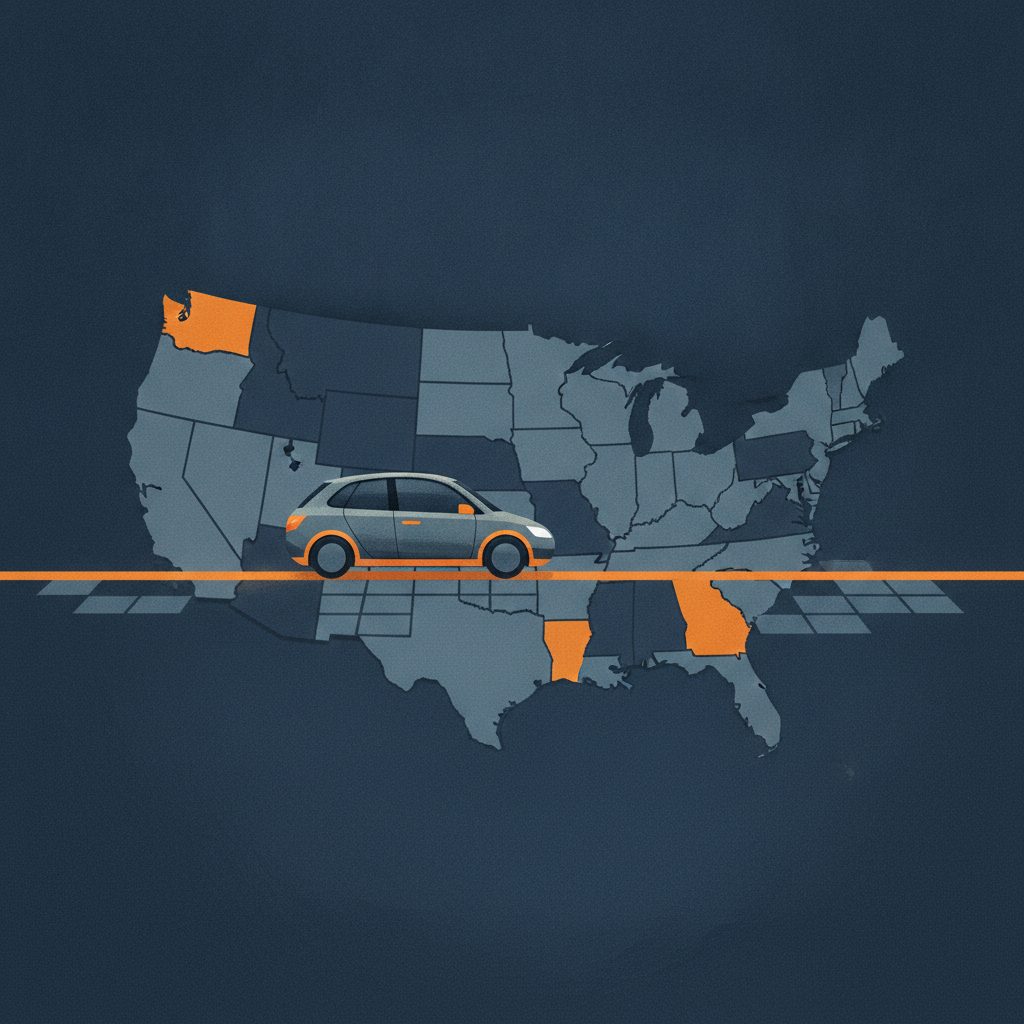
The U.S. federal government has launched its most consequential effort in years to create a single national standard for autonomous vehicles, a move that could replace the fragmented state-by-state regulatory landscape that has long complicated deployment. On July 30–31, 2026, the National Highway Traffic Safety Administration and the Department of Transportation announced ASCEND, a three-year, $5 million consortium tasked with developing the first national performance standards for self-driving cars.
The initiative, whose full name is Advancing America’s Safety and Competitiveness for the Evolution of National Deployments, pairs NHTSA with SAE Industry Technologies Consortia. Its initial focus will be on defining what constitutes a competent automated driving system — in effect, establishing a measurable benchmark for what makes an autonomous vehicle a safe driver. The announcement also included a separate regulatory change allowing manufacturers to begin producing vehicles before receiving formal safety exemptions, a shift intended to remove a bottleneck that industry leaders have long cited as a barrier to scaling operations.
Why a National Standard Now
The United States has operated for more than a decade without a unified federal framework for autonomous vehicles. Instead, manufacturers have navigated a patchwork of state regulations, some permissive and others restrictive, creating uneven deployment conditions and raising compliance costs. Companies testing or deploying automated driving systems in multiple states must often tailor their vehicles and operational procedures to meet conflicting requirements, a burden that falls disproportionately on smaller developers and slows the rollout of safety features. This fragmentation has been repeatedly identified by industry executives and federal officials as a structural obstacle to both safety oversight and commercial viability.
NHTSA Administrator Jonathan Morrison framed the ASCEND initiative as a deliberate recalibration. The approach, he said, aims to balance innovation with oversight — a phrase that signals a departure from the agency’s earlier posture of issuing voluntary guidance while leaving binding rulemaking largely untouched. By convening industry experts to help shape a single national standard, NHTSA is betting that technical input from manufacturers and suppliers can accelerate the development of enforceable performance criteria without waiting for the slower formal rulemaking process. The agency has historically relied on voluntary guidance documents that carry no legal force, and critics have long argued that this approach leaves safety gaps unaddressed while companies push systems to market.
The production-before-exemption rule is equally significant. Previously, manufacturers seeking to deploy vehicles with automated driving systems outside existing federal motor vehicle safety standards had to obtain an exemption first. That process could take months or longer, forcing companies to hold finished vehicles in storage or delay factory retooling while paperwork moved through the agency. The new rule inverts that sequence, allowing production to begin while the exemption is under review. For companies with capital-intensive manufacturing timelines, this change could compress deployment schedules by months or even years, reducing the financial risk of building vehicles that might later be deemed noncompliant.
What ASCEND Will Actually Do
ASCEND’s stated mission is to develop national performance standards for automated driving systems, with an initial focus on ADS competency. That term encompasses the core behavioral capabilities of an autonomous vehicle: lane keeping, object detection and response, intersection negotiation, and fallback maneuvers when systems encounter conditions they cannot handle. The consortium will gather data from industry participants, test results, and real-world operational reports to inform these standards. The goal is to define, in measurable terms, what a safe driver is when the driver is a software stack rather than a human being — a definition that has eluded federal regulators since the first automated driving systems appeared on public roads.
The three-year timeline is ambitious. NHTSA and SAE will need to move from data collection to draft standards to final publication within a window that is short by the standards of federal rulemaking. The $5 million budget is modest relative to the scale of the technical challenge, suggesting that much of the substantive work will rely on in-kind contributions from consortium members, including engineering time, test data, and access to proprietary simulation environments. SAE’s involvement brings technical credibility; the organization has long maintained the widely used J3016 taxonomy that defines levels of driving automation, and its standards development processes are well established. That infrastructure could help the consortium move faster than a purely governmental effort, but it also means the standards will be shaped by the same companies whose systems are being evaluated.
The consortium model also carries a structural implication: the standards that emerge will be shaped heavily by the companies whose systems are being regulated. That is not inherently unusual — many federal safety standards are developed with industry input, and manufacturers often possess the deepest technical knowledge of their own systems — but it places a premium on transparency and on NHTSA’s willingness to impose requirements that industry participants may resist. If the consortium produces standards that simply codify current industry practice, it will have failed its core purpose. If it produces standards that are too prescriptive, manufacturers may decline to adopt them voluntarily, leaving the regulatory gap unfilled.
The Safety Record That Shadows the Effort
Critics have not waited to see the consortium’s output before questioning its legitimacy. Advocates for Highway and Auto Safety, a prominent safety organization, has argued that a consortium relying on industry input and voluntary guidance cannot substitute for binding federal requirements. The group points to NHTSA’s own Standing General Order, which requires manufacturers to report crashes involving automated driving systems and advanced driver assistance systems. By June 15, 2026, that order had documented 61 fatal crashes involving ADS or ADAS-equipped vehicles.
That figure, while small relative to the roughly 40,000 annual traffic deaths in the United States, has become a focal point for safety advocates who argue that the technology is being deployed ahead of adequate oversight. The absence of enforceable federal standards for collision avoidance, cybersecurity, and operational domain limits — the conditions under which an automated system is permitted to operate — remains, in their view, a regulatory gap that a consortium cannot close on its own. They note that voluntary guidance has been in place for years without preventing fatal incidents, and they question whether a three-year, industry-heavy process will produce anything more binding.
A consortium relying on industry input and voluntary guidance cannot substitute for binding federal requirements.
The tension is structural. NHTSA has statutory authority to issue mandatory federal motor vehicle safety standards, but doing so through traditional rulemaking typically takes years and faces legal and political hurdles. The ASCEND model attempts to compress that timeline by front-loading industry collaboration. Whether the resulting standards will carry the force of law or remain voluntary is not yet clear, and that ambiguity is likely to shape the debate over the next three years. If the standards are voluntary, safety advocates will likely dismiss them as inadequate. If NHTSA attempts to make them mandatory, it will need to navigate a rulemaking process that could stretch well beyond the consortium’s timeline.
A Test Case for AI-Driven Mobility Regulation
Beyond the United States, the ASCEND initiative is being watched as a test case for how governments can regulate complex, AI-driven mobility systems without stifling innovation. Autonomous vehicles are among the most visible consumer-facing applications of machine learning and computer vision, and they present regulatory challenges that differ fundamentally from traditional mechanical safety standards. A vehicle’s behavior is determined not by a fixed design specification but by software that evolves over time, trained on data that is often proprietary and difficult to audit. Regulators cannot simply inspect a component and certify it as safe; they must evaluate a system’s performance across an effectively infinite range of driving scenarios.
For policymakers in Europe, Asia, and elsewhere, the U.S. experiment offers a potential template: a public-private consortium that produces technical standards faster than conventional rulemaking, with a federal agency retaining ultimate authority. If ASCEND succeeds in delivering robust, data-driven standards within its three-year window, it could influence regulatory approaches globally. If it produces standards that are perceived as weak or industry-captured, it may reinforce the arguments of those who favor stricter, more prescriptive government regulation. The stakes are high because autonomous vehicle deployment is not confined to any single market; companies operating in the United States typically seek to expand internationally, and regulatory decisions in one jurisdiction often shape expectations in others.
The production-before-exemption rule adds another layer of international relevance. Other countries with active autonomous vehicle programs, including Germany, Japan, and China, have adopted varying degrees of regulatory flexibility. The U.S. move toward allowing production to proceed while safety exemptions are pending could pressure other jurisdictions to accelerate their own approval processes, potentially creating a regulatory race that safety advocates warn could outpace the evidence base. A global race to loosen rules could lower safety standards in multiple markets simultaneously, while a more cautious approach in one country could leave its domestic industry at a competitive disadvantage.
The next three years will determine whether ASCEND delivers on its promise. The consortium must produce standards that are technically rigorous enough to satisfy safety concerns, flexible enough to accommodate rapid technological change, and credible enough to command compliance from an industry that has historically resisted prescriptive regulation. The 61 fatal crashes documented under the Standing General Order provide a sobering backdrop. The question is whether a $5 million consortium can produce what a decade of federal inaction has not: a single, enforceable definition of what it means for a machine to drive safely.
Sources
- A National Standard Arrives for Self-Driving Cars
- NHTSA Announces Pathways to Safer Streets at Lifesavers Conference | NHTSA
- Full Self-Driving Cars in 2026: What Every Driver Needs to Know
Written by an AI editorial process from the sources above. Errors may occur.
Newsletter
Get the AI news that matters
One short brief with the day's most important AI stories — written for professionals.
We send a confirmation link. No spam. Unsubscribe anytime.
Read next

The State of AI Security and Governance in 2026
As AI becomes embedded in core operations, security and governance gaps expose organizations to rising threats and regulatory risks.
28 Sep 2026
EU and U.S. AI Regulation Diverge in 2026
The EU enforces strict, rights-based AI rules while the U.S. embraces fragmented state-level policies, creating a transatlantic compliance divide.
23 Sep 2026
EU vs. U.S. State AI Laws: Compliance in a Divided Regulatory World
The EU’s binding AI Act contrasts sharply with the U.S.’s fragmented state laws, creating complex challenges for global businesses navigating divergent rules on risk, transparency, and enforcement.
22 Sep 2026